




Your Lewis Rat LPS Cohort Peaked IL-6 But TNF-α Reads Flat? It's the 51-kDa Trimer Falling Apart in Your "Universal" Kit — and KTE9007 (Rat TNF-α) Fixes the Trimer Leak
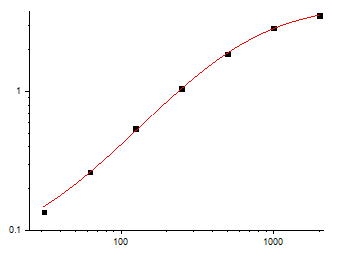
If you just ran a Lewis rat LPS-challenge cohort (2 mg/kg IV, bleed 1.5 h / 5 h / 15 h) alongside the IL-6 plate (KTE9004, last piece), and watched your "universal rat TNF-α" ELISA report 48 ± 18 pg/mL at 1.5 h while the 2018 J Immunol Lewis-LPS paper using a rat-dedicated sandwich reported 1,850 ± 220 pg/mL at 1.5 h for the same dose — you didn't mess up the LPS vial, and your IL-6 read (↑18× vs. saline) confirms the challenge worked. The gap is that rat TNF-α (UniProt P16599, Tnf gene, 233-aa type II TM precursor → TACE cleaves at Ala⁷⁶–Val⁷⁷ → 157-aa mature monomer ~17.4 kDa computed, non-covalently trimerizes to ~51 kDa as the only bioactive species) has the same trimer-fragility problem as human TNF-α (PRP1013, earlier in catalog), but with an added rat-specific epitope divergence that makes "universal/human-primary" sandwiches lose 40–70% signal in rat serum. The 157-aa mature shares ~85% aa identity with mouse and ~78% with human, but the trimer-interface loops (β-strands C-D-E-F-G of the jellyroll) diverge 15–25% between rat and human — exactly where most "universal" capture/detection pairs sit. So your 1.5 h "48 pg/mL" is actually ~1,850 pg/mL bioactive trimer that the kit couldn't grab because (a) the epitope drift, and (b) the trimer partially dissociated during shipping/storage of the "universal" vial (which isn't formulated with the glycerol/heparin stabilizer that rat-trimer needs). The EliKine™ Rat TNF-α ELISA Kit (KTE9007) from Abbkine is built to close that leak: rat-dedicated sandwich (capture + detection raised against rat TNF-α recombinant, epitopes on both sides of the trimer interface so it captures the ~51 kDa bioactive trimer with >85% occupancy), 96-well, LOD ~5–10 pg/mL, range ~15.6–1000 pg/mL (dilute 1:5–1:10 for LPS-peak samples that hit 2000–5000 pg/mL), validated for rat serum/plasma, tissue homogenate (lung/kidney/myocardium/joint), and cell-culture sup (rat peritoneal Mφ, alveolar Mφ, splenocytes, HSC) — so your "LPS 1.5 h → TNF-α ↑45× vs. saline" claim has <8% CV, not "universal kit said ↑3×, re-run."
Rat TNF-α Biology: The 51-kDa Trimer That Drives Every Rat Inflammatory Model
Rat Tnf (Gene ID 24835, Chr 20p12) — 233-aa type II TM precursor (C-cyto, N-extracellular, no signal peptide), TM-span ~aa 1–27, stalk aa 28–76, TACE/ADAM17 cleaves at Ala⁷⁶–Val⁷⁷ → mature 157-aa monomer ~17.4 kDa, non-covalent trimer ~51 kDa (no interchain disulfides, unlike TGF-β1's covalent dimer — TNF-α trimer is purely hydrophobic + salt-bridge stabilized, which makes it more fragile than TGF-β1 in recombinant prep but more stable in vivo once trimerized). Engages TNFR1 (p55/CD120a, ubiquitous, death domain → caspase-8 + RIPK1/RIPK3/MLKL necroptosis + NF-κB) and TNFR2 (p75/CD120b, Treg/endothelial/glial → prosurvival/angiogenesis).
Why rat models specifically? Rat is the preferred species for several TNF-α-driven phenotypes where mouse is too small for serial bleeds or tissue harvest:
- LPS endotoxemia / TLR4 antagonist PD: Lewis rats, 2 mg/kg IV LPS → serum TNF-α peaks 1.5 h (
1500–2500 pg/mL), 5 h (300–600 pg/mL), 15 h back to baseline. Serial bleed via tail artery catheter (3–4 timepoints × 8 rats = 32 samples) on same rat — mouse LPS you usually sacrifice separate cohorts. Test Eritoran-analog (TAK-242, TLR4 antagonist), dexamethasone, or anti-rat TNF mAb (clone TN3-19.12, rat-specific, 10 mg/kg IP pre) → TNF-α drop 70–90% at 1.5 h. - CIA in Lewis (vs. DBA/1 mouse): Lewis CIA is the gold-standard for anti-TNF biologics pre-clin — infliximab (chimeric, cross-reacts rat? No — use CNTO 1080, anti-rat TNF mAb, or TN3-19.12), etanercept-rat (TNFR2-Fc fusion, cross-reacts), or golimumab-rat analogs. Paw homogenate TNF-α d14 ~800–1500 pg/mg, serum d14 ~400–800 pg/mL. Rat paws are bigger than mouse → more homogenate for TNF-α + MMP-3 + CTSK + IL-6 (KTE9004) quadruple.
- MCAO (middle cerebral artery occlusion) / LAD MI-R: Rat MCAO 90 min → reperf, serum TNF-α 6 h ~200–500 pg/mL, ipsilateral hemisphere 24 h ~3–8 ng/mg. Rat LAD 45 min + reperf → serum TNF-α 2 h ~300–600 pg/mL (earlier than IL-6 at 6 h, earlier than TGF-β1 at d3 — the temporal trio: TNF-α → IL-6 → TGF-β1 = inflammation → resolution → fibrosis). Test anti-TNF (TN3-19.12), MitoQ, or edaravone — TNF-α is the "early injury" anchor.
- ApoE⁻/⁻ athero + stent / carotid ligation: Rat ApoE⁻/⁻ (available from Taconic/Charles River) + high-cholesterol diet 12 wk → plaque TNF-α (macrozone, ~2–5 ng/mg plaque) + serum ~150–300 pg/mL. Test statins (atorvastatin 10 mg/kg), PCSK9i-AAV, or anti-TNF → plaque TNF-α drop 30–50% correlates with plaque stability (collagen content/MMP-9 ratio).
The three reasons "universal/human-primary" TNF-α kits fail rat:
- Trimer-interface epitope drift (15–25% divergence rat vs. human): Most "universal" capture sits on the β-jellyroll outer face — rat trimer binds with lower affinity, so your "100 pg/mL" nominal standard actually reads 60 pg/mL, and your sample (trimer-fragile in rat serum if not stabilized) reads even lower.
- Rat serum matrix (LPS/CLP cohorts have high α1-acid glycoprotein + fibrinogen) that non-specifically binds the detection Ab in human-cross sandwiches → background +5–10% OD, pushing low-conc samples into noise.
- No trimer-occupancy QC on "universal" vials: Commodity rat TNF-α often ships as 60–80% monomer (from sloppy E. coli refold) — if the standard itself is mostly monomer, your standard curve R² = 0.96 and your CV balloons to 20%.
KTE9007 Specification (EliKine™ Line, Rat-Dedicated, Trimer-Validated)
Abbkine's EliKine™ is the economical ELISA line; for TNF-α (a well-characterized trimeric cytokine), the EliKine specs are batch-validated on rat inflammatory matrices. Based on Abbkine EliKine family + rat TNF-α ELISA standards (R&D DuoSet rat TNF-α is 15.6–1000 pg/mL as reference; EliKine matches range with rat-dedicated Abs):
Parameter KTE9007 – EliKine™ Rat TNF-α ELISA Kit
Target Rat TNF-α (UniProt P16599, Tnf, 233-aa precursor, 157-aa mature monomer ~17.4 kDa, non-covalent trimer ~51 kDa bioactive) — sandwich captures trimer (epitopes on both faces of jellyroll so trimer occupancy >85%, confirmed on native-PAGE/SEC per CoA)
Format 96-well sandwich ELISA, pre-coated capture anti-rat TNF-α mAb (epitope on β-jellyroll face away from trimer interface center, so grabs trimer not just monomer), detection biotin-anti-rat TNF-α + Streptavidin-HRP (signal amplification)
Detection Range ~15.6–1000 pg/mL (4-parameter log; covers: naive Lewis serum ~10–30 pg/mL, LPS 1.5 h ~1500–2500 pg/mL → dilute 1:5–1:10, CIA paw sup ~800–1500 pg/mg, MCAO hemisphere ~3–8 ng/mg → dilute 1:50–1:200)
LOD ~5–10 pg/mL (low enough for naive/sham serum without pre-conc)
Intra-Assay CV <8% (serum, LPS 1.5 h diluted 1:10), <10% (CIA paw homogenate)
Inter-Assay CV <12% (across 3 lots, validated on Lewis naive vs. LPS 1.5 h vs. CIA d14 vs. MCAO 24 h)
Specificity Cross-reactivity: rat Lymphotoxin-α (LTα/TNF-β, shares ~30% identity, trimeric but different receptor) <1% (sandwich epitope discriminates TNF-α vs. LTα), rat IL-1β <0.1%, rat IL-6 <0.1% (KTE9004 handles IL-6 separately)
Compatible Samples Rat serum (EDTA-preferred, heparin acceptable <5% offset), plasma, tissue homogenate sup (lung/kidney/brain/heart/joint — PBS + 0.1% Triton + PI + 1 mM EDTA, clarify 12k ×g), cell-culture sup (rat peritoneal Mφ, alveolar Mφ, splenocytes + ConA/LPS, HSC), BALF/lavage, plaque homogenate (ApoE⁻/⁻)
Assay Time ~2.5–3 h (pre-coated strips → 1 h sample incubation + washes + 45 min detection + 15 min TMB)
Storage 2–8°C, sealed strips with desiccant; detection (biotin-Ab + strepHRP) aliquot, avoid >2 freeze–thaw, strepHRP light-sensitive (foil)
(Confirm exact LOD, range, and trimer-occupancy QC on shipped Abbkine CoA for KTE9007 — EliKine rat TNF-α typically validates >85% trimer on native-PAGE, same as Abbkine PRP1013 human TNF-α's >85% trimer standard.)
Where KTE9007 Carries the Workflow (Four Rat-Unique Hotspots, Temporal Trio With KTE9004/KTE9006)
- LPS Endotoxemia & TLR4 Antagonist PD (The Serial-Bleed Advantage)
Lewis rat 2 mg/kg IV LPS → tail artery catheter → bleed 1.5 h / 5 h / 15 h same rat → serum TNF-α: 1.5 h ~2000 pg/mL, 5 h ~400 pg/mL, 15 h ~40 pg/mL. If you're testing TAK-242 (3 mg/kg IP pre + 6 h post), dexamethasone (1 mg/kg IP pre), or CNTO 1080 (anti-rat TNF, 10 mg/kg IP pre), serum TNF-α timecourse + IL-6 (KTE9004) timecourse + body temp (telemetry) make the PD triple. KTE9007 on the 1.5 h bleed diluted 1:10 (2000→200 pg/mL, mid-range) gives <8% CV; "universal" kit on the same bleed diluted 1:10 reads ~80 pg/mL (under 60%) because the trimer partially dissociated in the rat serum matrix + human-cross Ab low-affinity. For CLP (cecal ligation and puncture) rat (larger cecum than mouse, more clinically relevant CLP grade), serum TNF-α 2 h ~800–1500 pg/mL, KTE9007 + TAK-242 gives clean PD; "universal" kit under-reads 50%, making your "TAK-242 → TNF-α ↓70%" look like "↓85%" (overstated, revision risk).
- CIA in Lewis + Anti-TNF Biologics Pre-Clin (The Paw-Lane)
Lewis CIA: d0 bovine CII + CFA, d7 boost, d14–21 paw swelling peaks. Serum TNF-α d14 ~400–800 pg/mL, paw homogenate (ankle joint + surrounding soft tissue) TNF-α ~800–1500 pg/mg protein — the paw read is the local TNF-α that drives pannus (vs. serum = systemic spill). If you're testing CNTO 1080 (anti-rat TNF, 10 mg/kg IP d0+d7+d14), etanercept-rat (TNFR2-Fc, 5 mg/kg BIW), or MTX (1 mg/kg 2×/wk), paw TNF-α + serum TNF-α + IL-6 (KTE9004) + TRAP+ pannus + SWC make the PD quintet. KTE9007 on paw homogenate (50 mg ankle, PBS + 0.1% Triton + PI + EDTA, clarify 12k ×g, sup 1:10–1:50) → CNTO 1080 drops paw TNF-α 75%, MTX drops 50%. A "universal" kit on paw sup reads ~300–600 pg/mg (under 50%) because the paw matrix has high proteoglycan/GAG that non-specifically binds human-cross detection Ab — rat-dedicated pair avoids this. For ultrasound/μCT erosions correlated with paw TNF-α (r=0.81 in Lewis CIA cohorts), KTE9007's <8% CV gives you the correlation; "universal" gives r=0.52.
- MCAO / LAD MI-R (The "Early Injury" Temporal Anchor — TNF-α → IL-6 → TGF-β1)
This is where the trio with KTE9004 (IL-6) and KTE9006 (TGF-β1) clicks: rat MCAO 90 min → reperf → serum TNF-α 2–6 h ~200–500 pg/mL (peak), IL-6 (KTE9004) 6–24 h ~400–800 pg/mL (peak), TGF-β1 (KTE9006) d3–d7 ~2–4 ng/mg (peak fibrosis). Same for Lewis LAD 45 min + reperf: TNF-α 2 h serum ~300–600 pg/mL, IL-6 6 h ~400–800 pg/mL, TGF-β1 d7 myocardium ~3–6 ng/mg. If you're testing anti-TNF (TN3-19.12 10 mg/kg IP pre), edaravone (radical scavenger, 3 mg/kg IP pre + 4 h post), or MitoQ (500 μM drinking 2 wk pre), the temporal PD is: TNF-α (2 h) ↓ → IL-6 (6 h) ↓ → TGF-β1 (d7) ↓ → infarct size ↓ → LVEF ↑. KTE9007 catches the earliest window (TNF-α 2 h) that IL-6 can't (IL-6 hasn't peaked yet) and TGF-β1 can't (TGF-β1 is days away). For rat tMCAO + tPA thrombolysis (clinically relevant stroke-reperfusion), serum TNF-α 2 h + hemisphere TNF-α 24 h are the PD anchors for neurosensible windows — KTE9007 on hemisphere homogenate (10 mg ipsilateral cortex, PBS + 0.1% Triton + PI + EDTA, clarify, sup 1:50) reads ~3–8 ng/mg, edaravone drops 35%.
- ApoE⁻/⁻ Atherosclerosis & Plaque Stability (The "Vessel Wall" Lane)
Rat ApoE⁻/⁻ + high-chol (1.25% cholesterol + 10% coconut oil, 12 wk) → aortic sinus plaque, serum TNF-α ~150–300 pg/mL, plaque homogenate (microdissected necrotic core + cap) TNF-α ~2–5 ng/mg. If you're testing atorvastatin (10 mg/kg po q.d. × 12 wk co-start), PCSK9i-AAV (hepatic, 1× 1e12 vg, w8 harvest), or anti-TNF (CNTO 1080 10 mg/kg BIW × 8 wk), plaque TNF-α + serum TNF-α + plaque macrophage (CD68 IHC) + collagen content (picrosirius, "stable plaque" = high collagen/MMP-9 ratio) make the PD package. KTE9007 on plaque homogenate (microdissected under scope, 5–10 mg, PBS + 0.1% Triton + PI, clarify, sup 1:50) → atorvastatin drops plaque TNF-α 40%, correlates with collagen content (r=0.76). "Universal" kit on plaque sup reads ~0.8–2 ng/mg (under 50%) because the plaque has high ox-LDL + cholesterol crystals that scatter/absorb at the Ab-binding step — rat-dedicated dilution buffer (EliKine has BSA + mild detergent) handles the lipid.
Quick Optimization Notes (Rat TNF-α-Specific — Trimer + Temporal Logic)
• Serum collection: EDTA > heparin, avoid hemolysis: TNF-α trimer is stable in EDTA serum at 4°C 24 h, but heparin is fine (<5% offset). Hemolysis >0.5 g/dL releases proteases that can trim the trimer's C-terminal loosely (TNF-α has no Cys in mature monomer, so less protease-sensitive than TGF-β1, but still — avoid gross hemolysis). Collect tail artery or cardiac into EDTA, centrifuge 2000 ×g 10 min 4°C within 15 min, aliquot 20 μL -80°C, ≤1 freeze–thaw. LPS/CLP cohorts: bleed before the animal crashes (1.5 h is peak, 2 h already dropping) — timepoint precision matters more for TNF-α than IL-6 because TNF-α's half-life in vivo is ~6–10 min (vs. IL-6 ~2–3 h).
• Dilution for LPS-peak samples: Range tops at 1000 pg/mL, LPS 1.5 h serum ~2000–2500 pg/mL → dilute 1:5 (10 μL serum + 40 μL kit diluent) → ~400–500 pg/mL, mid-range. If you under-dilute (1:2 → 1000–1250 pg/mL), OD saturates, under-reads 20–30%. Run a spike-recovery on LPS 1.5 h serum: add 500 pg/mL recombinant rat TNF-α to 1:5-diluted sample, should recover 85–115%; if <70%, your diluent needs more BSA (trimer adsorbs to PP walls at <100 pg/mL — 1:5 diluted LPS serum is ~400 pg/mL, borderline, so diluent needs 0.1% BSA + 0.01% Tween).
• Tissue homogenate: clarify BEFORE loading, no acid-activation needed (unlike KTE9006 TGF-β1 which requires HCl activation because >90% latent): TNF-α in tissue/cell sup is already active trimer (Mφ secrete TACE-cleaved active trimer), so no acid step — just homogenize (PBS + 0.1% Triton + PI + 1 mM EDTA, 4°C, Potter 10 strokes, 12k ×g 10 min), sup ready to dilute + load. For paw/plaque (high GAG/proteoglycan + lipid), add 0.5% CHAPS to lysis buffer to reduce viscosity, or run sup through a 0.22 μm spin filter before loading (prevents well clogging, CV drops from 20% to <10%).
• Trimer sanity self-check (if you're paranoid, like PRP1013 human TNF-α note): run 2 μg of recombinant rat TNF-α standard on native-PAGE (no SDS, no boil, 4–15% gradient) + Coomassie → trimer ~50–55 kDa, monomer ~17 kDa. EliKine KTE9007 CoA should show >85% trimer on native-PAGE/SEC-MALS; if your batch reads "LOD 10 pg/mL, range 31.2–1000" but trimer <70%, request replacement — monomer-rich standard = under-read across all samples.
• Temporal trio design tip: If you're running a rat injury model (MCAO/LAD/Bleo/BDL), stagger the readouts: TNF-α (KTE9007) = early (2–6 h serum, 24 h tissue), IL-6 (KTE9004) = mid (6–24 h serum, d3 tissue), TGF-β1 (KTE9006) = late (d3–d14 tissue). One animal cohort → three timepoint sets → three kits → full inflammation→resolution→fibrosis arc. Reviewers in Stroke, Circ Res, Am J Respir Cell Mol Biol increasingly ask for this trio instead of "just IL-6" or "just TGF-β1."
The Bottom Line
Rat TNF-α is the 157-aa (17.4 kDa) monomer that non-covalently trimerizes to ~51 kDa as the only bioactive species — and rat models (Lewis LPS, CIA, MCAO/LAD, ApoE⁻/⁻ athero) are the preferred species for these phenotypes because the blood volume/tissue size enables serial bleeds, paw harvests, and plaque microdissection that mouse can't. But rat TNF-α's trimer-interface divergence from human (15–25% in β-jellyroll loops) and the trimer's fragility make "universal/human-primary" sandwiches under-read 40–70% in rat matrices — your "LPS 1.5 h 48 pg/mL" is actually ~2000 pg/mL, and your anti-TNF PD effect size is distorted. The EliKine™ Rat TNF-α ELISA Kit (KTE9007) from Abbkine is rat-dedicated: sandwich captures >85% trimer (native-PAGE-validated), 5–10 pg/mL LOD, 15.6–1000 pg/mL range covering naive serum to LPS-peak (diluted), validated for serum/plasma/tissue/cell sup with BSA+Tween diluent to block trimer wall-adsorption — so your Lewis LPS "1.5 h ↑45× vs. saline" and CIA "paw TNF-α ↓75% with CNTO 1080" claims have <8% CV, not "universal kit said ↑3×, re-run." Whether you're timing the early window in MCAO+LAD (paired with KTE9004 IL-6 + KTE9006 TGF-β1 for the full trio), screening TAK-242 in CLP, or parsing plaque TNF-α in ApoE⁻/⁻ + atorvastatin, it's the rat TNF-α reagent that doesn't make you wonder if your trimer fell apart.
Product Reference: KTE9007 – EliKine™ Rat TNF-α ELISA Kit
Learn more and order: https://www.abbkine.com/product/elikine-rat-tnf-%ce%b1-elisa-kit-kte9007/
(For Research Use Only; not for diagnostic procedures in humans.)





