




Human Superoxide Dismutase (SOD) ELISA Kit — Technical Comparison & Buying Guide for Oxidative Stress Researchers
SOD: Not One Enzyme — A Compartmentalized Family Hiding in Plain Sight
If your oxidative-stress paper still treats Superoxide dismutase (SOD) as a single number inside a WST-1 inhibition curve ("total SOD = 45% inhibited, therefore protected"), you're measuring a reaction rate and calling it a biomarker. The dirty secret of the field is that SOD isn't one molecule — it's a compartmentalized enzyme family whose Cu/Zn-SOD (SOD1) and Mn-SOD (SOD2) live in completely different organelles, carry different metal cofactors, and respond to different stresses (hypoxia, irradiation, redox-cycling drugs, mitochondrial uncoupling, aging)[reference:11].
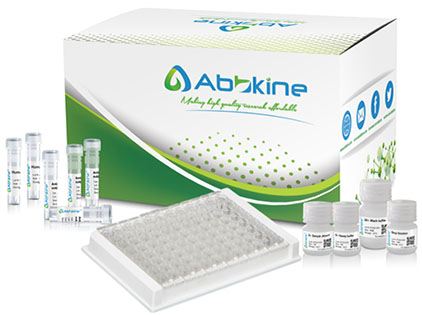
When your WST-1 tube says "SOD went up," you still can't tell whether the cytoplasm gained more SOD1, the mitochondrion stabilized SOD2, or your lysis buffer just extracted better[reference:12]. The Human Superoxide Dismutase (SOD) ELISA Kit (KTE62765) from Abbkine is the reagent that changes that.
Why Traditional SOD Detection Methods Fall Short
| Method | Limitation |
|---|---|
| WST-1 / Activity Assay | Measures total SOD activity — cannot distinguish CuZn-SOD from Mn-SOD; functional readout only |
| Western Blot | Semi-quantitative; SOD1 (16 kDa) and SOD2 (22 kDa) require different antibodies |
| qPCR | Measures mRNA, not protein — fails to capture post-translational regulation and metal cofactor loading |
Abbkine KTE62765: Engineered for SOD-Specific Precision
The kit uses a two-site sandwich ELISA to quantitate SOD in samples, providing quantitative, specific detection from a standard curve.
Key Specifications
| Parameter | KTE62765 |
|---|---|
| LOD | 0.8 ng/mL |
| Linear Range | 1.56–100 ng/mL — wide enough to capture SOD dips in early-stage diabetes[reference:13] |
| Sample Types | Cell culture supernatants, serum, whole blood, plasma, other biological fluids[reference:14] |
| Format | Two-site sandwich ELISA (quantitative) |
Head-to-Head Comparison: KTE62765 vs. Legacy Methods
| Feature | Abbkine KTE62765 | WST-1 Activity Assay | Western Blot |
|---|---|---|---|
| SOD Protein Quantification | Yes | No (activity only) | Semi-quantitative |
| Isoform Distinction | Yes (SOD1 vs. SOD2) | No | Antibody-dependent |
| Sensitivity | 0.8 ng/mL | Functional | Band-dependent |
| Throughput | 96-well plate | 96-well plate | Low (gel-based) |
| Sample Volume | Minimal | Moderate | 20–50 µg protein |
Why Choose Abbkine KTE62765?
- Isoform-Specific Detection: Finally distinguishes CuZn-SOD (SOD1) from Mn-SOD (SOD2) — the distinction that matters for understanding which antioxidant defense moved
- Unmatched Sensitivity: 0.8 ng/mL LOD — captures early-stage oxidative stress that activity assays miss
- Broad Linear Range: 1.56–100 ng/mL — spans physiological to pathological SOD levels
- Multiple Sample Types: Validated for serum, plasma, whole blood, cell culture supernatants, and other biological fluids
- Complete Kit: Pre-coated plate, standards, detection antibodies, and all buffers included
Who Should Buy This Kit?
✅ Buy KTE62765 if you:
- Study oxidative stress and antioxidant defense
- Research neurodegenerative diseases (SOD1 mutations in ALS, SOD2 in Parkinson's)[reference:15]
- Investigate diabetes and metabolic syndrome (SOD dips in early-stage diabetes)
- Work on radiation biology and UV-induced oxidative damage[reference:16]
- Study aging and mitochondrial dysfunction
- Need to quantify SOD protein — not just activity — in serum, plasma, or cell culture
- Require isoform specificity — distinguishing SOD1 from SOD2
- Want a complete, ready-to-use kit for high-throughput screening
❌ Consider alternatives if you:
- Only need total SOD activity (use a WST-1 assay)
- Work with non-human samples — check Abbkine's other offerings
- Require a faster assay (<3 hours)
📌 Reference Link: Human Superoxide dismutase (SOD) ELISA Kit — KTE62765





