




When your signal-to-noise ratio becomes a statistical lie — and the seventeen papers that fixed it without a headline
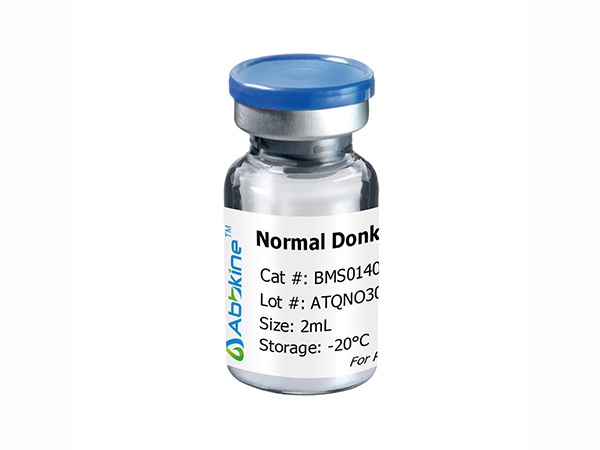
Every immunohistochemistry protocol ever written contains a lie so small that nobody notices it until the image appears on the screen. The lie is the blocking step. You pipette 5% BSA in PBS onto your tissue section, incubate for thirty minutes at room temperature, and proceed to primary antibody incubation confident that the hydrophobic patches on your Fc receptors are now occupied by inert albumin molecules that will not bind your detection reagents. Then you look at the image. The nuclei are brown where they should be brown, but so is the extracellular matrix. The cytoplasm has a haze that cannot be attributed to your target protein‘s known subcellular localization. The negative control without primary antibody—the control you ran because the protocol told you to, not because you expected it to show anything—shows staining nearly as intense as your experimental slide. The lie was not the concentration of BSA or the incubation time. The lie was the assumption that BSA was the right blocker for this tissue, this antibody, this detection system. Normal goat serum has been recommended for decades as the blocking reagent of choice when the secondary antibody was raised in goat, and the recommendation has survived every attempt to replace it with a chemically defined alternative because the biochemistry is not negotiable: the heterogeneous mix of serum proteins in normal goat serum saturates non-specific binding sites that homogeneous blockers like BSA or casein leave exposed, and the goat IgG in the serum occupies Fc receptors that would otherwise capture your goat anti-rabbit or goat anti-mouse secondary antibody. A 2025 Abbkine technical article confirms precisely this: BMS0050 normal goat serum functions effectively as a blocking reagent, specifically saturating non-specific binding sites that single-protein blockers miss. The blocking step is not a formality. It is the difference between a publication-quality micrograph and a troubleshooting session that consumes an afternoon.
Abbkine‘s Normal Goat Serum (BMS0050) enters this experimental landscape with a provenance that matters more than most blocking reagent datasheets would suggest. The serum is processed from blood collected exclusively from non-immunized normal adult goats, and the product page documentation specifies that proprietary techniques are employed during blood collection and serum extraction to minimize hemolysis. Hemolyzed serum is not a cosmetic problem; free hemoglobin released from lysed red blood cells possesses pseudoperoxidase activity that catalyzes the conversion of DAB substrate in HRP-based IHC detection systems, producing brown precipitate indistinguishable from genuine antigen localization. A blocking reagent that contributes to the very background it is supposed to eliminate is not a reagent; it is a sabotage vector. By controlling hemolysis at the collection stage, BMS0050 removes a variable that most blocking reagent manufacturers never acknowledge exists. The serum then undergoes lipid extraction to improve clarity—an optical specification that becomes operationally relevant when the blocking step is performed on tissue sections destined for fluorescence microscopy, where lipid micelles can scatter excitation light and produce punctate autofluorescence that survives all subsequent washes. The extracted serum is dialyzed against 10 mM sodium phosphate, 0.15 M sodium chloride, pH 7.2, a buffer composition that matches the ionic strength and pH of standard antibody diluents and eliminates the osmotic shock that can occur when a high-protein serum solution contacts delicate tissue architecture.
Purity claims for serum products occupy a contested space in the reagent industry. "Whole serum" can mean anything from "the supernatant after clotting, filtered" to "the supernatant after clotting, lipid-extracted, dialyzed, sterile-filtered, and quality-controlled by SDS-PAGE and immunoelectrophoresis." BMS0050 specifies whole serum purity—it is not an IgG-depleted fraction, not a Cohn fraction, not a proteolytically digested preparation—and that wholeness is functionally significant. Depleted or fractionated sera lack the full complement of serum proteins that collectively saturate the diverse non-specific binding sites present in fixed tissue: hydrophobic pockets on denatured proteins, charged residues on extracellular matrix components, unoccupied Fc receptors on tissue-resident immune cells, and endogenous biotin-binding proteins that capture streptavidin conjugates. Each of these binding modalities is blocked by a different class of serum protein, and removing any protein class creates a binding gap that the detection system will eventually find. The product page antibody applications notes specify that optimal working dilutions should be determined experimentally by the investigator, with suggested starting dilutions of 1:10–20 for IHC on paraffin sections, 1:10–20 for IF/ICC, and 1:100 for ELISA. These are realistic dilution ranges that reflect the protein concentration of whole serum rather than the exaggerated claims of pre-diluted commercial blockers that promise "ready-to-use" convenience at the cost of blocking effectiveness.
The publication record for BMS0050 is the validation that no certificate of analysis can provide. At the time of writing, the product has accumulated 17 citations in peer-reviewed literature, a number that places it among the most extensively validated normal serum products in its category. One of those citations appears in a Cancer Cell publication (impact factor 44.5) examining how Alistipes finegoldii augments the efficacy of immunotherapy against solid tumors—a study whose immunohistochemical end-points required blocking conditions that would not generate false-positive staining in tumor tissue sections where immune infiltrate density was the primary experimental readout. Another citation appears in Plant Communications (impact factor 11.6), where BMS0050 was used during the investigation of KNUCKLES-mediated meiotic cell-cycle progression in plants—a completely different tissue type, a completely different fixation chemistry, and the same normal goat serum performing without optimization beyond the standard dilution range. A study published in Cell Communication and Signaling (IF 8) deployed the product while characterizing RNF13-mediated protection against pathological cardiac hypertrophy, and a British Journal of Cancer publication (IF 6.8) relied on it during the investigation of enhanced CXCL10 expression in mast cells for cutaneous neurofibroma presenting with pain and itch. Each publication represents an independent laboratory that processed its own tissues, applied its own primary antibodies, detected with its own secondary reagents, and submitted its own figures for peer review with BMS0050 listed in the methods section. The aggregate validation from 17 independent laboratories, publishing in journals with impact factors ranging from 2.9 to 44.5, is more informative about real-world blocking performance than any internal QC dataset.
The chemical formulation of BMS0050 rewards a practical reading because the details determine whether the reagent integrates into a workflow or complicates it. The storage buffer is 10 mM sodium phosphate, 0.15 M sodium chloride with 0.05% sodium azide as preservative, pH 7.2—a buffer that matches the composition of phosphate-buffered saline precisely enough that the serum can be diluted directly into the same PBS used for antibody preparation without introducing ionic discontinuities that alter antibody binding kinetics. The 0.05% sodium azide concentration is standard for serum preservatives and low enough that residual azide in the blocking solution does not inhibit HRP activity when the blocking step is performed immediately before HRP-conjugated secondary antibody incubation. Storage instructions specify 2–8°C for short-term use or aliquot and store at or below -20°C for long-term storage, with the explicit instruction to avoid repeated freezing and thawing. Freeze-thaw cycling of serum products promotes the formation of cryoprecipitate—aggregated immunoglobulins and lipoproteins that precipitate upon thawing and contribute particulate background to tissue sections—and the aliquoting recommendation prevents this deterioration pathway entirely. Shipping on gel packs with blue ice maintains the cold chain from the manufacturer‘s warehouse to the laboratory freezer. Available in 2 mL and 10 mL package sizes, with bulk sizes available upon request.
The negative control capability of normal goat serum separates it from chemically defined protein blockers in a manner that becomes visible only when an experiment fails. Normal serum from the same host species as the primary antibody source—diluted to the same protein concentration as the primary antibody working solution—provides the most biochemically appropriate negative control for any immunoassay. Unlike buffer-only controls that reveal only the background from secondary antibody binding to tissue, a normal serum control at matched IgG concentration reveals the background from non-specific primary antibody binding, which is the background that actually competes with specific signal. BMS0050 can serve as a negative control when the primary antibody was raised in goat, providing an isotype-matched, host-matched, concentration-matched control that isolates the contribution of the primary antibody‘s antigen-binding region to the observed signal. For laboratories using goat polyclonal primary antibodies—and goat remains a major host species for polyclonal antibody production because of its large blood volume, robust immune response, and ease of handling—the availability of a validated normal goat serum for negative control experiments eliminates the need to source control IgG from a different supplier or species.
The broader immunological context makes the case for proper blocking reagent selection increasingly difficult to ignore as multiplexed imaging technologies proliferate. Cyclic immunofluorescence methods such as CODEX, CyCIF, and 4i require the sequential application and stripping of multiple primary antibodies on the same tissue section, and incomplete blocking between cycles permits residual antibodies from previous rounds to generate cross-cycle signal that is impossible to computationally deconvolve. Tyramide signal amplification (TSA)-based multiplexing deposits covalent fluorophore-tyramide conjugates at the site of HRP activity, and any non-specific HRP binding during the amplification step permanently labels the tissue with a fluorophore that cannot be removed. In both experimental contexts, the blocking reagent must perform to a standard that single-round IHC protocols can tolerate with inefficiency: every non-specific binding event is permanent, and the cumulative error across 10–40 cycles of staining, imaging, and stripping determines whether the final composite image reflects tissue antigen distribution or accumulated blocking failure. Normal goat serum blocking at 5–20% (v/v) provides the dense, multi-component protein coverage that iterative detection methods demand, and the instructions note that best results are obtained with diluted normal serum from the same host as the labeled antibody, applied as a separate incubation step before addition of the primary antibody.
For the graduate student whose IHC images show brown precipitate everywhere, the core facility technologist who processes hundreds of tissue sections per month and cannot afford a single failed blocking step, the immunology laboratory whose multiplexed tissue imaging experiment depends on the cumulative integrity of forty sequential blocking rounds, the plant biologist whose formalin-fixed paraffin-embedded Arabidopsis sections challenge every commercial blocker with their cuticle wax and phenolic content, and the investigator who simply wants the negative control slide to look like a negative control slide, BMS0050 provides a blocking reagent whose hemolysis-controlled collection, lipid-extracted clarity, whole-serum protein composition, PBS-matched dialysis buffer, and 17 peer-reviewed publications collectively answer the question that the blocking step asks: will this reagent block what I need it to block, and will it stay blocked through all the subsequent steps that matter? The serum that has been quietly ensuring immunohistochemistry reproducibility in laboratories publishing in Cancer Cell, Plant Communications, and Cell Communication and Signaling is available in 2 mL and 10 mL vials, ships on blue ice, stores at -20°C for long-term use, and costs less than the antibodies it protects.
Explore specifications, access the FAQ, and place your order here: https://www.abbkine.com/product/normal-goat-serum-bms0050/





