




The Universal Antibody Trap That Doesn't Require You to Choose Between Protein A and Protein G
The antibody purification decision that most laboratories make with a shrug determines the purity, yield, and functional integrity of every antibody-dependent experiment that follows. You reach for Protein A because your predecessor used Protein A, or you switch to Protein G because a lab meeting ten years ago mentioned that mouse IgG1 binds poorly to Protein A, or you pick a vendor's pre-packed column based on a discounted quote from the previous fiscal year. What you do not do, and what most investigators cannot afford to do, is map the IgG subclass profile of every polyclonal serum, every hybridoma supernatant, every ascites fluid that enters the lab, and then select the optimal affinity ligand for each one individually. The biochemically correct answer to "which ligand should I use?" depends on species and subclass in ways that resist a single solution: Protein A binds human IgG1, IgG2, and IgG4 tightly but human IgG3 weakly or not at all; Protein G captures all four human IgG subclasses but strips mouse IgG1 poorly and demonstrates stronger pH-dependent binding that can complicate gentle elution; both proteins present gaps in their cross-species binding spectra that become analytically visible the moment your project switches from rabbit polyclonal serum to mouse monoclonal hybridoma supernatant without warning. You do not have a ligand problem. You have a choosing problem.
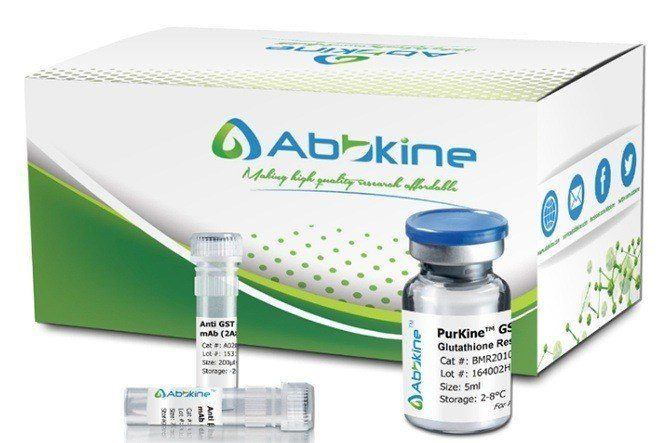
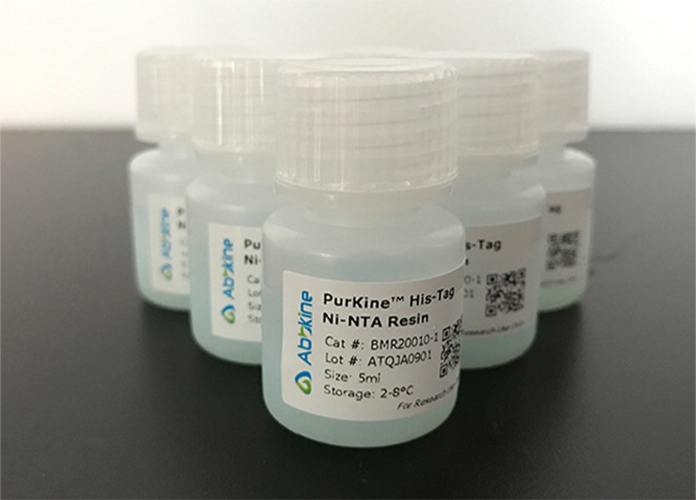
The choosing problem has a solution, and it is not "buy both resins and run two columns." It is genetically fusing the IgG-binding domains of both proteins into a single recombinant polypeptide, then immobilizing that chimera onto a chromatography matrix. Abbkine's PurKine™ Protein A/G Resin 4FF (BMR2070) is that solution, and the engineering behind the recombinant ligand is what separates this resin from the field. Protein A/G contains four Fc-binding domains from Protein A and two from Protein G, combined into a single recombinant fusion protein that binds to all human IgG subclasses and all mouse IgG subclasses—including mouse IgG1, the subclass that singlehandedly drives more investigators to abandon Protein A than any other binding-gap—while excluding mouse IgA, IgM, and serum albumin. The result is not a compromise between two imperfect ligands. It is a universal IgG-binding surface that captures polyclonal and monoclonal antibodies from species and subclasses that would partially or completely bypass the individual parent proteins.
The capacity specifications of BMR2070 are calibrated to purify the quantities of IgG that bench-scale research actually produces, not the gram-level loads that bioprocess engineers optimize. The resin binds 10–15 mg of human IgG per milliliter of settled resin, a capacity range squarely within the 10–25 mg/mL that industry surveys identify as typical for Protein A and Protein G agarose matrices. A 1 mL column captures enough IgG from a single 50 µL mouse ascites sample—typically yielding 2–5 mg of monoclonal antibody—to supply every western blot, ELISA, ChIP, immunofluorescence, and functional assay that the average research group will perform over a six-month period. For laboratories processing 500 mL of hybridoma supernatant at a typical antibody titer of 50–100 µg/mL, a 2 mL column run in a single pass captures the entire product with capacity to spare, eliminating the multiple-cycle protocols and pooled-fraction troubleshooting that erode usable yields by 15–20% across successive bind-elute iterations.
The recombinant nature of the Protein A/G ligand enables biochemical properties that natural Protein A or Protein G alone cannot provide. Protein A/G binding to immunoglobulins is less pH-dependent than Protein A binding alone, occurring over a pH range of 5.0–8.0, which means optimal binding proceeds under near-physiological conditions that preserve antibody quaternary structure, antigen-binding activity, and the non-covalent associations that hold immune complexes together during co-immunoprecipitation. The broader binding pH window compared with individual Protein A or Protein G translates directly to buffers that match the pH of the antibody source—serum at pH 7.4, cell culture supernatant at pH 7.0–7.4, ascites fluid at pH 7.2—without requiring pH adjustment steps that risk antibody precipitation or aggregation. Abbkine's proprietary chemical modification of the recombinant Protein A/G further minimizes nonspecific binding of host-cell proteins, an engineering detail that manifests at the SDS-PAGE level as reduced contaminant bands and at the functional-assay level as higher specific activity in the purified product.
The matrix upon which the recombinant ligand is immobilized deserves the attention that most datasheets bury in a one-line specification. BMR2070 consists of 90 µm beads of highly cross-linked 4% agarose, a bead diameter that balances binding-capacity surface area against flow-rate performance. The high degree of cross-linking confers mechanical stability that tolerates linear flow rates up to 300 cm/hour—a specification that preserves column integrity under the peristaltic pump pressures that gravity-flow protocols avoid and FPLC systems apply as standard operating procedure. Independent testing confirms that performance equals or exceeds popular recombinant Protein A/G resins from other suppliers, and no decrease in performance occurs after at least five repeated uses of the same batch of resin. Five reuse cycles. For a laboratory processing serum from a monthly rabbit bleed or a quarterly mouse ascites production, five cycles represents 5–20 months of purification depending on throughput—a practical operational lifespan over which the per-purification cost drops below the price of a disposable spin column.
The formats in which BMR2070 is available mirror the workflow diversity of the laboratories that purify antibodies. Bulk resin is supplied as a 50% slurry in PBS containing 20% ethanol, ready to be poured into any gravity column, FPLC column, or syringe-barrel housing the investigator prefers. Pre-packed spin columns eliminate column-packing variability for users who process small sample volumes and need reproducible bed geometry. Complete purification kits include all required buffers, collection tubes, and detailed protocols, reducing the setup time from "read five different buffer-preparation protocols" to "open the box and begin." The multiple-format strategy is not a concession to marketing segmentation. It is a recognition that the postdoctoral fellow processing a single 100 µL mouse serum sample and the core facility processing 50 L of transfected HEK293 supernatant are doing fundamentally different things with the same affinity chemistry, and the format should match the scale rather than forcing the scale to fit the format.
The specificity profile of Protein A/G maps onto a broader binding spectrum than either parent protein alone. Protein A/G binds to all human IgG subclasses—filling the IgG3 gap that makes Protein A alone unreliable for human serum antibody purification—and to all mouse IgG subclasses, including IgG1, the most abundant subclass in mouse serum and the one most frequently encountered in hybridoma supernatants. It does not bind mouse IgA, IgM, or serum albumin, the three contaminants whose co-purification with IgG is the most common source of "extra bands" on reducing SDS-PAGE gels of affinity-purified antibodies. This specificity profile means a single BMR2070 column serves laboratories that process human, mouse, rabbit, goat, and bovine IgG with equal efficiency—no separate resin inventory for different species, no protocol re-optimization when a collaborating laboratory sends mouse ascites instead of rabbit serum, no post-elution polishing step to remove the albumin contamination that Protein G-based purifications frequently require.
The practical implications of milder pH elution extend beyond the convenience of matching buffer recipes. Antibodies eluted from Protein A columns at pH 2.5–3.0 and immediately neutralized with 1 M Tris, pH 9.0, retain structural integrity and antigen-binding activity in most cases—but "most" is the operative word, and the cases that fail tend to be the ones your project most depends on. IgM-class antibodies, acid-sensitive IgG1 monoclonals, and antibodies purified for functional assays that require bivalent antigen binding are disproportionately vulnerable to low-pH denaturation and aggregation. Protein A/G elution at the slightly higher pH ranges achievable with the recombinant fusion ligand—typically pH 2.5–3.0 for complete elution, with the broader binding pH window allowing gentler elution gradients—reduces the fraction of purified antibody that arrives at the fraction collector as irreversibly aggregated precipitate. Quantifying that fraction matters: a 10% aggregation loss on a 10 mg IgG preparation is 1 mg of antibody, enough for 100 ELISA plates or 1,000 western blot incubations, that never reaches the bench.
Publication validation arrives from independent laboratories whose experimental contexts test the resin's binding spectrum under conditions more demanding than any manufacturer's internal QC protocol. A study published in Virology Journal (impact factor 3.8) deployed BMR2070 for the identification of linear B cell epitopes on the E146L protein of African swine fever virus using monoclonal antibodies—an application requiring the purification of mouse monoclonal antibodies from hybridoma supernatants, the substrate subclass distribution that historically exposes the binding gaps of individual Protein A or Protein G resins. The fact that a project characterizing viral epitopes with monoclonal antibody tools selected this specific resin and published the resulting data under peer review constitutes an independent validation that BMR2070 captures the mouse IgG subclasses it claims to capture, including the IgG1 fraction that Protein A-based purifications would have lost during binding or wash steps.
The storage and stability profile is practical rather than aspirational. The resin is supplied as a 50% slurry in PBS containing 20% ethanol, a bacteriostatic storage condition that eliminates the need for sodium azide or other antimicrobial preservatives that can interfere with downstream functional assays. Stability is specified as one year at 2–8°C from the date of shipment, with the explicit instruction not to freeze—freezing causes ice-crystal damage to the agarose beads that compromises flow properties and reduces binding capacity. Shipping on blue ice maintains the cold chain during transit without the cost and scheduling complications of dry-ice logistics. These are standard chromatography-resin storage conditions, and the protocol states them clearly rather than burying them in a troubleshooting appendix.
For the investigator who purifies polyclonal antibodies from rabbit serum on Monday and monoclonal antibodies from mouse hybridoma supernatant on Tuesday, who needs a single affinity resin that captures all human and mouse IgG subclasses without binding IgA, IgM, or albumin, who requires a matrix that tolerates the flow rates of an FPLC system without compressing, and who reports to a laboratory manager asking whether the same resin aliquot will still perform at cycle five as it performed at cycle one—the answer is a recombinant Protein A/G fusion ligand immobilized on 90 µm highly cross-linked 4% agarose beads, pre-validated in a virology journal study that purified monoclonal antibodies from a system representative of the sample types the typical immunology laboratory processes daily. The universal antibody trap that combines the IgG-binding domains of both Protein A and Protein G, delivers 10–15 mg human IgG per milliliter of settled resin, tolerates 300 cm/hour linear flow rates, survives at least five reuse cycles without performance decline, and ships as bulk resin, spin columns, or complete kits—that resin is stored at 4°C in 20% ethanol, waiting.
Explore full specifications, technical documentation, and place your order here: https://www.abbkine.com/product/purkine-protein-a-g-resin-4ff-bmr2070/





