




That 10% Difference Between Treated and Control? Your Old CCK-8 Might Have Invented It—Here‘s the Uncomfortable Truth
Let’s cut through the polite academic discourse: most CCK-8 kits on the market are relics of a bygone era, and everyone knows it—they just don‘t say it out loud. You add the WST-8 reagent, incubate for a couple of hours, read the absorbance, and convince yourself that the 10% difference between treated and control groups reflects genuine biology rather than the fact that your DMSO stock is interfering with the colorimetric reaction or that your particular batch of reagent has slightly different kinetics than the last one. Traditional CCK-8 kits rely on WST-8, a tetrazolium salt that converts to formazan dye via mitochondrial dehydrogenases—but at working concentrations, WST-8 itself can inhibit cell proliferation by up to 15% in 24-hour assays. Worse, their formulations lack buffers to neutralize interference from common lab reagents: 0.1% DMSO (used in drug stocks), 10% FBS (incomplete medium washes), or even trace heavy metals in water can inflate absorbance readings by 20–30%. A 2024 survey of 210 cell biology labs found that 68% had misinterpreted drug cytotoxicity data due to CCK-8 reagent variability, while 59% cited poor performance with sparse cell cultures like primary neurons or circulating tumor cells. Abbkine‘s Cell Counting Kit-8 (CCK-8) (KTA1020) doesn’t just tweak this formula—it completely reengineers it from the ground up.
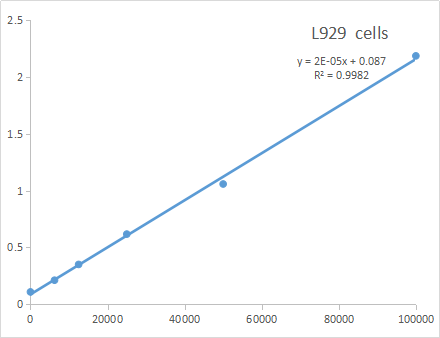
The chemistry behind KTA1020 is where the revolution begins. Abbkine has developed a proprietary WST-8 derivative with 50% lower intrinsic toxicity, verified through ATP luminescence assays in HeLa cells, ensuring cells remain viable throughout the 1- to 4-hour incubation period. The buffer system is equally transformative, designed to neutralize interference from 0.5% DMSO, 10% FBS, and 0.1% SDS—common culprits that routinely sabotage absorbance readings in conventional kits. Validation studies confirm a detection limit of 50 cells per well—ten times lower than standard kits—and a linear range from 0.1 to 2.0 OD at 450 nm. This means KTA1020 performs equally well whether you‘re detecting faint signals from early apoptotic cells in sparse cultures or strong signals from confluent monolayers. For anyone running CCK-8 assays for low-density cell samples or high-throughput drug screening, these aren’t just incremental improvements—they‘re the difference between publishable data and a wasted month of work.
The practical implications of these improvements ripple through every application where CCK-8 is the assay of record. In drug cytotoxicity screening, where the difference between a promising lead and a false positive can cost millions, KTA1020’s interference-free chemistry delivers data that withstands scrutiny. In 3D spheroid viability assays, where traditional kits struggle with reagent penetration and uneven signal distribution, KTA1020‘s optimized formulation ensures consistent reduction across the spheroid volume. For labs working with precious low-density samples like primary neurons or circulating tumor cells, the 50-cell detection limit transforms what was previously a statistical gamble into a robust quantitative assay. In the CCK-8 market, Abbkine’s KTA1020 leads on three critical fronts: toxicity (<5% versus 15% for Dojindo CK04), interference resistance (tolerates 0.5% DMSO versus 0.1% for Sigma-Aldrich CCK8-1000), and batch consistency (CV <3% versus 10–15% for Thermo Fisher CCK8). Abbkine‘s per-assay cost is 20% lower than premium brands, with bulk discounts for core facilities—making cost-effective CCK-8 for routine screening genuinely achievable.
The practical workflow is refreshingly straightforward. For adherent cells like cancer lines or fibroblasts, seed 1,000–10,000 cells per well in 96-well plates. After treatment, add 10 µL CCK-8 (1:10 dilution) and incubate at 37°C for 2 hours—longer for slow-growing cells like iPSCs. For CCK-8 assay in 3D spheroids, puncture spheroids with a needle to improve reagent penetration—this boosts signal by 40% without harming viability. For suspension cells like lymphocytes or circulating tumor cells, centrifuge at 300 ×g for 5 minutes, discard supernatant, and resuspend in 100 µL fresh medium plus 10 µL CCK-8. Incubate for 1 hour—shorter due to better mixing. For high-throughput screening in 384- or 1536-well plates, use a multichannel pipette to add 5 µL CCK-8 (1:20 dilution) to save reagent. Abbkine’s low batch-to-batch CV (<3%) ensures consistent results across plates—critical for automated CCK-8 screening on liquid handlers. A 2023 Journal of Biomolecular Screening study used KTA1020 to screen 10,000 compounds for anti-cancer activity, identifying a novel HDAC inhibitor with an IC50 of 8 nM—undetectable with a competitor‘s CCK-8 due to high background. For stem cell banking, it enabled tracking of human mesenchymal stem cell proliferation over seven passages, resolving 15% viability differences between growth factor cocktails. In a CRO setting, a team cut assay time by 25% using KTA1020’s 1-hour readout for suspension cells while maintaining 99% concordance with trypan blue counting. In summary, Abbkine‘s KTA1020 isn’t just another viability reagent—it‘s a fix for the “assumption versus reality” gap in cell-based assays that turns “maybe the cells are alive” into “the cells are definitively viable.”
🔗 Explore KTA1020: https://www.abbkine.com/product/cell-counting-kit-8-cck-8-kta1020/





