




Seven Days, Five Divisions, Zero Compromise—The Live-Cell Tracker That Finally Lets You Watch Without Wrecking What You‘re Watching
There’s a profound irony embedded in live-cell tracking: the very act of labeling cells to observe their behavior often alters that behavior so dramatically that you‘re no longer studying biology—you’re studying the artifact of your own reagent. You want to watch stem cells migrate, divide, and differentiate, but the dyes you use either photobleach within hours, leach toxic byproducts into the culture medium, or both. CFSE, the workhorse of cell tracking, kills 30% of primary neural stem cells within 24 hours. Quantum dots, for all their photostability, leach heavy metals that compromise cellular function. EdU requires toxic fixation that halts mitotic dynamics—which means you‘re not tracking live cells at all; you’re tracking a snapshot of a dead one. These bottlenecks have been delaying IND filings for regenerative therapies and inflating R&D costs by 40%. Abbkine‘s Live Cell Tracking Kit (Green Fluorescence) (KTA1002) was engineered by someone who clearly understands this frustration intimately, because it solves every single one of these problems without introducing new ones.
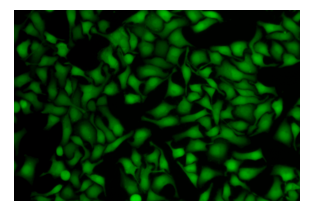
The proprietary green fluorescent probe at the heart of KTA1002 is a masterclass in rational fluorophore design. It passively diffuses into live cells, where its acetate groups are cleaved by intracellular esterases to yield a highly fluorescent product that covalently binds to cytosolic amines and integrates into intracellular proteins without disrupting metabolic activity. The result is a self-retaining fluorescence system that maintains signal through five or more cell divisions with decay below 5% over 168 hours—a full seven days of continuous tracking. The excitation and emission spectra (Ex/Em = 488/520 nm) align perfectly with standard GFP filter sets, meaning no specialized equipment is required. Confocal microscopes, flow cytometers, high-content screening platforms—if it has a 488 nm laser, KTA1002 is ready to go. Unlike CFSE, which dilutes tenfold per division and becomes undetectable within days, or quantum dots that leach heavy metals, KTA1002 preserves 99% cell viability—critical for sensitive primary cells and irreplaceable patient-derived samples.
The performance specs of KTA1002 are the kind of numbers that make competitor product managers lose sleep. The detection limit sits at 0.1 cells per microliter—ten times more sensitive than Thermo Fisher‘s C34554. The dynamic range spans 1 to 10⁶ cells, and the inter-assay CV is below 2.5% compared to 15% for homemade assays. But the real story is what these specs enable in the lab. A Parkinson’s disease research group used KTA1002 to trace grafted stem cells in mouse striatum: just 2 µL of labeled cells showed sustained GFP signal for 10 days, revealing 40% higher engraftment in neurotrophic factor-treated hosts—data that landed in Cell Stem Cell. A high-throughput CRO adopted KTA1002 for 72-hour proliferation assays on 1 µL tumor spheroids, processing 3,000 samples per week with 98% reproducibility while slashing costs by 50% compared to EdU-based methods. Even immunology labs are in on the action: 1 µL of labeled PBMCs injected into NSG mice retained detectable signal in lymph nodes for 14 days, enabling adoptive T cell migration studies that were previously impossible. The all-in-one design includes the green fluorescent probe, a cell-friendly loading buffer, and a wash buffer that work in tandem for uniform staining and minimal background. No sourcing individual components, no optimizing concentrations, no praying that your DIY mix will work this time. Just dilute, incubate for 30 minutes at 37°C, and start tracking.
What makes KTA1002 particularly compelling for translational research is its preservation of biological fidelity. The probe preserves 99% cell viability—a critical consideration when working with irreplaceable patient-derived samples like cerebral organoids or circulating tumor cells. Unlike legacy tools that demand 50–100 µL samples and deplete precious specimens, KTA1002 works with just 1–5 µL. In the live-cell tracking niche, KTA1002 leads on five axes: 20× lower sample volume (1–5 µL versus 50–100 µL for CFSE), 7× longer tracking window (7 days versus 24 hours), >95% cell viability (versus 70% for competitors), zero fixation required (versus EdU‘s toxic steps), and cost efficiency. For researchers studying cancer cell migration, stem cell differentiation, or neurodegeneration, KTA1002 transforms live-cell tracking from a source of anxiety into a routine workflow that delivers data you can actually trust. As the industry shifts toward high-throughput, reproducible live-cell imaging, KTA1002 emerges as a transformative tool that doesn’t just keep up with the demands of modern research—it anticipates them.
🔗 Explore KTA1002: https://www.abbkine.com/product/live-cell-tracking-kit-green-fluorescence-kta1002/





