ExKine™ Nuclear and Cytoplasmic Protein Extraction Kit (KTP3001) — Technical Comparison & Buying Guide for Subcellular Localization Researchers
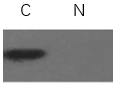
The Nuclear–Cytoplasmic Boundary Is Where Your Western Blot Lies to You
Every time you run a nuclear/cytoplasmic fractionation and load both fractions on the same gel, you are making an implicit claim: that the bands you see reflect where the protein actually lives. But subcellular fractionation is one of the most contamination-prone procedures in protein research. Cytoplasmic proteins leak into nuclear preps, nuclear proteins bleed into cytosolic fractions, and ER/mitochondrial membrane fragments co-sediment with nuclei — a problem the literature has flagged repeatedly, noting that "contamination of nuclear fractions with mitochondrial and ER components is a common issue"[reference:0].
The ExKine™ Nuclear and Cytoplasmic Protein Extraction Kit (KTP3001) from Abbkine is built around a stepwise hypotonic swelling → cell disruption → high-salt nuclear release workflow that yields non-denatured, active proteins in less than two hours, with the manufacturer reporting little or no cross-contamination[reference:1]. With 27 publications citing this kit — including work in International Journal of Molecular Medicine (IF 13.3) — it has become a reference tool for labs that need fractionation they can actually defend[reference:2].
Why Generic Fractionation Protocols Fall Short
| Bottleneck | Consequence |
|---|---|
| Cytoplasmic carryover into nuclear pellets | Incomplete supernatant removal leaves cytosolic proteins in the "nuclear" fraction; the literature recommends at least three successive washes to eliminate residual cytoplasmic proteins[reference:3] |
| ER/mitochondrial co-sedimentation | Nuclear fractions contaminated with membrane organelles produce false nuclear signals for ER or mitochondrial proteins[reference:4] |
| Harsh detergent lysis | High detergent concentrations can disrupt weak protein interactions and reduce immunoblot specificity[reference:5] |
| Denaturing buffers | Native protein–protein interactions and enzyme activities are lost — ruling out EMSA, reporter assays, and activity assays |
Abbkine KTP3001: Hypotonic Swelling, Controlled Disruption, High-Salt Release
The kit allows cells to swell in a hypotonic buffer, then disrupts them so the cytoplasmic fraction is removed before the nuclear proteins are released by a high-salt buffer[reference:6]. Critically, the workflow is non-denaturing — the proteins you recover remain active and compatible with downstream functional assays.
Key Specifications
| Parameter | KTP3001 |
|---|---|
| Workflow time | <2 hours |
| Protein state | Non-denatured, active |
| Sample types | Fresh mammalian cultured cells and tissues |
| Cross-contamination | Little or no cross-contamination (manufacturer) |
| Kit components | Cytoplasmic Solution A (CES A), Cytoplasmic Solution B (CES B), Nuclear Extraction Solution (NES), DTT (500×), Protease Inhibitor (100×) |
| Downstream compatibility | Western blotting, gel-shift assays (EMSA) , protein assays, reporter gene assays, enzyme activity assays |
| Storage | –20°C, 12 months |
| Shipping | Gel pack with blue ice |
| Publications | 27 citations (including IF 13.3) |
Head-to-Head Comparison: KTP3001 vs. Generic Fractionation
| Feature | Abbkine KTP3001 | Generic Hypotonic Lysis | Commercial Nuclear Extraction Kits |
|---|---|---|---|
| Workflow time | <2 hours | 2–4 hours | 2–3 hours |
| Protein state | Non-denatured, active | Often denatured | Variable |
| Cross-contamination control | Stepwise removal of cytoplasmic fraction before nuclear release | Relies on operator skill | Variable |
| Native protein interactions preserved | Yes | Often lost | Variable |
| Downstream functional assays | EMSA, reporter, enzyme activity | Limited | Often WB-only |
| Published validation | 27 citations | None | Kit-specific |
Why Choose Abbkine KTP3001?
- Stepwise Chemistry, Not Operator Guesswork: The cytoplasmic fraction is physically removed before nuclear proteins are released — reducing the carryover that plagues single-step lysis protocols
- Non-Denatured, Active Proteins: Preserves native conformation and interactions, so the same prep works for Western blot, EMSA, reporter assays, and enzyme activity assays[reference:7]
- Under Two Hours: Fast enough to fit into a standard experimental day without compromising fraction quality
- Validated in 27 Publications: Including a study on the S100A14–CCL2/CXCL5 axis in breast cancer metastasis (IF 13.3)[reference:8]
- Complete Kit: CES A, CES B, NES, DTT, and protease inhibitor are all included — no buffer assembly required
Who Should Buy This Kit?
✅ Buy KTP3001 if you:
- Study transcription factor nuclear translocation (NF-κB, STAT, HIF, Nrf2)
- Run EMSA or reporter gene assays that require functional nuclear extracts
- Need to demonstrate subcellular localization by Western blot with defensible fraction purity
- Work with precious primary cells or small tissue samples
- Want non-denatured, active proteins rather than SDS-denatured lysates
- Value a kit with 27 published citations, including high-impact oncology work
❌ Consider alternatives if you:
- Only need total protein — the KTP3006 or KTP3007 total protein kits are more direct
- Need membrane protein fractionation — see KTP3005
- Require subcellular fractionation beyond nuclear/cytoplasmic (e.g., mitochondrial, ER) — additional organelle-specific protocols are needed
📌 Reference Link: ExKine™ Nuclear and Cytoplasmic Protein Extraction Kit — KTP3001
Prev:This is the latest article