PurKine™ Endotoxin Removal Kit (Polymyxin B) (KTP2140) — FAQ for Protein Expression and Cell Biology Researchers
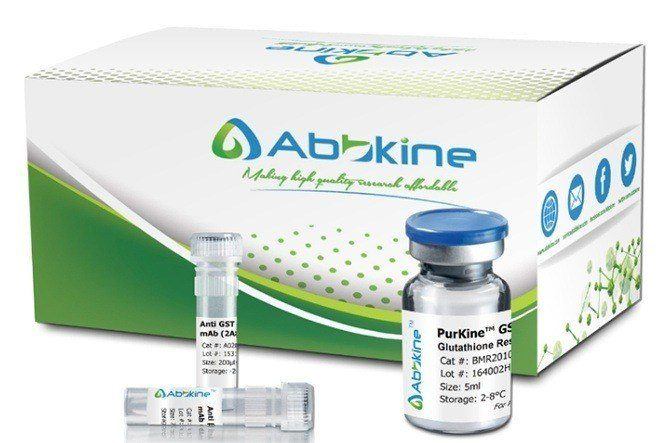
PurKine™ Endotoxin Removal Kit: Your Questions Answered
Endotoxins — also known as lipopolysaccharides (LPS) — are cell membrane components of Gram-negative bacteria (e.g., E. coli). They strongly influence transfection of DNA into primary cells and sensitive cultured cells, and increased endotoxin levels lead to sharply reduced transfection efficiencies[reference:73]. If you express recombinant protein in E. coli, your prep is almost certainly endotoxin-contaminated — and if you use that protein on primary cells or in vivo, the endotoxin will confound your results.
Abbkine's PurKine™ Endotoxin Removal Kit (Polymyxin B) (KTP2140) is designed to reduce endotoxin levels in protein samples by ≥99% while maximizing protein recovery[reference:74]. Here are the answers to the questions that matter most.
How does polymyxin B resin remove endotoxin?
Polymyxin B (PMB) is a cyclic lipopeptide antibiotic that binds lipid A — the toxic moiety of LPS — with high affinity. The PurKine™ Endotoxin Removal Resin consists of 90 µm beads of cross-linked 4% agarose to which modified polymyxin B has been coupled[reference:75]. When your protein sample passes through the column, LPS binds the immobilized PMB while your protein flows through in the recovery fraction.
What is the endotoxin removal capacity and protein recovery?
| Parameter | KTP2140 |
|---|---|
| Endotoxin removal | ≥99% reduction[reference:76] |
| Binding capacity | >2,000,000 EU/mL of resin[reference:77] |
| Final endotoxin level | Reduced to 0.1 EU/mL[reference:78] |
| Protein recovery | >85%[reference:79] |
| Reuse | No performance decrease after ≥5 repeated uses[reference:80] |
The >2,000,000 EU/mL capacity is the number that matters for real protein preps: it means you can load a substantial amount of endotoxin-contaminated sample onto a small column without breakthrough, and still recover >85% of your protein.
Why is protein recovery sometimes low, and how can I improve it?
The recovery–clearance trade-off is the central challenge of endotoxin removal. Polymyxin B binds not only LPS but can also bind some proteins — particularly hydrophobic or negatively charged proteins — reducing yield[reference:81]. The KTP2140 formulation is optimized to maximize protein recovery (>85%) while still achieving ≥99% endotoxin clearance[reference:82].
Practical steps to improve recovery:
- Optimize buffer pH and ionic strength: PMB binding to LPS is salt-dependent; follow the kit's equilibration buffer (10× included) recommendations[reference:83]
- Avoid overloading: stay within the resin's binding capacity to prevent protein displacement
- Use a two-pass strategy if needed: some samples may require a second pass to reach the target EU level, as polymyxin B columns can be repeated to lower endotoxin concentrations to acceptable levels[reference:84]
My protein binds to the polymyxin B column. What should I do?
If your protein of interest is highly hydrophobic or strongly negatively charged, it may interact with the PMB resin and co-elute poorly. Options include:
- Adjust pH/ionic strength to weaken non-specific interactions
- Add a low concentration of a mild detergent (if compatible with downstream use)
- Consider an alternative endotoxin removal method (e.g., two-phase extraction or anion-exchange-based endotoxin removal) for exceptionally sticky proteins
Does this kit work for all protein samples?
The kit is validated for protein samples — recombinant proteins purified from E. coli, cell lysates, and other biological preparations[reference:85]. It is not a nucleic acid purification kit, although it can be used to remove endotoxin from DNA preparations in some workflows. For endotoxin removal from plasmid DNA or RNA, consult Abbkine's technical support for the appropriate product.
What applications is this kit suitable for?
This kit is designed for research use only. Applications include:
- Recombinant protein production in E. coli for cell-based assays
- Transfection and gene delivery experiments where endotoxin suppresses efficiency[reference:86]
- Primary cell culture and sensitive cultured cells that respond to LPS
- In vivo studies where endotoxin triggers inflammation and confounds results
- Biologic and vaccine development workflows requiring low-endotoxin intermediates
How should I store and handle the kit?
- Storage: Stable for 1 year at 2–8°C from date of shipment; do not freeze[reference:87]
- Shipping: Blue ice
- Formulation: Liquid solution, 50% slurry in 20% ethanol[reference:88]
- Kit components: Endotoxin Removal Polymyxin B Packed Column, 10× Regeneration Buffer, 10× Equilibration Buffer[reference:89]
What's included in the kit?
| Component | Included |
|---|---|
| PurKine™ Endotoxin Removal Polymyxin B Packed Column | ✅ |
| Regeneration Buffer (10×) | ✅ |
| Equilibration Buffer (10×) | ✅ |
A complete, ready-to-use kit.
📌 Reference Link: PurKine™ Endotoxin Removal Kit (Polymyxin B) — KTP2140