ExKine™ Pro Total Protein Extraction Kit for Plant Tissues (KTP3008) — Technical Comparison & Buying Guide for Plant Proteomics Researchers

Plant Protein Extraction: Why Your RIPA Buffer Is Lying to You
Plant tissues are the most hostile sample matrix in protein research. Cell walls resist lysis, phenolics oxidize and cross-link proteins, proteases are abundant and active, and secondary metabolites interfere with downstream assays. The default solution in most plant labs — RIPA buffer plus liquid nitrogen grinding — is slow, labor-intensive, and, as Abbkine's own technical documentation notes, may lead to random loss of protein that produces "many difficult data that are difficult to explain"[reference:0].
The ExKine™ Pro Total Protein Extraction Kit for Plant Tissues (KTP3008) is a centrifugal column-based system that replaces liquid nitrogen grinding with optimized lysis buffer + filter cartridge centrifugation — delivering total protein in 8 minutes with 2–8 mg/mL yield and no altered protein profile[reference:1]. With 2 publications citing this kit, it has been validated in plant proteomics workflows. Here's how it compares to the legacy approach.
Why Traditional Plant Protein Extraction Falls Short
| Bottleneck | Consequence |
|---|---|
| Liquid nitrogen grinding | Labor-intensive, equipment-dependent, difficult to scale; inconsistent homogenization between samples |
| RIPA buffer | May cause random protein loss, producing irreproducible Western blots and "difficult-to-explain" data[reference:2] |
| Phenolic oxidation | Proteins cross-link and precipitate; yield drops and band patterns distort |
| Multi-step centrifugation | Extended hands-on time increases protease exposure and sample-to-sample variability |
Abbkine KTP3008: Centrifugal Column Chemistry, 8-Minute Workflow
The kit pairs Denaturing Cell Lysis Buffer with a Protein Extraction Filter Cartridge, Collection Tube with Cap, and reusable Plastic Rod[reference:3]. Tissue is lysed in the optimized buffer, then clarified by centrifugation through the filter cartridge — no liquid nitrogen, no grinding, no multi-step centrifugation.
Key Specifications
| Parameter | KTP3008 |
|---|---|
| Workflow time | 8 minutes[reference:4] |
| Protein yield | 2–8 mg/mL from 50–200 mg plant tissue[reference:5] |
| Protein profile | No altered protein profile[reference:6] |
| Sample types | Plant tissue, leaves, seeds, soft stems, roots[reference:7] |
| Lysis buffer | Denaturing Cell Lysis Buffer (optimized for plant matrices) |
| Format | Centrifugal column (filter cartridge + collection tube) |
| Downstream compatibility | Western blotting, SDS-PAGE[reference:8] |
| Storage | Room temperature, 12 months[reference:9] |
| Sizes | 5 T / 50 T |
| Publications | 2 citations |
Head-to-Head Comparison: KTP3008 vs. RIPA + Liquid Nitrogen Grinding
| Feature | Abbkine KTP3008 | RIPA + LN₂ Grinding |
|---|---|---|
| Workflow time | 8 minutes | 30–60 minutes + grinding |
| Liquid nitrogen required | No[reference:10] | Yes |
| Protein yield | 2–8 mg/mL | Variable; often lower due to phenolic loss |
| Protein profile | No altered profile | Random loss reported with RIPA[reference:11] |
| Homogenization consistency | Centrifugation-driven (cartridge) | Operator-dependent grinding |
| Storage | Room temperature | 4°C or –20°C |
| Throughput | Scalable (5 T / 50 T) | Labor-limited |
Why Choose Abbkine KTP3008?
- 8-Minute Extraction: Collapses lysis, homogenization, and clarification into a single centrifugation step — minimizing protease exposure and operator variability
- No Liquid Nitrogen Grinding: Eliminates the equipment, labor, and inconsistency of LN₂ grinding while still achieving 2–8 mg/mL yield
- No Altered Protein Profile: The optimized denaturing buffer avoids the random protein loss that RIPA can cause in plant matrices
- Broad Plant Tissue Coverage: Validated for leaves, seeds, soft stems, and roots — not just a single model tissue
- Room-Temperature Storage: Stable at RT for 12 months, simplifying lab logistics
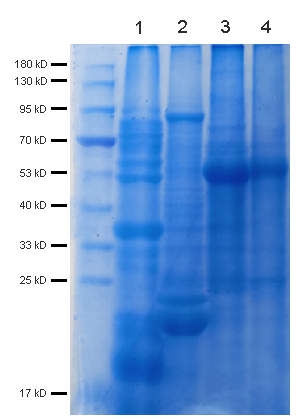
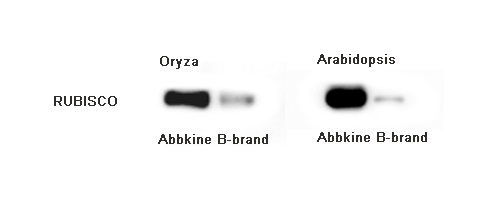
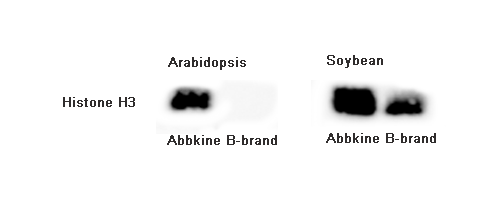
- Published Validation: Cited in 2 publications, with side-by-side WB comparisons against competitor kits (Oryza, Arabidopsis, Soybean)[reference:12]
Who Should Buy This Kit?
✅ Buy KTP3008 if you:
- Extract total protein from plant tissues (leaves, seeds, stems, roots) for Western blot or SDS-PAGE
- Want to eliminate liquid nitrogen grinding without sacrificing yield
- Have struggled with RIPA-induced random protein loss and irreproducible plant Western blots
- Need a scalable, 8-minute protocol for multi-sample plant cohorts
- Value room-temperature-stable reagents and a column-based workflow that standardizes homogenization
- Want a kit validated against competitor kits in Oryza, Arabidopsis, and Soybean[reference:13]
❌ Consider alternatives if you:
- Need subcellular fractionation of plant cells (nuclei, chloroplasts, mitochondria) — this is a total protein kit
- Work with woody or fibrous tissues that may require additional homogenization beyond the filter cartridge
- Need native (non-denaturing) protein for activity assays — this kit uses a denaturing lysis buffer
📌 Reference Link: ExKine™ Pro Total Protein Extraction Kit for Plant Tissues — KTP3008