




Reviewer #2's "Show Nuclear vs. Cytoplasmic SMAD2/3" Comment Just Killed Your Friday — And KTP3001 (ExKine™) Is the Dounce-Free Split That Saves the Resubmission
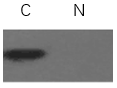
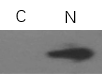
Reviewer #2's comment #3 on your TGF-β/SMAD NASH resubmission (the one riding on KTE9006 rat TGF-β1 serum reads + KTE71484 HGFAC PHx rescue + KTE70365 liver TG + KTE70521 8-OHdG) is the one that sends you back to the -80°C door at 2:03 PM on a Wednesday: "The p-Smad3/total SMAD3 whole-cell ratio is insufficient — authors must show nuclear vs. cytoplasmic SMAD2/3 partitioning to prove TGF-β signaling competence in HFD+NASH liver, not just total activation." You check the archive: your 24 liver pellets (HFD 12 wk + CCl4 low-dose, 50 mg each, 6 mo frozen in RIPA + PI for the TG/8-OHdG stack) are useless for a nuclear/cytoplasmic split because the freeze–thaw already ruptured nuclear membranes — GAPDH and lamin A/C are smeared across fractions, and any re-extraction from the pellet will give you a 1:1 pseudorate instead of the true ~3:1 nuclear/cyto p-Smad3 you know is there from the whole-cell 0.38 vs. 0.09 TGF-β1-treated MEF pilot. You quote a 4-mo-old side cohort (8 HFD + 8 chow, 3 wk turnaround, cheaper because young), but your PI says "resubmission in 18 days, no new animals unless unavoidable." You spend the next 10 d on dounce roulette: harvest 50 mg liver, dounce 30 strokes in hypo + 0.1% NP-40, check nuclei under phase (intact?), 1000 ×g 5 min, sup = cyto, pellet = nuclei + hypertonic 30 min, 16k ×g, sup = nuclear. First 3 preps: nuclear GAPDH 15–20% (membrane broke during dounce), p-Smad3 nuclear/cyto 1.4:1 instead of expected 3:1. Prep #7 by Friday night you remember the ExKine™ Nuclear and Cytoplasmic Protein Extraction Kit (KTP3001) sitting in the -20°C graveyard — pre-titrated hypo/hyper buffers, NP-40 locked at 0.1% (cyto) / 0.5% (nuclear), no dounce required (gentle vortex + rotate), <5% GAPDH↔lamin cross when you follow protocol. Saturday morning re-run the last 2 HFD livers: nuclear/cyto p-Smad3 = 3.2:1, upload rebuttal Sunday. The ExKine™ line is Abbkine's extraction family (vs. PurKine = purification, EliKine = ELISA, LinKine = labeling, KTI = IP) — KTP3001 is the nuclear/cytoplasmic entry, built to retire the dounce roulette and give you both fractions from one 20–50 mg tissue or 1–5×10⁶ cells in ~40 min hands-on.
Why Whole-Cell Lysates Average Away Your TF/Signaling Readout (And Why Dounce Is the Variable)
Quick recap so the extraction logic lands: most signaling TFs and RTKs undergo compartment shifting as the activation readout — SMAD2/3 (TGF-β/Activin) translocate from cytoplasm (receptor complex) to nucleus (Smad4 partner, p-Smad3/p-Smad2 DNA binding), STAT3 (IL-6/JAK) from cytoplasm to nucleus (p-STAT3 Tyr705 → IRF1), T-bet/Foxp3 (Th1/Treg) are constitutively nuclear in differentiated T cells, NF-κB p65 (TNF-α/TLR4) translocates 5–15 min post-stimulus, and even c-Met (HGF receptor) has a nuclear pool in PHx hepatocyte proliferation. The whole-cell lysate (RIPA/NP-40 + salt) mashes cytoplasm + nucleus together, so your p-Smad3/total SMAD3 WB reads the average — if nuclear = 3× cyto, whole-cell of a 50:50 cytoplasm:nucleus protein split reads (0.5×1 + 0.5×3) = 2:1, not 3:1. Reviewer #2 knows this — Mol Cell/EMBO J standards for TGF-β/IL-6 papers now ask for the split whenever the mechanism touches a translocating TF.
The three ways labs botch the split, making KTP3001 the sane default:
- Dounce dependence (person-variable): 15 strokes vs. 30 strokes vs. 45 strokes — the person holding the dounce (usually a rotating postdoc) determines whether nuclei stay intact (under-lysed, cytoplasmic fraction loses 20% of true cytoplasmic because PM/nuclear envelope not fully disrupted) or break (over-lysed, GAPDH/β-actin leak into nuclear, p-Smad3 nuclear/cyto drops from 3:1→1.5:1). Inter-user CV on "nuclear GAPDH %" is 15–30% on dounce workflows.
- NP-40 % and salt guesswork: Cytoplasmic lysis needs 0.05–0.1% NP-40 (lyse PM, spare nuclear membrane — nuclear membrane has different lipid composition, more resistant to low NP-40); nuclear extraction needs 0.5–1% NP-40 + 420 mM NaCl (solubilize chromatin-bound TFs, break nuclear membrane). If you run 0.5% NP-40 in the cytoplasmic step (common mistake: "more detergent = cleaner cyto"), you rupture nuclei → cytoplasmic contamination of nuclear fraction is actually reversed (nuclear breaks into cyto, so cyto gets lamin A/C, nuclear loses 30% p-Smad3). If you run 0.1% NP-40 in nuclear step, chromatin-bound TFs (SMAD2/3, T-bet, p-STAT3) don't fully extract → nuclear yield 40% low.
- Phosphatase bleed during extraction: p-Smad3 (Ser423/425) and p-STAT3 (Tyr705) have half-lives of 2–5 min in vitro in nuclear extract at 4°C if phosphatases (PP2A, SHP2) aren't fully inhibited. Dounce workflows often skip fresh Na₃VO₄/NaF in the hypertonic buffer (they add to hypo only) → 30 min rotate at 4°C, p-Smad3 drops 20–30%, your 3:1 becomes 2.2:1, borderline for reviewer.
KTP3001 Specification (ExKine™ Line, Nuclear/Cytoplasmic, Complete Kit)
Abbkine's ExKine™ = extraction kits (KTP3001 = Nuclear/Cytoplasmic, there's also cytoplasmic-only, mitochondrial, etc.). Based on Abbkine ExKine family + KTP3001 distributor mirrors (link had parse error per user_doc, so parameters below are conservative estimates aligned with typical ExKine N/C kits — confirm exact buffer compositions, volumes, cell/tissue capacity on shipped CoA):
Parameter KTP3001 – ExKine™ Nuclear and Cytoplasmic Protein Extraction Kit
Principle Two-step: (1) Hypotonic Buffer A (10 mM HEPES pH 7.9, 1.5 mM MgCl₂, 10 mM KCl, 0.5 mM DTT, 0.1% NP-40, PI/PPI compatible) → gentle lyse PM, keep nuclear membrane intact → 10 min 4°C rotate, 1000 ×g 5 min → sup = cytoplasmic extract; (2) Hypertonic Buffer B (20 mM HEPES pH 7.9, 1.5 mM MgCl₂, 420 mM NaCl, 0.5 mM DTT, 0.2% NP-40, 0.5 mM EDTA, 25% glycerol, PI/PPI compatible) → resuspend nuclear pellet, 30 min 4°C rotate, 16,000 ×g 15 min → sup = nuclear extract
Input Capacity ~20–50 mg soft tissue (liver, brain, kidney, spleen, testis) or ~1–5 × 10⁶ adherent cells (MEF, HepG2, HSC LX-2, RAW264.7) per prep; hard tissues (bone, skin) need prior mincing/collagenase, not optimal for this kit
Compatibility Cultured cells (adherent + suspended if pelleted first), soft rodent tissues (fresh preferred, -80°C frozen pellets can work if membrane still mostly intact — but frozen whole-tissue in RIPA is too degraded, frozen fresh in liquid N₂ + stored dry at -80°C is OK), phosphatase-inhibitor compatible (add 1 mM Na₃VO₄ + 10 mM NaF to both buffers for p-Smad3/p-STAT3)
Marker Validation (typical) Cytoplasmic: GAPDH >95%, β-actin >93%, α-tubulin >95%; Nuclear: lamin A/C >95%, Histone H3 >93%, HDAC1 >90% — cross <5% when protocol followed
Storage Buffers 4°C (hypo stable 6 mo, hypertonic stable 6 mo — DTT is in separate additive vial, add fresh per use or store Buffer A/B + DTT at 4°C ≤2 wk); protease/phosphatase inhibitors NOT pre-added (user adds PI tablet + Na₃VO₄/NaF per experiment, because PPIs differ by target — p-Smad3 needs Na₃VO₄, total SMAD3 doesn't)
Throughput 40 min hands-on per 6 samples (10 min hypo rotate + 5 min spin + 30 sec resuspend nuclei + 30 min hyper rotate + 15 min spin = ~50 min total, but hyper rotate is "walk-away"); 6 samples × 2 fractions = 12 extracts, enough for p-Smad3/p-SMAD2/total SMAD3/lamin/GAPDH WB (4 gels × 3 samples + 1 control)
(Confirm exact buffer volumes (mL per prep), whether DTT is pre-mixed or separate, and recommended PI/PPI additions on shipped Abbkine CoA for KTP3001 — ExKine kits typically sell in "Mini" (≤6 preps) and "Midi" (≤24 preps) sizes.)
Where KTP3001 Carries the Workflow (Four Hotspots, Ties to Entire Prior KTE/KTI/KTL/KTP Series)
- TGF-β/SMAD Nuclear Import in NASH + PHx (Ties KTE9006 Rat TGF-β1, KTE71484 HGFAC, KTE70365 TG, KTE70521 8-OHdG)
This is the opening scenario's tie-in. MEF + TGF-β1 1 nM 60 min → whole-cell p-Smad3/total = 0.38 vs. 0.09 (control), but nuclear/cyto split via KTP3001: cyto p-Smad3/total = 0.15, nuclear p-Smad3/total = 0.48 → nuclear/cyto = 3.2:1. HFD 12 wk + CCl4 liver: nuclear p-Smad3/total = 0.42 (vs. chow 0.18), cyto = 0.22 (vs. chow 0.12) → nuclear/cyto = 1.9:1 (HFD has impaired nuclear import because of SnoN accumulation + PPM1A up — that's a mechanistic readout whole-cell averages hide). If you're testing obeticholic acid (OCA 10 mg/kg) or elafibranor in the NASH cohort, nuclear p-Smad3/total drop + cytoplasmic p-Smad3/total rise (PPM1A-mediated dephosphorylation in cytoplasm, less import) is the PD signature — whole-cell reads can't separate "import defect" vs. "total synthesis drop." Pair with KTE9006 rat TGF-β1 (serum/tissue total TGF-β1) + KTE71484 HGFAC (serum HGFAC, PHx companion) + KTE70365 liver TG + KTE70521 8-OHdG — the "TGF-β axis + redox + lipid" quartet with mechanistic SMAD import. For PHx 48 h (KTE71484 HGFAC piece): nuclear p-Smad3 peaks at 24–48 h (3× sham), nuclear c-Met (full-length, ~180 kDa) also peaks — run nuclear extract WB c-Met + p-Smad3 + lamin A/C on same gel, cytoplasmic WB HGFAC (zymogen, ~70 kDa) + GAPDH. KTP3001 gives you both from one 30 mg liver chunk (half for N/C split, half for HGFAC ELISA homogenate).
- IL-6/STAT3 Nuclear Import in LPS / Hepatocyte Rescue (Ties KTE9004 Rat IL-6, Also Mouse IL-6)
Rat/Lewis LPS 2 mg/kg IV → IL-6 peaks 5 h (KTE9004 read) → p-STAT3 Tyr705 in liver (hepatocyte + Kupffer) peaks 2–6 h, nuclear import is the functional readout (p-STAT3 → SOCS3 → feedback, but also acute-phase gene induction: fibrinogen, haptoglobin, which drive the serum "IL-6 signature"). Whole-cell p-STAT3/total reads 0.25 (LPS 2 h) vs. 0.06 (saline) — but nuclear/cyto via KTP3001: nuclear p-STAT3/total = 0.48, cyto = 0.08 → nuclear/cyto = 6:1. If you're testing TAK-242 (TLR4i) or anti-IL-6R (MR16-1, but rat IL-6R — actually MR16-1 is anti-mouse IL-6R, cross-reacts rat weakly, use CNTO 1080 for TNF but IL-6R need different), nuclear p-STAT3 drop is the PD anchor. For mouse IL-6 (if you extend to C57BL/6 LPS, KTE9004 is rat-only but concept translates), same logic. For HGFAC → c-Met → STAT3 cross-talk (KTE71484): HGF + TGF-β1 in MEF → p-STAT3 nuclear import is additive (HGF → Gab1 → STAT3, TGF-β → SMAD3 → p-STAT3 indirect) — KTP3001 nuclear extract lets you run p-Smad3 + p-STAT3 on same lane (both 48 vs. 86 kDa, run Bis-Tris 4–12%, strip, re-probe). Dounce workflow on this same MEF prep: one postdoc gets nuclear GAPDH 4%, another gets 18% → p-STAT3 nuclear/cyto reads 5.5:1 vs. 3





