




Quantify the Junction, Not the Bystanders: Direct ATP Citrate Lyase Activity Measurement Finally Leaves the Radioisotope Era
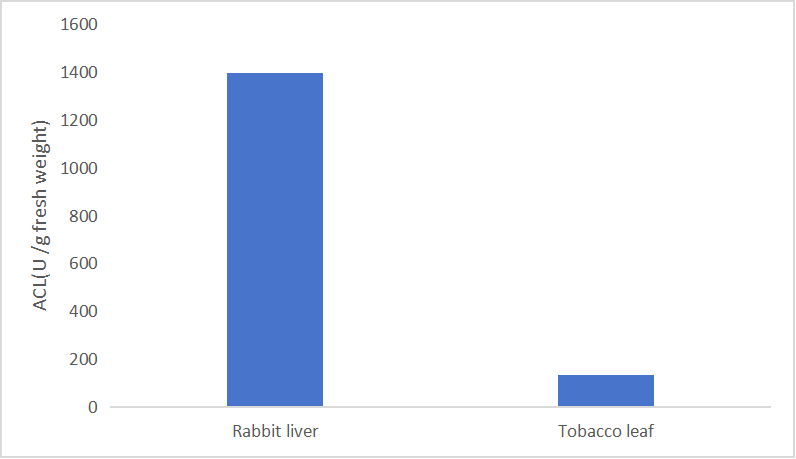
A PhD student in a lipid metabolism lab once showed me her six-month dataset on fatty acid synthase expression, ACC phosphorylation, and SREBP-1c nuclear translocation. It was meticulous Western blotting, the kind that takes three days per membrane and leaves your thumb calloused from the film cassette. But when I asked what ATP citrate lyase was actually doing in her model—not its transcript level, not its protein abundance, but its catalytic output—she paused, then said, “We haven’t measured that. We’re inferring it from the downstream lipogenic markers.” That student is not lazy. She is one of thousands of researchers who have internalized the uncomfortable truth that ACL sits at the most consequential metabolic junction in the cell and yet somehow belongs to the category of enzymes we talk about rather than measure.
ACL is not a peripheral player. It catalyzes the ATP-dependent cleavage of mitochondrial-derived citrate into cytosolic acetyl-CoA and oxaloacetate, and that acetyl-CoA is the two-carbon currency that funds fatty acid synthesis, cholesterol biosynthesis, and histone acetylation. When a cancer cell rewires its metabolism to sustain membrane biogenesis during rapid proliferation, ACL sits squarely in the middle of that transition. When hepatocytes shift from glycogen storage to triglyceride export under hyperinsulinemic conditions, ACL is the rate-limiting bridge between carbohydrate excess and hepatic steatosis. When an inhibitor of ACL enters preclinical development, the question that separates a convincing mechanism-of-action study from a speculative one is not whether ACL protein expression changed. It is whether enzymatic activity dropped, by how much, and over what time course. That question demands an activity measurement. mRNA abundance does not answer it. Protein level does not answer it.
The traditional methods for measuring ACL activity have spent decades systematically alienating the researchers who need them most. The classical approach—a radioisotopic assay tracking ¹⁴C-citrate conversion into ¹⁴C-acetyl-CoA—requires a radioactive substrate license, a scintillation counter, and a waste disposal protocol that your institution’s environmental health and safety office will take four weeks to approve. The alternative spectrophotometric methods that avoid radioactivity tend to couple ACL to NADH oxidation, which means every other NADH-consuming dehydrogenase in a crude lysate becomes a source of background signal. The result is a measurement that faithfully reports total dehydrogenase activity in your sample and loosely correlates with ACL. Neither approach is compatible with the throughput demands of a dose-response experiment across eight drug concentrations and four time points. Neither leaves a postdoctoral fellow with data she would confidently submit to a reviewer.
Abbkine’s CheKine™ Micro ATP Citrate Lyase (ACL) Activity Assay Kit (KTB1252) replaces that landscape with a detection chemistry that is specific, safe, and microplate-ready.
The reaction cascade inside each well is stoichiometrically direct. ACL cleaves citrate—in the presence of ATP and coenzyme A—into acetyl-CoA, oxaloacetate, ADP, and inorganic phosphate. The oxaloacetate is then reduced by malate dehydrogenase in a reaction that consumes one molecule of NADH, and the resulting decrease in absorbance at 340 nm is monitored kinetically. The rate of NADH consumption is directly proportional to ACL activity. No scintillation cocktails. No antibody-based detection steps. No secondary enzymatic cascades that amplify noise faster than signal. The chemistry is a straight enzymatic relay: ACL generates oxaloacetate, malate dehydrogenase consumes NADH, and the 340-nm absorbance drop traces the whole process in real time on a standard UV-capable microplate reader.
The practical implications of that design are cumulative. First, the assay is performed in a 96-well plate, which means a full experiment—samples, negative controls without citrate, positive controls, and a standard curve—can be loaded and read in a single batch. Researchers who previously spent an afternoon processing eight individual cuvettes can now run a complete dose-response matrix before lunch. Second, the absorbance decrease at 340 nm is measured kinetically, not as a single endpoint, which means the linear range of the reaction is verified within each well. Samples that fall outside the optimal range can be identified immediately and diluted for re-assay, rather than generating misleading data that survives until the moment a reviewer asks for individual data points. Third, the kit stores at -20°C and remains stable for six months from receipt, with components shipped on gel packs with blue ice. No reagents that must be reconstituted daily. No coenzyme A stocks that oxidize within a week.
Sample compatibility extends across the biological matrices that metabolism researchers actually use: animal tissues, plant tissues, bacteria, cultured cells, serum, and plasma. The protocol emphasizes that fresh samples yield the best results, and recommends completing the sample preparation step before freezing if the assay cannot be performed immediately. That is an enzymologist’s instruction, not a marketer’s generalization—ACL, like most cytosolic enzymes, loses activity incrementally through freeze-thaw cycles, and the protocol’s acknowledgment of that fact signals genuine biochemical competence rather than formulaic product documentation. For long-term storage, samples can be held at -80°C for up to one month.
The fact that the kit currently shows zero publications in its citation record should not be mistaken for a flaw. It is a recently launched product addressing an enzyme that, until very recently, most researchers elected to skirt rather than confront directly. The technical rationale underpinning the assay—a coupled enzymatic detection system with a kinetic NADH readout at 340 nm—is the same biochemical logic that has anchored gold-standard dehydrogenase enzymology for decades. What has changed is the packaging: a pre-formulated reagent set optimized for microplate throughput, a protocol that does not assume the user has spent five years purifying mitochondrial enzymes, and a detection chemistry that does not require the lab to possess a radioactive materials license. When the first publications citing KTB1252 appear—and they will appear, because interest in ACL as a drug target in cancer and metabolic disease is expanding rapidly—they will have been enabled by exactly this kind of accessible, specific, and reproducible activity measurement tool.
The broader context makes the case for direct ACL activity measurement even more urgent. Pharmacological ACL inhibitors, including bempedoic acid and several preclinical candidates targeting the ACL active site or its regulatory phosphorylation by AKT, are advancing through development pipelines. A compound that inhibits ACL should produce a measurable decrease in ACL enzymatic activity in target tissues. If that decrease cannot be demonstrated directly and quantitatively, the mechanism-of-action argument remains circumstantial, and the dose-response relationship remains inferred from downstream markers that are themselves subject to regulation by pathways entirely unrelated to ACL. A robust activity assay is not a luxury item for a metabolism laboratory. It is one of the few experimental outputs that transforms a correlation into a causal chain.
For researchers who have spent years building mechanistic narratives around ACL function using transcript levels, protein abundance, and lipogenic endpoint measurements, the availability of a straightforward microplate-based activity assay changes the conversation. It is now possible to ask not whether ACL is present, but whether it is working. Not whether its expression changed, but whether its catalytic output responds to a treatment in the direction and magnitude predicted by the hypothesis. Those are the questions that reviewers and funding agencies are increasingly demanding, and they are the questions that KTB1252 was engineered to answer. Quantify the junction. Not the bystanders.
Explore specifications, access the protocol, and place your order here: https://www.abbkine.com/product/chekine-micro-atp-citrate-lyase-acl-activity-assay-kit-ktb1252/





