




GABA Synthesis at Your Fingertips: The CheKine™ Micro GAD Activity Assay Kit for Neural and Plant Research
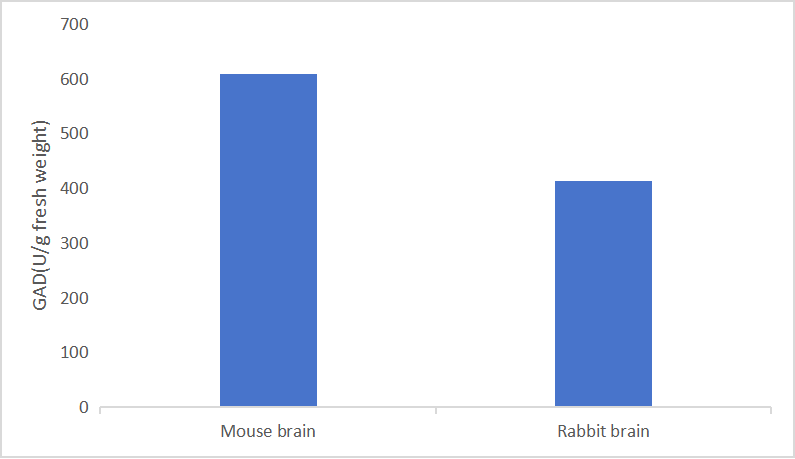
In the intricate circuitry of the mammalian brain, and within the stress-response pathways of plants, the conversion of the excitatory neurotransmitter glutamate to the inhibitory neurotransmitter γ-aminobutyric acid (GABA) is a pivotal metabolic switch. This reaction, catalyzed by the enzyme Glutamate Decarboxylase (GAD), not only governs neuronal excitability, plasticity, and the fine balance between excitation and inhibition but also serves as a critical signaling node in plant development and adaptation to environmental challenges . Dysregulation of GAD activity and GABAergic signaling is implicated in a spectrum of neurological and psychiatric disorders, including epilepsy, anxiety, schizophrenia, and Parkinson's disease . In plants, GABA rapidly accumulates in response to drought, salinity, hypoxia, and pathogen attack, acting as a signaling molecule and osmoprotectant . Therefore, precise quantification of GAD activity is indispensable for neuroscientists probing synaptic function and disease mechanisms, plant biologists studying abiotic stress tolerance, and researchers in the food industry developing GABA-enriched functional foods. The CheKine™ Micro Glutamate Decarboxylase (GAD) Activity Assay Kit (KTB3044) from Abbkine provides a sensitive, convenient, and high-throughput colorimetric microplate method to accurately measure this crucial enzymatic activity. Designed for efficiency, this kit enables researchers to reliably determine GAD activity in complex biological matrices such as brain tissue homogenates, neuronal cell lysates, and plant extracts, accelerating discoveries across multiple life science disciplines.
The Dual Significance of GAD: A Master Regulator in Brain and Botany
Glutamate Decarboxylase exists in multiple isoforms (GAD65 and GAD67 in mammals) and plays non-redundant roles in central nervous system function and plant physiology . In the brain, GAD is the rate-limiting enzyme for GABA synthesis. GAD67 is constitutively active and responsible for basal GABA production, while GAD65 is activated during periods of high synaptic demand, providing rapid, activity-dependent GABA supply . This tight regulation is essential for maintaining neuronal network stability, preventing hyperexcitability, and supporting cognitive functions like learning and memory . Autoantibodies against GAD65 are associated with stiff-person syndrome and certain forms of cerebellar ataxia, highlighting its clinical relevance . In plants, GAD activity is calcium/calmodulin-dependent and is a key responder to environmental stress. The resulting GABA accumulation influences pH regulation, nitrogen metabolism, defense signaling, and overall plant resilience . Consequently, measuring GAD activity is a direct functional readout for: assessing inhibitory neurotransmission integrity in disease models, evaluating the efficacy of potential neuroactive compounds, understanding plant adaptation mechanisms, and optimizing conditions for microbial GABA production.
Assay Principle: A Coupled Enzymatic Reaction for Specific Detection
The CheKine™ Micro GAD Activity Assay Kit utilizes a highly specific, two-step coupled enzymatic reaction that translates GAD activity into a robust colorimetric signal . The principle is elegantly designed to ensure specificity for GABA production:
- GAD Catalyzed Reaction: GAD in the sample decarboxylates its substrate, L-glutamate, producing GABA and carbon dioxide (CO₂).
- GABA Detection Reaction: The generated GABA is then specifically oxidized by the enzyme GABAase (a mixture of GABA transaminase and succinic semialdehyde dehydrogenase). This oxidation reaction concurrently reduces NAD+ to NADH.
- Signal Amplification and Detection: The produced NADH reduces a tetrazolium salt (e.g., WST-8) to a water-soluble formazan dye in the presence of an electron mediator (e.g., 1-Methoxy PMS). This final step generates a strong orange color, the intensity of which—measured by its absorbance at 450 nm—is directly proportional to the amount of GABA produced, and thus to the GAD activity in the original sample. The coupled reaction ensures high specificity by directly linking the signal to the product of the target enzyme.
This method offers significant advantages over indirect techniques, providing excellent sensitivity, low background interference, and compatibility with standard microplate readers, making it ideal for complex tissue and cell lysates.
Key Features and Advantages of the CheKine™ Micro GAD Assay Kit
• High Specificity and Sensitivity: The coupled enzymatic detection system specifically measures GABA, the direct product of GAD, minimizing interference from other sample components. The signal amplification provides high sensitivity, suitable for samples with low enzymatic activity.
• Convenient Microplate Format: The 96-well plate design allows for the simultaneous analysis of up to 96 samples, blanks, and standards, enabling high-throughput screening, detailed kinetic studies, and processing of large experimental cohorts with exceptional efficiency and reproducibility.
• Straightforward and Optimized Protocol: The assay features a user-friendly workflow. After sample preparation, it involves adding a single, pre-mixed Working Reagent, incubating at 37°C, and measuring the endpoint or kinetic absorbance. This "add-mix-measure" approach saves time and reduces pipetting errors.
• Broad Sample Compatibility: The kit is validated for a diverse range of sample types, offering great flexibility for interdisciplinary research:
◦   Neural Tissues: Brain region homogenates (cortex, hippocampus, cerebellum), spinal cord.

◦   Cellular Samples: Lysates from primary neurons, neuronal cell lines, glial cells.

◦   Plant Tissues: Leaf, root, or seed extracts under control and stress conditions.

◦   Microbial/Bacterial Lysates: For strains engineered for GABA production.
• Reproducible and Ready-to-Use: All reagents are pre-formulated and quality-controlled to ensure low batch-to-batch variability and consistent performance. The kit includes Assay Buffer, Substrate (L-Glutamate), Cofactor (Pyridoxal 5'-phosphate, PLP), Enzyme Mix (GABAase), NAD+, Probe, and detailed instructions for reliable results.
• Comprehensive Data Output: The assay allows for the calculation of GAD activity in absolute units (e.g., mU/mL or mU/mg protein), facilitating direct comparison across experiments and publications.
Diverse Applications Across Research Fields
- Neuroscience and Neurological Disease Research: Investigate alterations in GABAergic signaling in models of epilepsy, anxiety, depression, autism, and neurodegenerative diseases. Measure GAD activity changes in response to pharmacological treatments or genetic manipulations.
- Psychopharmacology and Drug Discovery: Screen compound libraries for modulators of GAD activity to identify potential novel therapeutics for disorders characterized by GABAergic dysfunction.
- Plant Stress Physiology and Agriculture: Quantify GAD activation and GABA accumulation in crops (e.g., rice, tomato, Arabidopsis) exposed to drought, salt, cold, or flooding stress, to understand tolerance mechanisms and guide breeding strategies.
- Food Science and Functional Food Development: Monitor GAD activity in fermenting foods (e.g., kimchi, yogurt, sourdough) or in microorganisms used to produce GABA-enriched beverages and supplements.
- Basic Biochemistry and Enzyme Characterization: Determine kinetic parameters (Km, Vmax) of purified GAD isoforms from different sources and study the effects of pH, temperature, and potential inhibitors/activators.
- Developmental Biology: Profile GAD activity during brain development or plant organogenesis to understand its role in maturation and differentiation processes.
Streamlined Workflow for Efficient Analysis
Step 1: Sample Preparation. Homogenize brain tissue or plant material in ice-cold assay buffer or a compatible extraction buffer. Lyse cultured cells using a gentle detergent. Centrifuge samples at high speed (e.g., 10,000 x g) at 4°C to remove debris. Keep supernatants on ice. Determine protein concentration for normalization.
Step 2: Reaction Setup. Prepare the Working Reagent according to the protocol. Aliquot samples, blanks (assay buffer), and GABA standards (for a calibration curve, if quantifying absolute GABA production) into a clear 96-well microplate.
Step 3: Incubation and Measurement. Add the Working Reagent to initiate the reaction. Mix gently, cover the plate to prevent evaporation, and incubate at 37°C for 30-60 minutes. The orange color will develop. Measure the absorbance at 450 nm (A450) using a microplate reader.
Step 4: Calculation of GAD Activity. Calculate the net A450 for each sample by subtracting the blank value. Using the standard curve generated from known GABA concentrations, determine the amount of GABA (in nmol) produced in each well. GAD activity is then calculated as: Activity (mU/mL) = (Amount of GABA produced (nmol)) / (Reaction time (min) Sample volume (mL) 1000). To normalize to protein content, divide by the protein concentration (mg/mL) to express activity as mU/mg protein.
Why the CheKine™ Micro GAD Activity Assay Kit is a Research Essential
• Bridges Neuroscience and Plant Biology: This versatile kit serves the distinct yet methodologically similar needs of neurobiologists and plant physiologists, providing a common, reliable tool to study GABA synthesis in different kingdoms of life.
• Delivers Functional Insights: It moves beyond measuring static GABA levels to provide a dynamic readout of the enzymatic activity that controls its production, offering deeper mechanistic understanding.
• Maximizes Research Output: The high-throughput capability and simple protocol free up valuable researcher time, allowing for more experimental conditions and replicates, leading to more robust and publishable data.
• Powered by Abbkine Reliability: As part of the trusted CheKine™ portfolio, this kit is backed by rigorous validation, ensuring that your measurements of this critical enzymatic activity are accurate and dependable.
Decode the synthesis of the brain's primary brake and a plant's stress signal with precision and ease. The CheKine™ Micro Glutamate Decarboxylase (GAD) Activity Assay Kit (KTB3044) is your sensitive, specific, and high-throughput solution for quantifying a central metabolic enzyme in health, disease, and environmental adaptation.
Product Reference: KTB3044 – CheKine™ Micro Glutamate Decarboxylase (GAD) Activity Assay Kit
Learn more and order: https://www.abbkine.com/product/chekine-micro-glutamate-decarboxylase-gad-activity-assay-kit-ktb3044/





