




Human Protein Wnt-7a (WNT7A) ELISA Kit (KTE60019)
WNT7A Quantification in Developmental Biology Research
The WNT gene family encodes secreted signaling proteins that regulate embryonic development, cell fate determination, and tissue patterning. WNT7A specifically plays essential roles in limb development, uterine morphogenesis, and angiogenesis.
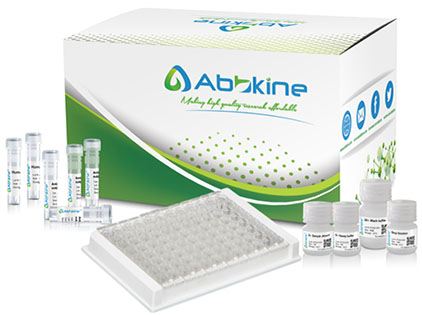
Abbkine's Human Protein Wnt-7a (WNT7A) ELISA Kit (KTE60019) enables precise quantification of this critical signaling molecule in human samples. Here's how researchers across different fields are putting it to work.
Developmental Biology: Mapping WNT7A Signaling in Embryogenesis
WNT7A is a key regulator of limb bud formation and axis specification during early development. Researchers studying developmental pathways use this kit to:
- Quantify WNT7A secretion in embryonic stem cell differentiation models
- Monitor WNT7A expression in organoid cultures (lung, limb, uterus)
- Correlate WNT7A levels with developmental stage in tissue samples
- Validate WNT7A knockdown or overexpression in gene editing experiments
The sandwich ELISA format delivers quantitative data from serum, plasma, or cell culture supernatants—ideal for both in vivo and in vitro developmental models.
Cancer Research: WNT7A as a Tumor Suppressor and Oncogene
WNT7A has dual roles in cancer—acting as a tumor suppressor in some contexts and an oncogene in others. This kit supports cancer researchers by enabling:
- Quantification of WNT7A in cancer cell line conditioned media
- Monitoring WNT7A levels in patient serum/plasma as a potential biomarker
- Assessing WNT7A secretion in 3D culture and spheroid models
- Correlating WNT7A expression with metastatic potential and prognosis
The high sensitivity and excellent specificity ensure that WNT7A signals aren't masked by cross-reactivity with other WNT family members.
Reproductive Biology: Uterine and Placental Research
WNT7A is essential for uterine development and placentation. Reproductive biologists use this kit to:
- Quantify WNT7A in endometrial and decidual cell cultures
- Monitor WNT7A secretion in trophoblast and placental models
- Study WNT7A's role in implantation and pregnancy maintenance
- Investigate WNT7A dysregulation in reproductive disorders
Sample flexibility—serum, plasma, cell culture supernatants—makes this kit adaptable to various experimental systems.
Angiogenesis and Vascular Research
WNT7A promotes angiogenesis through endothelial cell signaling. Vascular researchers leverage this kit to:
- Quantify WNT7A in endothelial cell culture models
- Monitor WNT7A levels in ischemic tissue models
- Study WNT7A's role in vascular development and repair
- Assess WNT7A as a therapeutic target in vascular disease
Why Choose This Kit for Your WNT7A Research?
| Feature | Benefit |
|---|---|
| Sandwich ELISA | Quantitative, specific detection |
| Human reactivity | Directly applicable to human samples |
| Multiple sample types | Serum, plasma, cell culture supernatants |
| High specificity | No significant cross-reactivity with WNT analogues |
| Complete components | Ready-to-use—no additional reagents needed |
| Biotin-streptavidin HRP | Enhanced signal amplification |
Kit Components at a Glance
- Human Protein Wnt-7a microplate
- Human Protein Wnt-7a standard
- Human Protein Wnt-7a detect antibody
- Streptavidin-HRP
- Standard diluent, assay buffer, HRP substrate, stop solution, wash buffer, plate covers
📌 Reference Link: Human Protein Wnt-7a (WNT7A) ELISA Kit — KTE60019





