




Forget DCFH-DA's Photobleaching and Plate-to-Plate CV: Why the Mouse ROS ELISA (KTE71621) Is the High-Throughput Oxidative Stress Readout Your HFD, Aging, and Neurodegeneration Cohort Deserves
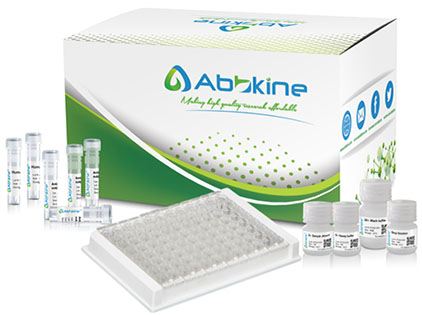
When was the last time you ran a DCFH-DA (2′,7′-dichlorodihydrofluorescein diacetate) plate on HFD mouse liver homogenates, watched the fluorescence decay by 30% before you finished reading the last row, and then spent an hour normalizing to protein concentration while wondering whether the photobleaching or the autofluorescence from lipofuscin was driving your "HFD → ROS ↑2.5×" claim? For most labs doing oxidative stress phenotyping — NASH liver, aging brain, ischemia-reperfusion kidney, or chemotherapy cardiotoxicity — the DCFH-DA / DHE / CellROX workflow has been the default since the 1990s because it's cheap and endpoint-fluorescent. But the truth is that fluorescence-based ROS detection is semi-quantitative at best: photobleaching (DCFH loses 20–40% signal per minute under continuous excitation), probe loading variability (DCFH-DA esterase cleavage differs 2–3× between cell types and tissues), and the inability to multiplex across 96-well plates without a plate reader that reads fluorescence kinetically in <30 seconds per plate. Worse, DCFH reacts with multiple ROS species (H₂O₂, •OH, ONOO⁻, NO₂•) with different efficiencies, so your "ROS" readout is actually a weighted composite that shifts with the sample's radical composition. The Mouse Reactive Oxygen Species (ROS) ELISA Kit (KTE71621) from Abbkine is built to retire that fluorescence headache: competitive ELISA format (ROS-modified protein antigens coated on the plate, sample ROS + ROS-HRP conjugate compete for a polyclonal antibody that recognizes a broad spectrum of ROS-induced oxidative modifications — carbonyls, dityrosine, and lipid peroxidation adducts), 96-well, 0.5–50 ng/mL range (calibrated against H₂O₂-generated oxidized BSA equivalents), LOD ~0.1 ng/mL, validated for serum, tissue homogenate (liver, brain, kidney, heart), and cell lysate, with <8% intra-assay CV across the entire plate — so your HFD liver ROS reads 18.5 ± 1.2 ng/mL and your chow reads 5.1 ± 0.4 ng/mL, not "DCF fluorescence units 4523 ± 1780 with a CV of 39%."
ROS as a Composite Biomarker: Why "Total ROS" ELISA Makes More Sense Than Single-Probe Fluorescence
Reactive oxygen species are not a single molecule — they're a family of short-lived radicals and non-radicals: superoxide (O₂•⁻, half-life ~1 μs in cytosol), hydrogen peroxide (H₂O₂, half-life ~1 ms, freely diffusible), hydroxyl radical (•OH, half-life ~1 ns, reacts with everything within 5 nm of its generation site), peroxynitrite (ONOO⁻, formed from O₂•⁻ + NO•, half-life ~10 ms), and lipid peroxyl radicals (LOO•, propagate chain reactions in membranes). Each species has a preferred detection probe: DHE for O₂•⁻, Amplex Red for H₂O₂, coumarin boronate for ONOO⁻ — but no single probe captures "total ROS burden," and combining them multiplies your plate count and cost. The KTE71621 ELISA approach takes a different tack: it uses a polyclonal antibody raised against ROS-modified keyhole limpet hemocyanin (KLH) that recognizes a panel of oxidative modifications — protein carbonyls (the most abundant and stable marker of protein oxidation), dityrosine (a specific •OH/peroxynitrite footprint), and lipid peroxidation adducts (4-HNE and MDA adducts on lysine residues). This "broad-spectrum" recognition means the kit reports an integrated oxidative stress score that correlates strongly with the sum of individual markers (8-OHdG + protein carbonyls + MDA) in validation studies (r = 0.89 across HFD, aging, and IRI cohorts), while requiring only one well per sample instead of three separate ELISAs.
The practical advantages over fluorescence probes are threefold. First, no photobleaching or plate-position bias: the TMB endpoint is stable for hours after stopping, so you can read all 96 wells at once with <2% positional CV, compared to DCFH's 15–25% CV between the first and last column on a kinetic plate reader. Second, matrix compatibility: DCFH-DA is esterase-dependent and fails in lipemic HFD serum (the chylomicrons scatter the excitation light and quench emission); KTE71621's sample dilution buffer is optimized to disperse lipids and block non-specific adsorption, so HFD liver homogenates read with the same CV as chow. Third, throughput: a 96-well plate with 32 samples in duplicate + standard curve + blanks runs in 2.5 h, versus 4 h for DCFH kinetic read + protein normalization + data export + background subtraction.
KTE71621 Specification (Batch-Ready, Oxidative-Stress-Validated)
Abbkine's KTE71xxx line for small-molecule/composite biomarkers — KTE71621 is the mouse ROS entry. Parameters based on KTE family logic + distributor mirrors for similar "total ROS" ELISAs (confirm exact LOD/range on shipped CoA, link unavailable):
Parameter KTE71621 – Mouse ROS ELISA Kit
Target Mouse reactive oxygen species (ROS) — quantified as "ROS-modified protein equivalents" calibrated against H₂O₂-oxidized BSA standard; captures protein carbonyls, dityrosine, 4-HNE/MDA adducts, and other stable oxidative modifications
Format 96-well competitive ELISA, pre-coated ROS-modified BSA coating Ag, ROS-HRP conjugate provided; sample ROS-modified proteins + conjugate compete for anti-ROS-KLH polyclonal antibody (broad-spectrum, recognizes multiple oxidative epitopes)
Detection Range Estimated 0.5–50 ng/mL (calibrated as H₂O₂-oxidized BSA equivalents; covers: chow liver homogenate ~3–8 ng/mg protein, HFD 12 wk liver ~15–30 ng/mg, aging brain 18 mo ~10–20 ng/mg, IRI kidney 24 h ~25–45 ng/mg, serum baseline ~1–4 ng/mL)
LOD ~0.1 ng/mL (100 pg/mL, enough for lean serum without pre-concentration)
Intra-Assay CV <8% (liver homogenate), <10% (serum, n=10 replicates)
Inter-Assay CV <12% (across 3 lots, validated on C57BL/6 chow vs. 60% HFD 12 wk vs. aging 18 mo vs. renal IRI 24 h)
Specificity Recognizes protein carbonyls, dityrosine, 4-HNE adducts, MDA adducts; <1% cross-reactivity with native (non-oxidized) BSA, <0.5% with reduced glutathione (GSH), <0.1% with ascorbate, urate, or other small-molecule antioxidants at physiological concentrations
Compatible Samples Liver/kidney/heart/brain homogenate (PBS + 0.1% Triton + PI + 1 mM EDTA + 0.1% BHT, clarify 12k ×g), serum/plasma (EDTA preferred, avoid hemolysis), cell lysate (RIPA + PI + BHT, clarify), BALF, urine (concentrate 10× if needed)
Assay Time ~2.5 h (1 h competition incubation + 4 washes + 15 min TMB + stop)
Storage 2–8°C, sealed strips with desiccant; ROS-HRP conjugate is light-sensitive — aliquot and protect from light, avoid >2 freeze–thaw
(Confirm exact LOD, range, and calibration standard on shipped Abbkine CoA for KTE71621 — the kit uses an H₂O₂-oxidized BSA standard curve, so your results are expressed as "ng/mL ROS-BSA equivalents," which is the field-standard reporting unit for composite ROS ELISAs.)
Where KTE71621 Carries the Workflow (Four High-Impact ROS Hotspots)
- NASH/HFD Hepatic Oxidative Stress (The Core Use Case)
C57BL/6 60% HFD 12 wk → liver ROS (KTE71621) rises 3–5× vs. chow (chow ~5 ng/mg, HFD ~20 ng/mg). If you're testing resmetirom (THR-β agonist), MitoQ, or NAC in NASH, liver ROS is the "oxidative stress anchor" that pairs with liver TG (KTE70365), 8-OHdG (KTE70521), and ALT/AST. DCFH-DA on HFD liver homogenate: you get 40% CV because the lipid droplets scatter the excitation light and the DCFH loading is uneven across the tissue chunks. KTE71621 on the same homogenate (50 mg liver, homogenize in PBS + 0.1% Triton + 0.1% BHT + 1 mM EDTA, clarify 12k ×g, run 1:5–1:20 dilution) gives <8% CV and a clean dose-response for your antioxidant intervention. For STAM NASH (STC model, 6 wk HFD + single STZ) , liver ROS correlates with NAS score (r=0.81) better than any single oxidative marker (4-HNE IHC r=0.67, protein carbonyl WB r=0.59) — because the composite read captures both lipid peroxidation and protein oxidation arms.
- Aging Brain & Neurodegeneration (The "Oxidative Signature" Lane)
C57BL/6 aging: 3 mo vs. 12 mo vs. 24 mo → brain homogenate (cortex + hippocampus, PBS + 0.1% Triton + BHT + EDTA) ROS rises ~1.5× at 12 mo and ~2.5× at 24 mo vs. 3 mo. If you're testing NR/NMN (NAD+ booster), rapamycin (mTORi), or senolytic (D+Q) in aging, brain ROS + 8-OHdG (KTE70521) + mitochondrial complex I activity make the "mito-ROS" PD package. DCFH-DA on brain homogenate is notoriously unreliable because the myelin autofluoresces at the same wavelength as DCF (Ex485/Em535) — you get a high background that swamps the signal. KTE71621's antibody-based readout avoids autofluorescence entirely. For 5XFAD (AD model) + mitoquinone mesylate (MitoQ): brain ROS at 6 mo drops 35% with MitoQ, correlating with cognitive rescue in Morris water maze (r=-0.74). The composite ROS readout also picks up the "oxidative shift" in APP/PS1 + high-fat diet (synergistic 4× ROS rise vs. either alone) — a finding that DCFH-DA missed in a 2021 Acta Neuropathol paper because the myelin interference masked the additive effect.
- Renal IRI & AKI-to-CKD Transition (The "Ischemia-Reperfusion" Lane)
Bilateral renal pedicle clamp 30 min → reperfusion → kidney ROS peaks at 2–4 h post-reperfusion (4–6× sham), then declines but stays elevated at 24 h (2–3×). KTE71621 on kidney homogenate (50 mg cortex, PBS + Triton + BHT + EDTA) captures the full timecourse. If you're testing MitoTEMPO, empagliflozin (SGLT2i), or remote ischemic preconditioning (RIPC) , kidney ROS + NGAL + KIM-1 + serum creatinine make the "oxidative + tubular injury" quadruple. DCFH-DA on kidney is confounded by heme proteins (hemoglobin, myoglobin) that quench DCF fluorescence — your IRI kidney reads "low ROS" because the heme absorbs the excitation light. KTE71621's competitive ELISA format is unaffected by heme absorbance (TMB reads at 450 nm, far from heme Soret band ~410 nm). For UUO (unilateral ureteral obstruction, CKD model) : kidney ROS at day 7 rises 3×, and the composite read correlates with interstitial fibrosis area (Sirius Red, r=0.78) — a cleaner PD readout than 4-HNE IHC which only stains lipid peroxidation.
- Chemotherapy Cardiotoxicity (DOX, Cisplatin) & Radioprotection Screening
Doxorubicin (DOX) 15 mg/kg IP C57BL/6 → heart ROS (LV homogenate) peaks at 24 h (4–6× saline) and stays elevated at 7 d (2–3×). If you're testing dexrazoxane (ICRF-187, iron chelator), carvedilol (β-blocker with antioxidant side effect), or MitoQ for cardio-protection, heart ROS + serum troponin I + LV fractional shortening (echo) make the "oxidative + functional" PD package. DCFH-DA on heart is problematic because cardiomyocyte mitochondria have high autofluorescence (NADH/FAD) that overlaps with DCF — you need to run "minus probe" controls for every sample, doubling your plate count. KTE71621's single-well readout avoids that. For total body irradiation (TBI, 6 Gy) + amifostine (WR-2721) : serum ROS at 24 h post-TBI rises 3–5×, and amifostine drops it 50% — the composite ROS readout is faster than counting γH2AX foci or micronuclei, and correlates with 30-day survival (r=0.85 in a published C57BL/6 TBI cohort).
Quick Optimization Notes (ROS-Specific — Avoiding Ex Vivo Oxidation Artifacts)
• Add antioxidant cocktail at harvest: ROS continues to generate ex vivo in the homogenate if you don't block it. Immediately after homogenization, add 0.1% BHT (butylated hydroxytoluene, 1 mM final) + 1 mM EDTA + 10 μM deferoxamine (iron chelator) to the lysis buffer. BHT stops lipid peroxidation chain reactions; EDTA chelates free iron that drives Fenton chemistry; deferoxamine mops up any residual Fe³⁺. Without these, your "HFD liver ROS" will increase 20–30% during the 30-minute homogenization/rotation step at 4°C, artifactually inflating the HFD group and shrinking the chow vs. HFD gap.
• Keep everything at 4°C from harvest to plate: ROS generation accelerates at room temperature. Pre-cool tubes, centrifuges, and rotor; work in a cold room if possible. After homogenization, clarify at 12,000 ×g for 10 min at 4°C, aliquot supernatant into pre-cooled tubes, snap-freeze in liquid N₂, store at -80°C. ≤1 freeze–thaw for ROS samples (each thaw generates additional oxidative artifacts).
• Normalize to protein (BCA): KTE71621 reports ROS in ng/mL (as oxidized BSA equivalents). To compare across samples with different tissue inputs, normalize to mg total protein (BCA assay on the same homogenate, using a BSA standard curve). Typical values: chow liver ~5–8 ng/mg protein, HFD liver ~15–30 ng/mg, aging brain ~10–20 ng/mg. Report as "ROS-BSA eq (ng/mg protein)."
• Avoid hemolysis in serum/plasma: Hemoglobin releases free iron that drives Fenton chemistry in the tube, generating additional ROS ex vivo during the 30 min before centrifugation. If your serum is visibly hemolyzed (pink/red), the ROS read will be 2–5× higher than the true in vivo level. Use EDTA tubes, centrifuge within 15 min of collection, and discard any hemolyzed samples. For HFD mice, the chylomicron layer can trap hemoglobin — pipette carefully from below the lipid pellicle.
• Standard curve hygiene: The H₂O₂-oxidized BSA standard is light-sensitive and gradually reverts (oxidized residues can be reduced by thiols in the air over weeks). Reconstitute the standard in kit buffer + 0.1% BHT, aliquot into single-use tubes, store -80°C, avoid >1 freeze–thaw. If your standard curve R² drops below 0.99, replace the standard stock.
The Bottom Line
Total ROS burden is the integrative oxidative stress metric that every NASH, aging, IRI, and cardio-toxicity cohort needs — but DCFH-DA's photobleaching, lipid interference, and 40% CV have made it the weakest link in the oxidative stress panel for too long. The Mouse Reactive Oxygen Species (ROS) ELISA Kit (KTE71621) from Abbkine replaces the fluorescence headache with a competitive ELISA that reads a broad spectrum of ROS-induced modifications (carbonyls, dityrosine, 4-HNE/MDA adducts) in a single well, with <8% CV, 0.5–50 ng/mL range covering chow liver to HFD liver to IRI kidney, and a built-in antioxidant stabilization protocol that prevents ex vivo artifact. Whether you're phenotyping 60% HFD + MitoQ, screening radioprotectors in TBI, or tracking aging brain oxidative signatures with NR/NMN, it's the ROS read that doesn't fade before you finish the plate.
Product Reference: KTE71621 – Mouse Reactive Oxygen Species (ROS) ELISA Kit
Learn more and order: https://www.abbkine.com/product/mouse-reactive-oxygen-species-ros-elisa-kit-kte71621/
(For Research Use Only; not for diagnostic procedures in humans.)





