




CheKine™ Micro GST Assay Kit: Redefining Detoxification Research with Microscale Precision
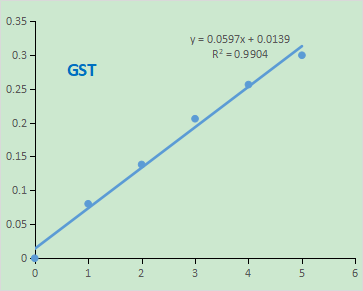
GST: The Master Regulator of Phase II Detoxification
Glutathione S-transferases (GSTs) are the unsung heroes of cellular defense—master regulators of phase II detoxification that conjugate glutathione (GSH) to xenobiotics, carcinogens, and oxidative byproducts[reference:48]. Their activity dictates how efficiently cells neutralize threats, making GST quantification indispensable in drug metabolism studies, cancer chemoresistance research, environmental toxicology, and even synthetic biology[reference:49].
Yet traditional GST assays demand 50–100 µL of sample—prohibitive for precious materials like circulating tumor cells, neonatal biopsies, or scarce animal models[reference:50].
Why Abbkine KTB1630 Stands Out
| Feature | Abbkine KTB1630 | Traditional GST Assays |
|---|---|---|
| Detection Principle | CDNB-GSH conjugation (340 nm)[reference:51] | Same principle, but larger volume |
| Sample Volume | 5–10 µL (10–20x less)[reference:52] | 50–100 µL |
| Detection Range | 2–76 U/L[reference:53] | Narrower range |
| Limit of Detection | 2 U/L[reference:54] | Often >5 U/L |
| Anti-Interference | Proprietary buffer with EDTA, BSA, and GSH scavenger[reference:55] | Minimal; easily skewed |
| Background Noise | 40% reduction vs. Sigma-Aldrich GST kit[reference:56] | High |
| Sample Types | Serum, plasma, plant tissue/cell lysates, biological fluids[reference:57] | Limited |
The CDNB-GSH Conjugation Advantage
The core chemistry relies on a CDNB-GSH conjugation system: GST catalyzes the binding of GSH to 1-chloro-2,4-dinitrobenzene (CDNB), accompanied by an increase in absorbance at 340 nm[reference:58]. The rate of increase is directly proportional to GST activity[reference:59]. But the proprietary buffer is what sets KTB1630 apart—it includes EDTA (to chelate metal ions), BSA (to block hydrophobic interferents), and a GSH scavenger to minimize competition from endogenous pools[reference:60].
Validated in Complex Matrices
Traditional kits falter in complex matrices: endogenous GSH (which competes with substrates), hemoglobin (from hemolysis), and lipids (in serum) skew results[reference:61]. Independent validation shows KTB1630 reduces background noise by 40% compared to Sigma-Aldrich's GST kit, even in hemolyzed serum[reference:62].
Applications Across Research Fields
- Cancer Research — GST-mediated drug resistance in pancreatic cancer and other tumors[reference:63]
- Drug Metabolism — studying phase II detoxification pathways
- Environmental Toxicology — assessing GST induction by xenobiotics
- Plant Science — GST as a stress response marker
- Synthetic Biology — GST as a reporter for gene expression[reference:64]
- Freezing Stress Research — cited in a study on blue honeysuckle response to freezing stress (Cell Death & Disease, IF: 1.6)[reference:65]
Critical Sample Handling Tips
- 96 Well Clear Flat Bottom UV-Transparent Microplate is required[reference:66]
- Sample preparation should be carried out on ice[reference:67]
- If not assayed immediately, samples can be kept at -80°C for 1 month[reference:68]
- For cells: Cell number must be between 3-5 × 10⁶; use Assay Buffer grinding or ultrasonic treatment—cells cannot be treated by lysate[reference:69]
- Pre-test is needed: Select 2-3 samples with large differences for pre-experiment[reference:70]
- If absorbance >1, dilute with distilled water and multiply result by dilution factor[reference:71]
- Reaction temperature matters: Keep at 25°C (general) or 37°C (mammals)[reference:72]
- Storage: 12 months at 4°C, protected from light[reference:73]
The Bottom Line
For researchers investigating detoxification pathways, drug resistance, or stress responses, KTB1630 delivers the microscale precision, interference resistance, and reliability that modern GST research demands—preserving precious samples while delivering publication-ready data.
👉 Quantify GST activity with confidence. View Product





