




The Protease That Cuts Through Your Protein Expression Problems: A Closer Look at Abbkine's Ulp1 (SUMO Protease)
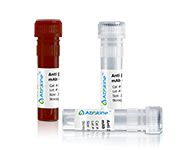
Let's be honest—if you've spent any time in the weeds of recombinant protein expression, you know the drill. You clone your gene of interest, pick the perfect vector, transform it into E. coli, and after all that induction and purification, you're staring at an SDS-PAGE gel that looks like a smear. Or worse, you see a nice clean band at the wrong size, or nothing at all because your protein decided to aggregate into an insoluble mess. It's a frustration so common it's practically a rite of passage. One of the most elegant solutions to come along in recent years is the SUMO fusion system, and right at the heart of that system is a very specific enzyme: the Ulp1 protease. Abbkine's recombinant Ulp1 (SUMO Protease/Ulp1 peptidase), catalog number PRP3001, is one of those workhorse reagents that quietly makes the impossible a little more possible.
The beauty of the SUMO system, and why Ulp1 is so critical, comes down to recognition and precision. Unlike other common fusion tags like GST or MBP, which often require harsh conditions or leave behind unwanted amino acids after cleavage, the SUMO tag does something special. As the product background explains, Ulp1 is a highly active cysteine protease from yeast (Saccharomyces cerevisiae) that doesn't just look for a specific amino acid sequence. Instead, it recognizes the three-dimensional structure of the SUMO protein (Smt3). This structural recognition is key—it means the cleavage is incredibly specific and efficient. When you fuse SUMO to your target protein, it often acts as a magic chaperone, helping your difficult protein fold correctly and stay soluble. Then, when you're ready to remove the tag, Ulp1 snips it off cleanly, right at the junction, leaving your native protein sequence intact. No extra glycines or artifacts. It's a level of finesse that really matters for downstream applications like structural studies or enzyme assays.
So, what exactly are you getting with the Abbkine Ulp1? The details matter, especially when you're planning a purification strategy. This recombinant protein is derived from the ULP1 isoform (UniProt ID Q02724), specifically expressing amino acids 403 to 621. That's the core catalytic domain, which is the part that does all the work. They've tacked on a poly-6xHis tag on both ends, which is a smart move for two reasons. First, it helps with the initial purification of the protease itself. Second, and more importantly for you, it means after Ulp1 has done its job cleaving your SUMO fusion protein, you can easily remove the protease from your sample by passing it over a nickel column. The protease sticks, your clean target protein flows through. The predicted molecular mass is about 28.7 kDa, and the purity is quoted at >95% by SDS-PAGE. In the lab, that kind of purity translates directly to less background noise and fewer unexpected degradation products.
Looking at the product page, one of the most reassuring details is that this enzyme has already been cited in three publications. Now, three might not sound like a huge number, but for a specialized reagent like a SUMO protease, it's a solid vote of confidence from the research community. Take one of the cited studies, for example—a paper in Oxidative Medicine and Cellular Longevity (IF: 6.9) investigating a bacteriophage protein as an enolase inhibitor. The fact that researchers tackling complex protein-protein interaction studies chose this specific Ulp1 to process their samples tells you it's reliable enough for high-stakes work. It's not just a reagent sitting on a shelf; it's a tool that has proven itself in the hands of other scientists, which, let's face it, is the only validation that really counts when you're trying to get your own paper published.
If you're considering adding this to your workflow, there are a few practical things to keep in mind based on the specs. The enzyme comes lyophilized, which is great for long-term stability, but the storage instructions are strict: keep it desiccated below -80°C. That tells you it's a bit sensitive, so you'll want to aliquot it upon resuspension to avoid those damaging freeze-thaw cycles. The formulation is a simple, sterile buffer—20 mM Tris, 500 mM NaCl, pH 8.0—which is pretty standard and should be compatible with most of your common protein buffers post-elution. And because it's his-tagged, the cleanup step is built right in. For anyone wrestling with a protein that just won't behave, having a clean, specific tool like the Abbkine Ulp1 in your arsenal can be the difference between months of optimization and a straightforward, successful purification. You can check out the full product details for the Abbkine Ulp1 (SUMO Protease/Ulp1 peptidase) (PRP3001) here: https://www.abbkine.com/product/ulp1-sumo-protease-ulp1-peptidase-prp3001/ .





