




The Unseen Anchor of Reliable Science: Why the Anti-β-Actin Mouse Monoclonal Antibody (1C7) is a Laboratory Cornerstone
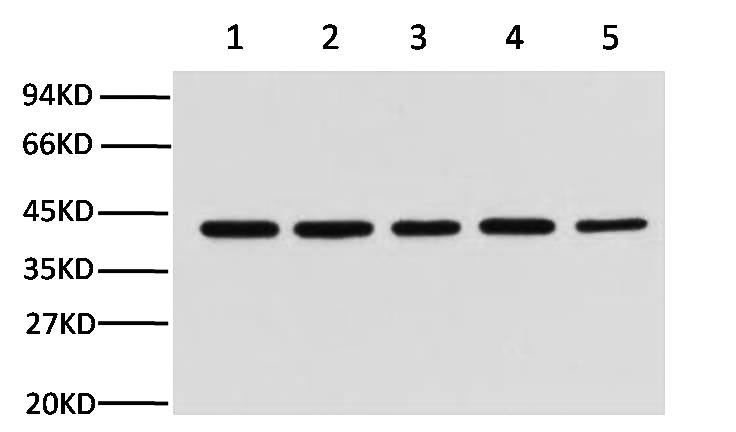
In the daily workflow of a molecular biology laboratory, few tasks are as routine, yet as fundamentally important, as confirming equal protein loading across the lanes of a Western blot. It is a step so common it can become almost automatic—probing for a housekeeping protein to normalize your target signal and validate that the differences you observe are biologically real, not artifacts of uneven sample transfer or loading error. For decades, β-actin has stood as a primary sentinel in this role, a ubiquitous cytoskeletal protein whose expression is presumed constant. However, the quality of this critical control step is entirely dependent on the reagent used to detect it. The Anti-β-Actin Mouse Monoclonal Antibody (1C7) from Abbkine (ABL1010) is not merely another antibody; it is a precisely engineered tool designed to provide the consistency and specificity that rigorous, reproducible science demands.
The selection of an appropriate loading control antibody is a decision that carries significant downstream consequences for data interpretation. A poorly characterized antibody can yield non-specific bands, variable signal, or fail to recognize its target across different species, introducing an unquantifiable variable into experimental normalization. The 1C7 clone, however, is built upon a foundation of broad reactivity and high titer. Its documented ability to recognize β-actin from an extensive range of species—including human, mouse, rat, chicken, rabbit, dog, hamster, monkey, and even insect—makes it an exceptionally versatile reagent for laboratories working with diverse model organisms or comparative biology. The suggested starting dilution for western blotting at 1:10000 is particularly noteworthy; this high titer not only conserves reagent but also minimizes background, contributing to cleaner, more interpretable results. The accompanying immunohistochemistry images on human lung, mouse liver, and rat testis tissues further validate its performance across different applications and tissue contexts.
Beyond its technical specifications, the most compelling evidence for the reliability of the Anti-β-Actin (1C7) antibody lies in its widespread adoption by the research community. The product page lists an impressive 71 publications citing this specific clone, a figure that speaks volumes about its performance in real-world laboratory settings. A closer examination of these citations reveals its use across a vast spectrum of research areas, from high-impact studies in journals like Nature Communications (investigating the role of TRAF6 in cardiac hypertrophy) and the Journal of the American Chemical Society (exploring gene expression in colon carcinoma), to specialized work in plant stress responses, neurobiology, and toxicology. This is not a reagent used in only one type of experiment; it is a trusted tool for normalizing data in cancer biology, immunology, plant science, and beyond. Each citation serves as an independent validation point, reinforcing the antibody's utility and the confidence researchers place in its signal.
The foundational role of β-actin as a loading control, however, carries an implicit responsibility to verify its stable expression under the specific conditions of each experiment. While the 1C7 antibody provides a reliable means of detection, the onus remains on the investigator to confirm that β-actin levels are indeed constant across their experimental groups, particularly in paradigms involving cytoskeletal rearrangement, major cellular stresses, or treatments that might directly affect actin dynamics. The antibody is the tool for making this critical assessment; the interpretation of its signal is the art of the scientist. The availability of a well-validated monoclonal reagent like 1C7 empowers researchers to make this determination with confidence, ensuring that the normalization step strengthens, rather than weakens, the overall conclusions of the study. For any laboratory seeking a dependable, high-performance workhorse for protein normalization, the extensive validation and community trust associated with this antibody make it a compelling and prudent choice. To explore its specifications and citation history further, you can access the product page for the Anti-β-Actin Mouse Monoclonal Antibody (1C7) (ABL1010) here: https://www.abbkine.com/product/anti-%ce%b2-actin-mouse-monoclonal-antibody-1c7-abl1010/ .





