




The Silent Partner in Immunodetection: A Critical Look at SuperKine™ Enhanced Antibody Dilution Buffer
In the intricate workflow of a Western blot or immunohistochemistry experiment, considerable attention is lavished on the primary antibody—its specificity, its titer, its clonality. Yet, the medium in which that critical reagent is presented to the sample is often treated as an afterthought, a simple saline solution. This is a significant oversight. The buffer used to dilute an antibody is not a passive participant; it is an active determinant of signal strength, background noise, and even the usable lifespan of the precious antibody itself. The SuperKine™ Enhanced Antibody Dilution Buffer from Abbkine (BMU103-EN) elevates this silent partner to its rightful place, offering a formulation that is as thoughtful as it is functional for a wide array of immunodetection methods including WB, IF, IHC, and ELISA.
What sets this particular diluent apart is its deliberate departure from traditional, minimalist formulations. Classic antibody diluents, often based on simple PBS or TBS with a carrier protein like BSA, serve a basic purpose but offer little else. The SuperKine™ buffer, as its name suggests, has been "innovatively optimized" to go beyond mere dilution. By incorporating professional immune signal enhancement components alongside uniquely developed blocking and stabilizing agents, it actively works to amplify the specific signal while simultaneously suppressing non-specific background. The background information provided by Abbkine is particularly telling here: this is not a one-size-fits-all saline; it is a carefully balanced cocktail designed to create an optimal environment for the antibody-antigen interaction, effectively increasing the signal-to-noise ratio—a goal that sits at the very heart of all immunodetection.
The composition of the SuperKine™ Enhanced Antibody Dilution Buffer reveals a modern approach to reagent stability and versatility. It is notably free of protein, phosphate, sodium azide, or thimerosal. The absence of azide, a common preservative, is a significant advantage for antibodies used in functional assays or live cell work, as azide can be toxic. However, the FAQ section wisely notes that without a preservative, the user must be vigilant to avoid microbial contamination during handling. The absence of phosphate also makes it more compatible with certain detection systems. Furthermore, the FAQ clarifies that it does not contain Triton X-100; for applications requiring membrane permeabilization, such as intracellular staining in ICC/IF, a separate permeabilization step prior to antibody incubation is recommended. This transparency about the formulation empowers the user to integrate the buffer correctly into their established protocols.
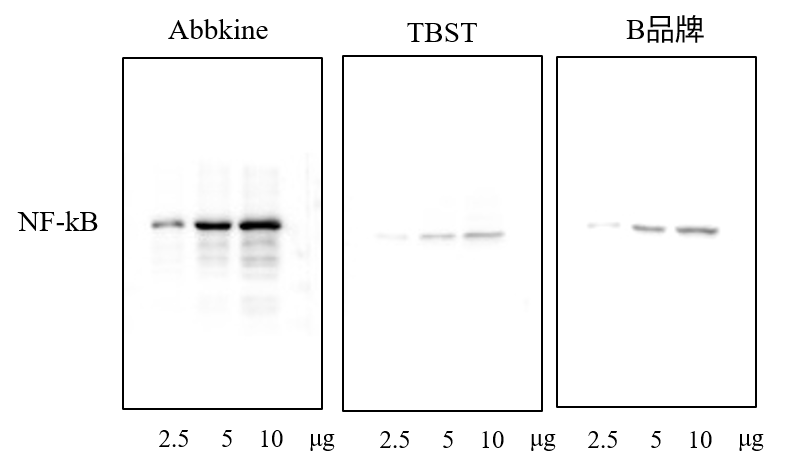
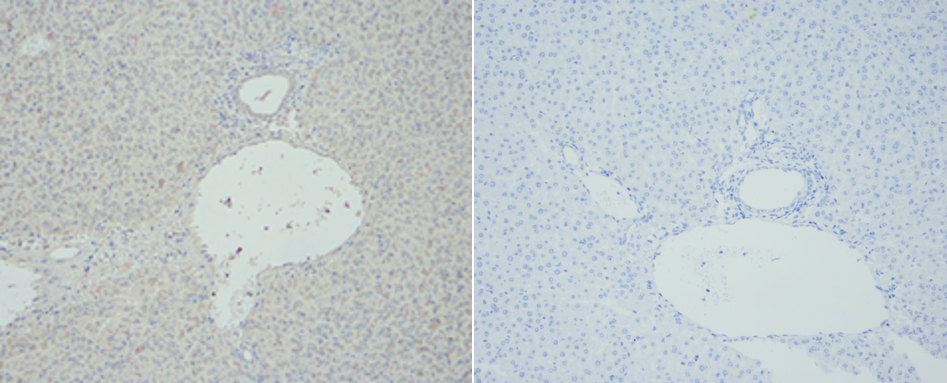
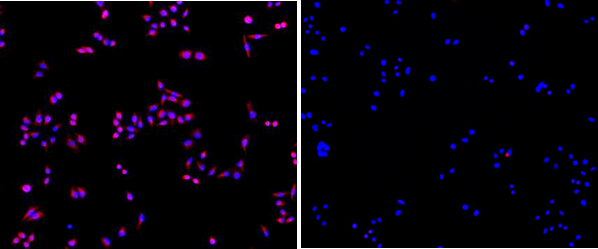
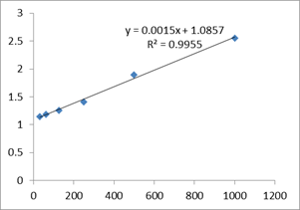
The true test of any optimized reagent lies in its performance across multiple applications, and the provided data for this diluent is compelling. The Western blot comparison using HEK293 cells clearly demonstrates that the SuperKine™ buffer yields a more intense and cleaner signal for the NFkB p65 target compared to another brand. Similarly, the IHC images on mouse liver tissue and the IF images on HeLa cells show crisp, specific staining with remarkably low background in the negative controls. Perhaps most impressive is its validation within a complete ELISA system, where the standard curve for the EliKine™ Mouse IL-12 p70 ELISA Kit maintains its integrity. This cross-application validation is crucial; it tells the researcher that this single buffer can be a reliable, consistent tool across their entire workflow, from cell imaging to quantitative plate-based assays.
From a practical, bench-side perspective, the storage and usage recommendations for the SuperKine™ buffer are designed with real-world laboratory workflows in mind. The ability to store the buffer stably at 4-8°C for one year is a significant convenience, eliminating the need for freezer space and time-consuming thawing. The FAQ’s advice to incubate antibodies diluted in this buffer at 4°C to prolong their life and allow for repeated use is a valuable tip that can lead to substantial reagent savings. This aligns perfectly with the product's stated benefit of increasing the storage time of diluted antibodies. For laboratories running multiple blots over several days, the ability to prepare a primary antibody dilution once and use it reliably across multiple experiments is a genuine efficiency gain.
In the broader context of experimental reproducibility, the choice of diluent is a subtle but critical variable. Inconsistent background or variable signal strength can often be traced back to the quality and composition of the dilution buffer. By standardizing with a product like the SuperKine™ Enhanced Antibody Dilution Buffer, researchers eliminate one more variable from their already complex protocols. It allows them to focus on the biology of their experiment, confident that the tool delivering their antibody to the target is enhancing, not hindering, the detection. For any lab seeking to push the limits of sensitivity and clarity in their immunodetection work, this buffer represents a simple, impactful upgrade. To review the full specifications and application data, you can visit the product page for the SuperKine™ Enhanced Antibody Dilution Buffer (BMU103-EN) here: https://www.abbkine.com/product/superkine-enhanced-antibody-dilution-buffer-bmu103-en/ .





