




The Trust Signal in a Cytokine Storm: Deconstructing the Market Value of the EliKine™ Mouse IL-6 ELISA Kit (KTE7009)
In the bustling marketplace of immunology research tools, the mouse IL-6 ELISA kit occupies a peculiar and highly competitive position. IL-6 is not just another cytokine; it is a pleiotropic master regulator, a benchmark indicator of inflammation, and a critical readout in models ranging from infectious disease and autoimmunity to cancer cachexia and metabolic disorders. Consequently, the market is flooded with options. The challenge for any researcher is no longer finding a kit, but finding one that delivers unshakeable specificity, lot-to-lot consistency, and the sensitivity required to detect subtle but biologically significant changes. In this crowded arena, the EliKine™ Mouse IL-6 ELISA Kit (KTE7009) from Abbkine distinguishes itself not through extravagant claims, but through a combination of rigorous technical specifications and, most importantly, a growing body of validation by the scientific community itself.
The central technical challenge that defines the entire IL-6 detection landscape is the issue of biological complexity. IL-6 is a multifunctional protein produced by a staggering variety of cells—from T-cells and macrophages to fibroblasts, endothelial cells, and even certain tumors. As the background information on the product page notes, its production is modulated by an equally diverse set of signals, including mitogens, lipopolysaccharides, and other cytokines like IL-1 and TNF. In a complex sample like mouse serum or tissue culture supernatant, IL-6 exists alongside a host of structurally unrelated but potentially interfering substances. This is where the kit's fundamental design as a two-site sandwich ELISA becomes its strongest asset. The use of a capture antibody and a separate, biotin-conjugated detection antibody, paired with the proprietary EliKine™ Streptavidin-HRP system, creates a biochemical filter. It ensures that the signal measured at the final step is specifically derived from intact IL-6 molecules simultaneously recognized by two distinct antibodies, dramatically reducing the risk of cross-reactivity or interference from analogues—a feature explicitly validated and stated in the kit's benefits.
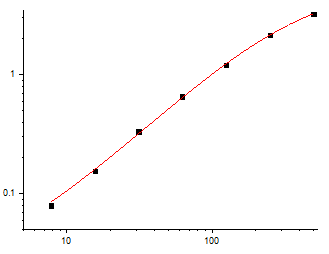
Beyond the core assay principle, the performance metrics of the KTE7009 kit speak directly to the practical demands of modern preclinical research. The stated detection limit of 2 pg/mL, within a calibration range of 7.82 pg/mL to 500 pg/mL, is not just a number on a datasheet. In real-world terms, this level of sensitivity is what allows researchers to quantify baseline IL-6 levels in healthy mouse tissues or to detect early, subtle spikes in inflammation before gross pathological changes occur. This is particularly critical in fields like neuroinflammation or transplant rejection, where cytokine concentrations in interstitial fluid or plasma may be low. Furthermore, the broad compatibility with sample types—serum, plasma, cell culture supernatants, and other biological fluids—reflects a design philosophy that prioritizes versatility. A single validated kit that performs reliably across these different matrices simplifies experimental workflows and reduces the variables introduced by switching between different quantification platforms.
A deeper analysis of the market positioning of this kit, however, must extend beyond its technical specifications to examine its currency within the scientific community: citations. The EliKine™ Mouse IL-6 ELISA Kit boasts eight publications to its name, and a closer look at these citations provides compelling evidence of its utility and trustworthiness. For instance, its use in a high-impact study published in Neurobiology of Disease (with an impressive impact factor of 33.2) investigating melatonin's protective role against traumatic colon injury demonstrates its capability to perform in complex in vivo injury models. Another citation in Carbohydrate Polymers (IF: 12.5), examining the inflammatory effects of dietary starch, proves its sensitivity in detecting low-grade, diet-induced inflammation. This is not just a kit for gross inflammation; it can discern nuanced physiological shifts. Each citation acts as an independent validation, a peer-reviewed endorsement that the kit delivers reliable, quantifiable data across diverse and challenging biological contexts. For a researcher, this publication record is often the most powerful differentiator in a crowded market.
Looking at the competitive landscape, the true value proposition of the Abbkine EliKine™ series lies in its ability to offer performance comparable to industry-leading brands while maintaining accessibility. In an era where reproducibility is paramount, the warnings in the usage notes—such as not mixing components from different lots, allowing full 30-minute temperature equilibration, and the emphatic note that "Mix Thoroughly is very important for the result"—are not mere disclaimers. They are insights into the critical control points of the assay. They guide the user toward best practices, acknowledging that even the best antibody pair can be undermined by poor technique. This focus on educating the user, combined with the kit's documented performance, positions it as a thoughtful tool designed for the generation of publication-ready data. For laboratories investigating the role of this multifunctional cytokine in mouse models of disease, the choice is increasingly clear: a kit that offers high sensitivity, proven specificity, and the collective confidence of a growing list of peer-reviewed publications. For more details on its specifications and applications, you can visit the product page for the EliKine™ Mouse IL-6 ELISA Kit (KTE7009) here: https://www.abbkine.com/product/elikine-mouse-il-6-elisa-kit-kte7009/ .





