




The 215-kDa Scout That Finds Every Broken Chromosome First: Why Quantifying MRE11A Protein Changes How You Read DNA Damage, HR Competence, and Tumor Radiation Response
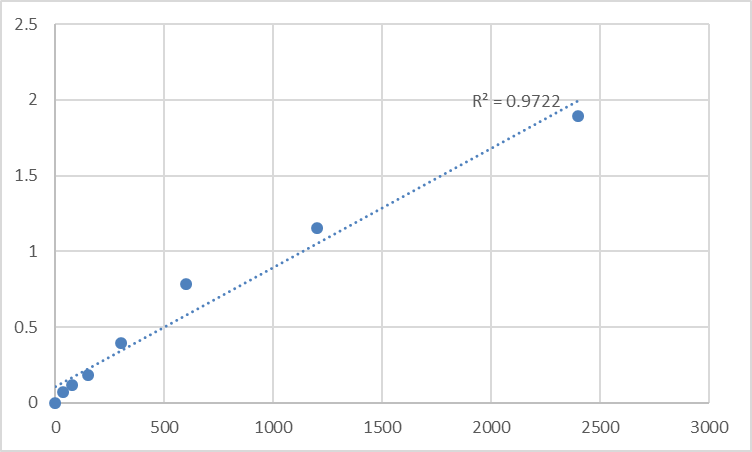
If your lab measures DNA double-strand breaks (DSBs) by γH2AX foci and stops there, you're looking at the smoke without measuring the fire department. Every DSB in a human cell triggers a two-second triage: the genome has to sense the break, decide whether to repair it by faithful homologous recombination (HR) or error-prone non-homologous end joining (NHEJ), and then resection/restart the replication fork so the cell doesn't die in S-phase. The protein that initiates that entire sequence—by literally landing on the broken DNA ends first—is MRE11A (MRE11 homolog A, commonly called MRE11), the ~215 kDa core nuclease/scaffold of the MRN complex (MRE11–RAD50–NBS1/NBN). The Human Double-strand break repair protein MRE11A (MRE11A) ELISA Kit (KTE61540) from Abbkine gives you a way to measure this pivotal DDR (DNA damage response) hub as a calibrated, plate-readable concentration (ng/mL), so your radiation biology, PARPi/ATRi combo, or HR-competence story rests on a number—not a 215 kDa band you hope transferred evenly.
MRE11A in One Clean Paragraph: The "Break Sensor" That Recruits ATM and Opens the Resection Gate
MRE11A (UniProt: P49959, Gene ID: 4361, Chr 5q15–q21, computed ~708 aa / ~215 kDa before alternative splice/modifications) is not just a structural adaptor—it carries a structure-specific endonuclease/exonuclease activity (the PF01751 nuclease motif, coordinated by RAD50's Walker A/B ATPase heads) that can peel, nick, and resect 5' strands to generate the 3' ssDNA tails HR absolutely requires. In plain order-of-operations:
- DSA (Damage Sensor Arrival): MRE11 (with RAD50 and NBN) is recruited within seconds to DSBs via chromatin-binding and CtIP/CtIP-family tethering.
- ATM Activation: MRN positions and oligomerizes around the break in a way that activates ATM kinase (ATM otherwise sits largely inactive as a dimer/monomer in unstressed nuclei). Activated ATM then phosphorylates H2AX (γH2AX), CHK2, p53, SMC1, KAP1, and the MRN components themselves—setting the whole DDR phosphorylation cascade in motion.
- Resection Initiation (HR gate): MRE11's controlled 3'→5' exonuclease/endonuclease activity, together with CtIP and EXO1/BLM/DNA2, generates the 3' ssDNA-RPA tail that becomes RAD51-loaded (via RAD52/BRCA2) for strand invasion.
Without enough functional MRE11A protein or MRN integrity, resection stalls, ATM activation weakens, and the cell limps along with NHEJ-dominated repair or catastrophic chromosome fragmentation.
Genetically, hypomorphic or dominant-negative MRE11A/NBN/RAD50 alleles produce an NBS-like (Nijmegen Breakage Syndrome-like) picture: microcephaly, radiosensitivity, immunodeficiency, and a massive cancer predisposition—because the cell loses the ability to properly sense and faithfully repair DSBs.
Why a Sandwich ELISA for a ~215 kDa Nuclear Scaffold — And Why "Just γH2AX" Is an Incomplete Claim
MRE11A is:
• Large (~215 kDa), nuclear, and chromatin/complex-associated → it doesn't always extract equally with a gentle buffer; you need a reasoned lysis (often low-salt + 0.5–1% SDS or sequential extraction to get the true nuclear pool).
• Low-ish abundance in many differentiated cells (but strongly visible in proliferating/germ/stem cells and tumor biopsies) → gel-band quantification drifts with transfer efficiency at high MW.
• The central question in many DDR papers isn't "is MRE11 present?" but: did my drug (ATRi, PARPi, CHK1i, rutin/flavopiridol-type CDK7, HDACi) shift the MRE11A protein level, turnover, or extractability?
A two-site sandwich ELISA (pre-coated capture + biotinylated detection, different epitopes) answers that with a recombinant MRE11A standard curve on every plate, turning OD₄₅₀ into interpolated ng/mL with CVs you can publish.
The KTE61540 kit uses the classic, field-appropriate architecture:
- Microplate pre-coated with a capture antibody specific for human MRE11A.
- Standards (recombinant human MRE11A) and samples — tissue homogenates, nuclear extracts, whole-cell lysates, other biological fluids — added → MRE11A binds.
- Wash → biotinylated anti-MRE11A detection antibody (different epitope) → Streptavidin–HRP → TMB → color ∝ bound MRE11A.
- Stop → read 450 nm → interpolate unknowns from the MRE11A standard curve.
Typical performance envelope you'll cite for this kit family:
Parameter Typical KTE61540-class Specification
Target Human MRE11A / MRE11 (UniProt P49959, Gene 4361)
Format 96-well sandwich ELISA, pre-coated capture
Detection Biotin-Ab → SA-HRP → TMB, 450 nm
Dynamic Range 0.156 – 10 ng/mL (7-point standard)
Sensitivity / LOD ~0.05–0.10 ng/mL
Intra-Assay CV < 7–8%
Inter-Assay CV < 10–12%
Samples Tissue homogenates, nuclear extracts, whole-cell lysates, cell culture supernatants/lysates
Assay time ~3–5 hours
Status For Research Use Only; not for diagnostic procedures
(Always confirm exact range, recommended dilutions, and lot-specific recovery on the shipped Abbkine datasheet/CoA.)
Where MRE11A Quantification Actually Carries the DDR/Radiation Paper
- Ionizing Radiation (IR) & Chemo Response Surrogates
The classic therapeutic axis: IR/bleomycin/anthracyclines → DSB burst → MRN lands → ATM fires → γH2AX foci → repair or cell death.
MRE11A ELISA in tumor-lysate panels (normalized to mg total protein, BCA, or a true nuclear marker like Lamin A/C or Histone H3) lets you ask the smarter question:
• Did the drug destabilize MRN (e.g., proteasome inhibition → NBN/MRE11 turnover)?
• Did the pretreatment downregulate MRE11A transcriptionally (p53/p21/EGR1 crosstalk)?
• Is the resistant clone simply overexpressing MRE11A to bulk-up resection and HR capacity?
Pair with γH2AX (WB/flow), 53BP1 foci, RAD51 foci, and survival (clonogenic) and the figure becomes an argument, not a correlation.
- HR Competence / Synthetic Lethality (PARPi, ATRi, CHK1i)
HR-competent tumors repair DSBs cleanly; HR-deficient (BRCA1/2, PALB2, RAD51C) ones can't—and that's why PARPi works. But HR status isn't binary. MRE11A protein level is one of the structural inputs that shapes the resection efficiency:
• MRE11A ↓ / MRN disrupted → resection ↓ → HR ↓ → PARPi sensitivity ↑ (sometimes even in BRCA-intact backgrounds)
• MRE11A ↑ (or hyper-stable MRN) → excessive resection → genomic instability but also radioresistance
Quantifying MRE11A gives you the scaffold occupancy axis that γH2AX alone can't see.
- Replication Stress & ATR Inhibitor Combos (the Hot Corner of DDR Therapeutics)
ATR inhibitors (ATRi) selectively kill cells with high basal replication stress (MYC-amplified, CCNE1-overexpressing, Fanconi anemia pathway compromised). The early event remains unscheduled origin firing + stalled fork collapse → DSBs, and MRN is the first responder. If your experiment tests ATRi ± PARPi ± gemcitabine, a plate-based MRE11A readout (total protein, sometimes paired with an MRE11 S658 phosphorylation read if you have a phospho-specific reagent) is a clean mechanistic covariate.
- Tumor Biopsies & FFPE-Lysate Banks (Where p-values Live or Die)
Fresh-frozen or high-quality FFPE lysates can yield enough MRE11A for sandwich ELISA, and that lets you run cohort-scale correlations (MRE11A level vs. grade, vs. ATM/γH2AX IHC H-score, vs. relapse-free survival). Because MRE11A is nuclear and fairly stable in fixed tissue when processed correctly, it can serve as a DNA-repair-capacity anchor for multi-biomarker signatures.
- CRISPR/AAV Validation (The "Did I Lose/Gain the Sensor?" Question)
Editing MRE11A or NBN? Don't stop at "foci look different." Report % MRE11A protein remaining ± SEM from the calibrated ELISA (ng/mg), and link it to:
• RAD51 focus frequency (after 4–6 Gy or HU)
• γH2AX persistence (24–48 h recovery)
• Chromosome aberration index / micronucleus assay
Reviewers consistently prefer this triad over a lone gel-band.
A Minimal Prep Blueprint (Because MRE11A Is ~215 kDa and Chromatin-Associated)
Option A — Quick Whole-Cell (Good for most tumor-cell lines):
• Lyse in RIPA or 50 mM Tris pH 7.4, 150 mM NaCl, 1% Triton X-100/0.5% deoxycholate + protease + phosphatase inhibitors; keep cold; briefly sonicate (2–3 × 3-sec pulses, low power, on ice) to help release nuclear MRE11A without shredding it.
• Clarify 12,000–16,000 ×g, 15 min, 4°C → supernatant = your "total + loosely chromatin-associated" MRE11A pool.
• BCA → express as ng MRE11A / mg total protein.
Option B — Sequential Extraction (Cleaner "chromatin/MRN" Fraction):
• CSK buffer first (0.5% Triton, low salt) → spin → pellet = nuclear/chromatin → extract pellet with TNES (50 mM Tris pH 7.5, 300–400 mM NaCl, 1 mM EDTA, 0.5% SDS or 1% Sarkosyl) + inhibitors → clarify → measure MRE11A in the salt/SDS-eluted fraction.
This separates "cytosolic/nucleoplasmic spill" from the chromatin-tethered MRN that actually matters for DDR.
Universal rules: keep cold; add 1–5 mM Na₃VO₄ + 10–20 mM NaF + protease inhibitors if you plan parallel phospho-reads; warm kit reagents ≥ 30 min RT before opening; protect TMB; read 450 nm promptly; run the full standard curve on every plate.
The Bottom Line
MRE11A is the 215 kDa nuclease/scaffold that lands on a broken chromosome end before anything else can decide the cell's fate—activating ATM, initiating resection, and standing at the hinge between faithful HR and dangerous NHEJ. If your experiment is about radiation response, replication stress, PARPi/ATRi synthetic lethality, or chromosomal instability in cancer, then "γH2AX went up" is only half the story; you also need the sensor that made the DSB visible in the first place. The Human Double-strand break repair protein MRE11A (MRE11A) ELISA Kit — KTE61540 from Abbkine gives you that sensor as a number: pre-coated capture → biotin detection → HRP–TMB → 450 nm → ng/mL, over a 0.156–10 ng/mL working range with LOD ~0.05–0.1 ng/mL, in a ~3–5 hour workflow that scales across clones, doses, and cohorts without chaining you to a 6% gel and a densitometry argument.
Product Reference: KTE61540 – Human Double-strand break repair protein MRE11A (MRE11A) ELISA Kit
Learn more and order: https://www.abbkine.com/product/human-double-strand-break-repair-protein-mre11a-mre11a-elisa-kit-kte61540/
(For Research Use Only; not for diagnostic procedures in humans.)





