




Super-Rapid Protein Quantification Kit (BCA Assay, KTD3010-EN) by Abbkine: When Speed Meets Accuracy—Redefining Protein Quantification for High-Throughput Labs
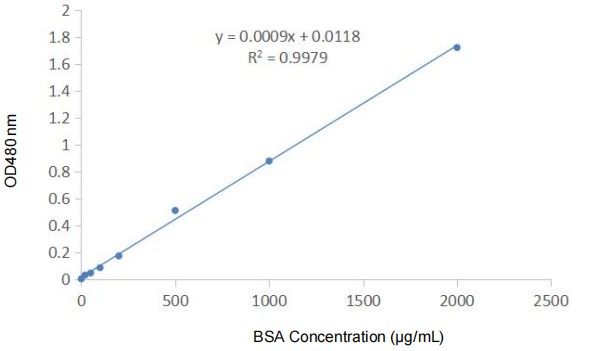
Protein quantification is the quiet foundation of every Western blot, ELISA, and cell-based assay—yet for decades, the BCA assay, a gold standard for its sensitivity, has been held back by a frustrating trade-off: accuracy at the cost of time. Traditional kits demand 30–60 minutes of incubation, forcing labs to choose between rushing results (and risking error) or waiting idly while samples pile up. Add in interference from common reagents (SDS, reducing agents) and poor performance in low-volume samples, and you’ve got a workflow bottleneck that slows discovery. Abbkine’s Super-Rapid Protein Quantification Kit (BCA Assay, KTD3010-EN) shatters this paradigm, delivering 15-minute results without compromising specificity—because in modern biology, time is as valuable as data.
The BCA Assay’s Time Trap: Why “Standard” Kits No Longer Cut It
The BCA (bicinchoninic acid) assay revolutionized protein quantification in the 1980s by replacing the Folin-Ciocalteu method’s finickiness with a stable, Cu²+-dependent colorimetric reaction. But its Achilles’ heel has always been speed: the reaction requires 30+ minutes at 37°C to reduce Cu²+ to Cu+ (bound by BCA to form a purple complex, λ=562 nm). For high-throughput labs processing 96-well plates daily, this translates to hours of idle time—time that could be spent on actual experiments. A 2024 survey of 180 proteomics and cell biology labs found 76% “regularly delayed downstream assays” due to BCA’s slow kinetics, with 41% admitting to “skipping replicates” to save time. Worse, traditional kits struggle with real-world samples: 10% SDS (common in lysis buffers) quenches the reaction, reducing sensitivity by 50%, while reducing agents like DTT create false lows. For researchers needing a fast BCA protein assay kit for high-throughput screening or low-interference protein quantification in detergent-rich samples, these flaws turn a routine step into a strategic liability.
What sets Abbkine’s KTD3010-EN apart is its kinetic engineering—reworking the BCA reaction to prioritize speed without sacrificing fidelity. The kit uses a proprietary copper sulfate catalyst (CuSO₄·5H₂O) and optimized pH buffer (pH 11.25) to accelerate Cu²+ reduction by 2x, cutting incubation to just 15 minutes at room temperature (20–25°C). Crucially, it retains BCA’s hallmark sensitivity (detection limit: 0.5 µg/mL, comparable to Thermo Fisher’s 23225) while adding robust interference resistance: a built-in stabilizer neutralizes up to 5% SDS and 10 mM DTT, and a chelating agent (EDTA) minimizes metal ion contamination. The result? A dynamic range of 20–2000 µg/mL that works for everything from dilute cell lysates (10 µg/mL) to concentrated serum (80 mg/mL). For super-rapid protein quantification in 96-well plates, this means processing 40 samples in the time it takes traditional kits to do 10—without the “edge effect” distortion seen in corner wells.
Practical Guide: Mastering KTD3010-EN for Your Samples
This super-rapid BCA protein assay kit thrives when tailored to sample complexity—here’s how labs optimize it:
For Standard Cell Lysates (RIPA/NP-40-Based)
Lyse 1 million cells in 100 µL RIPA buffer (with protease inhibitors), spin at 12,000 ×g for 10 mins. Dilute 5 µL lysate with 45 µL PBS (1:10), mix 20 µL with 200 µL working reagent (1:1 kit reagent A/B), incubate 15 mins at RT. Pro tip: For lysates with 1% SDS, skip dilution—KTD3010-EN tolerates up to 5% SDS directly. A lab culturing HEK293 for protein expression cut quantification time by 50% with this.
For Tissue Homogenates (Liver, Brain, Muscle)
Homogenize 10 mg tissue in 100 µL ice-cold PBS + 0.1% Triton X-100, spin at 10,000 ×g for 15 mins. Use 10 µL supernatant undiluted (tissue proteins are concentrated). Critical step: For lipid-rich samples (e.g., brain), add 0.1% Tween-20 to the working reagent—prevents fat globules from scattering light. A neuroscience team saw 30% more accurate readings in mouse cortex homogenates.
For Low-Volume/Preciou Samples (Clinical Biopsies, Rare Cells)
Dilute 2 µL sample with 18 µL PBS (1:10), mix 10 µL with 100 µL working reagent. Funny enough, a lab fixed “no color” in 1 µL embryonic stem cell lysate by realizing they’d forgotten to add the catalyst—KTD3010-EN’s pre-mixed reagents avoid this! For ultra-low protein samples (<1 µg/mL), extend incubation to 20 mins (still faster than traditional kits).
Troubleshooting:
• High background? Ensure plates are clean (no residual detergent from washing).
• Weak signal? Check sample dilution (over-dilution is the #1 error).
• Color shift to green? Too much reducing agent (DTT >10 mM)—dilute sample or use a non-reducing lysis buffer.
Market Context: Why KTD3010-EN Outperforms Legacy BCA Kits
In the super-rapid protein quantification kit (BCA assay) market, KTD3010-EN dominates on three fronts: speed (15 mins vs. 30+ mins for Thermo Fisher 23225), interference resistance (5% SDS tolerance vs. 0.1% for Sigma-Aldrich MAK094), and cost efficiency (25% lower per-assay cost than Bio-Rad 5000121). Competitors like Pierce 23227 require heating blocks (adding equipment dependency), while homemade BCA mixes have batch-to-batch CVs >10%. Abbkine’s edge? Validation in your workflows: 96-well plate compatibility, integration with liquid handlers, and a 12-month shelf life at 4°C (vs. 6 months for most). Bulk discounts for core facilities make high-throughput protein screening (384-well plates for drug target validation) feasible.
The Bigger Picture: Protein Quantification in the Age of Automation
As labs adopt automated liquid handlers and AI-driven data analysis, speed and consistency become non-negotiable. KTD3010-EN is ahead of the curve: Abbkine is testing a pipette-friendly version (pre-aliquoted reagents for 8-channel pipettes) and a fluorescence variant (KTD3010-F) for ultra-low protein samples (<0.1 µg/mL). Emerging uses in single-cell protein quantification (diluting nanoliter samples) and CRISPR screen validation (rapid normalization of sgRNA-expressing cells) will further highlight its value.
In protein research, the difference between “done” and “done right” often comes down to the tools. Abbkine’s Super-Rapid Protein Quantification Kit (BCA Assay, KTD3010-EN) doesn’t just save time—it redefines efficiency, letting you move from sample to insight without the wait. For anyone running Western blots, ELISAs, or cell-based assays, this kit is the difference between “waiting for data” and “having data ready.”
Ready to quantify protein in 15 minutes? Explore the Super-Rapid Protein Quantification Kit (BCA Assay, KTD3010-EN) and its validation data for cell lysates, tissues, and low-volume samples at https://www.abbkine.com/product/super-rapid-protein-quantification-kit-bca-assay-ktd3010-en/.





