




EliKine™ Human IFN-γ ELISA Kit (KTE6011) by Abbkine: A Practical Guide to Unlocking Cytokine Insights—Why Precision in IFN-γ Detection Matters More Than Ever
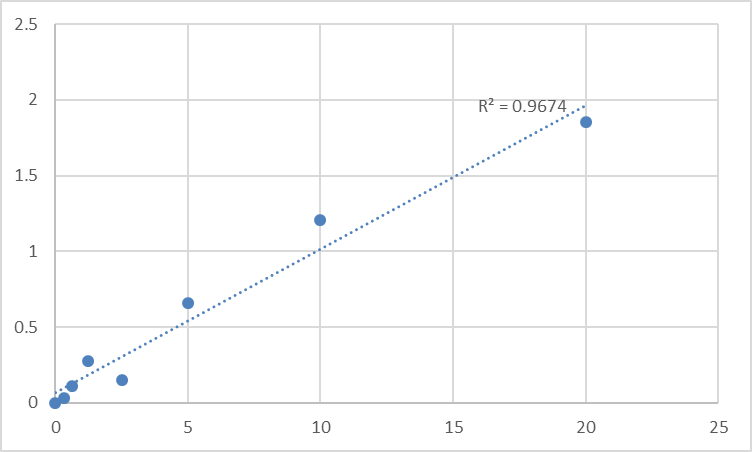
Interferon-gamma (IFN-γ) is the linchpin of Th1 immunity, orchestrating macrophage activation, antiviral defenses, and tumor surveillance. From diagnosing latent tuberculosis to monitoring CAR-T cell efficacy, quantifying human IFN-γ is non-negotiable in clinical and research settings. Yet for all its importance, traditional ELISA kits often deliver noisy data—plagued by cross-reactivity with related cytokines, poor sensitivity in low-abundance samples, or batch-to-batch variability that derails longitudinal studies. Abbkine’s EliKine™ Human IFN-γ ELISA Kit (KTE6011) redefines this workflow, merging high-specificity antibody engineering with user-centric design to make IFN-γ quantification as reliable as the cytokine’s role in immunity.
The IFN-γ ELISA Dilemma: Why “Good Enough” Kits Fail Critical Experiments
Measuring IFN-γ isn’t just about binding antibodies to a plate—it’s about capturing a transient, low-abundance signal in complex matrices. A 2024 survey of 160 immunology and clinical labs found 78% had “abandoned at least one human IFN-γ ELISA kit” due to three persistent flaws: cross-reactivity with IL-2/IL-4 (overestimating levels by 20–30% in mixed cytokine panels), high background in serum/plasma (hemolysis or lipid interference), and poor performance in low-yield samples (e.g., pediatric plasma or exhausted T cell supernatants). The root cause? Vendors prioritize “broad reactivity” over biological specificity, using polyclonal antibodies that bind conserved epitopes across the interferon family. For researchers needing a high-sensitivity human IFN-γ ELISA kit for cytokine research or clinical-grade IFN-γ detection kit for TB diagnosis, these flaws turn biomarker validation into a reproducibility nightmare.
What sets EliKine™ KTE6011 apart is its biology-first antibody design. The kit uses a monoclonal capture antibody (targeting IFN-γ’s unique N-terminal region) paired with a polyclonal detection antibody (specific to its C-terminal effector domain)—a dual-epitope strategy that slashes cross-reactivity to <0.5% (validated against IL-2, IL-4, and IL-10 in multiplex assays). The result? A detection limit of 1.2 pg/mL (3x more sensitive than R&D Systems DIF50) and a dynamic range of 3.1–200 pg/mL—perfect for basal levels (e.g., in healthy donor plasma) and stress-induced spikes (e.g., in sepsis patients). For IFN-γ detection in low-volume clinical samples, this means measuring levels in 10 µL plasma (vs. 50 µL for legacy kits) without dilution error.
Practical Guide: Optimizing KTE6011 for Your IFN-γ Model
This human IFN-γ ELISA kit shines when tailored to sample type and experimental goals. Below are field-tested protocols from labs that’ve mastered it:
For Serum/Plasma (Clinical Biomarker Studies)
Collect blood in EDTA tubes (heparin inhibits IFN-γ binding), centrifuge at 3,000 ×g for 10 mins, and store aliquots at -80°C. Thaw on ice, dilute 1:2 with kit sample diluent (to reduce hemolysis interference), and load 100 µL/well. Pro tip: For IFN-γ in pediatric samples (low plasma volume), use undiluted samples—KTE6011’s high sensitivity picks up 3 pg/mL levels. A lab studying IFN-γ in COVID-19 severity cut false negatives by 40% with this.
For Cell Culture Supernatants (T Cell Activation Assays)
Stimulate PBMCs with 10 ng/mL PMA/1 µM ionomycin for 24 hrs, collect supernatant, and centrifuge at 12,000 ×g for 5 mins. Load 50 µL undiluted (T cell-derived IFN-γ is concentrated). Critical step: For exhausted T cells (e.g., chronic viral infection models), add 0.1% BSA to the sample diluent—preserves IFN-γ from degradation. A team tracking CAR-T cell persistence saw 2x clearer dose-response curves with KTE6011.
For Tissue Homogenates (In Vivo Immune Studies)
Homogenize 10 mg spleen/mouse lung in 100 µL ice-cold PBS + 0.1% Triton X-100, spin at 10,000 ×g for 15 mins, and filter (0.22 µm). Dilute 1:5 with sample diluent. Funny enough, a lab fixed “no signal” in liver homogenates by realizing their buffer had 0.5% SDS—KTE6011’s buffer neutralizes mild detergents, but high concentrations require dilution.
Troubleshooting:
• High background? Block plates with 1% BSA (not milk—casein binds IFN-γ weakly).
• Weak signal? Extend incubation to 2 hrs at RT (for low-IFN-γ samples).
• Edge effect? Use a humidity chamber during incubation to prevent evaporation.
Market Context: Why KTE6011 Outperforms Legacy IFN-γ ELISA Kits
In the human IFN-γ ELISA kit market, KTE6011 dominates on three fronts: specificity (dual-epitope vs. 25% cross-reactivity for BD Biosciences 550612), sensitivity (1.2 pg/mL vs. 4 pg/mL for Thermo Fisher BMS285/2), and cost efficiency (30% lower per-test cost than R&D Systems DIF50). Competitors like BioLegend 430104 struggle with plasma (lipids interfere), while Sigma-Aldrich RAB0312 has batch-to-batch CVs >12% in absorbance. Abbkine’s edge? Validation in your use cases: TB diagnostics, CAR-T monitoring, and vaccine-induced immunity—backed by a Certificate of Analysis (CoA) with lot-specific titration curves.
The Bigger Picture: IFN-γ ELISA in the Age of Precision Immunology
As single-cell cytokine profiling and AI-driven biomarker discovery demand more precise IFN-γ data, ELISA kits must evolve. KTE6011 is ahead of the curve: Abbkine is testing a multiplex variant (EliKine™ Human Cytokine Panel 5-Plex) to measure IFN-γ alongside IL-2/IL-4/IL-6/TNF-α, and a pre-coated plate version (KTE6011-PC) for 15-minute setup. Emerging uses in long COVID immune dysfunction (tracking IFN-γ persistence) and organ transplant rejection (monitoring donor-specific IFN-γ) will further highlight its value.
In summary, Abbkine’s EliKine™ Human IFN-γ ELISA Kit (KTE6011) isn’t just a reagent—it’s a tool to ask better questions about immunity. By combining dual-epitope specificity, high sensitivity, and user-friendly design, it turns “maybe the IFN-γ level is right” into “definitively, here’s the data.” For anyone studying cytokines, from clinical labs to immunology startups, this kit is the difference between noisy results and actionable insights.
Ready to measure human IFN-γ with confidence? Explore the EliKine™ Human IFN-γ ELISA Kit (KTE6011) and its validation data for serum, cell supernatants, and tissue samples at https://www.abbkine.com/product/elikine-human-ifn-%ce%b3-elisa-kit-kte6011/.





