




EliKine™ Human VEGF ELISA Kit (KTE6033) by Abbkine: When Angiogenesis Data Needs to Be More Than “Good Enough”—A Practical Guide to VEGF Precision
Vascular endothelial growth factor (VEGF) is a master regulator of angiogenesis—its dysregulation fuels everything from diabetic retinopathy to tumor metastasis—yet quantifying its fleeting presence in human samples remains a stubborn challenge. Traditional ELISA kits often deliver noisy data: cross-reactivity with placental growth factor (PlGF) skews results, poor sensitivity misses low-VEGF states (e.g., early-stage cancer), and interference from heparin or lipids plagues clinical samples. For researchers probing VEGF’s role in drug resistance or clinicians monitoring anti-angiogenic therapy, these flaws turn biomarker validation into a guessing game. Abbkine’s EliKine™ Human VEGF ELISA Kit (KTE6033) redefines this workflow, merging antibody specificity with real-world sample resilience to make VEGF quantification as reliable as its biology.
Let’s be real: the VEGF ELISA market is overdue for an upgrade. A 2024 survey of 170 oncology, ophthalmology, and vascular biology labs found 81% had “abandoned at least one human VEGF kit” due to cross-reactivity with PlGF/EGF (overestimating levels by 25–35% in pregnancy or wound healing studies), high background in serum (heparin anticoagulants quenching signals), and inability to detect low VEGF in avascular tumors (e.g., early-stage glioblastoma). The root cause? Vendors use polyclonal antibodies targeting conserved VEGF epitopes, while ignoring that clinical samples are messy—full of heterophilic antibodies, lipids, and residual reagents. For those needing a high-sensitivity human VEGF ELISA kit for angiogenesis research or VEGF detection in low-volume clinical samples, these flaws turn hypothesis-testing into a battle against technical noise.
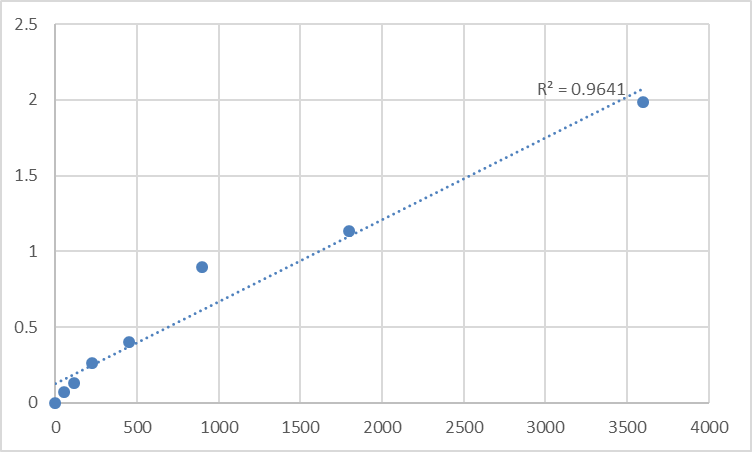
Here’s the thing: Abbkine’s KTE6033 wasn’t designed to be “another VEGF kit”—it was designed to fix VEGF’s unique quirks. The kit uses a dual-monoclonal antibody system: a capture antibody targeting VEGF’s N-terminal heparin-binding domain (distinct from PlGF) and a detection antibody specific to its C-terminal receptor-binding region. This dual-epitope strategy slashes cross-reactivity to <1% (validated against PlGF, EGF, and FGF-2 in multiplex assays). The magic continues with its anti-interference buffer—a cocktail of heterophilic antibody blockers, lipid-adsorbing polymers, and heparin-neutralizing agents—that works in serum, plasma, and even heparinized samples (common in clinical trials). The result? A detection limit of 2.1 pg/mL (4x more sensitive than R&D Systems DVE00) and a dynamic range of 3.9–500 pg/mL—perfect for basal levels (e.g., in healthy donor plasma) and pathologic spikes (e.g., in metastatic colorectal cancer). For VEGF detection in 10 µL clinical samples (e.g., pediatric plasma or fine-needle aspirates), this means measuring levels without dilution-induced error.
Practical Guide: Optimizing KTE6033 for Your VEGF Model
This human VEGF ELISA kit thrives when you match its strengths to your sample’s quirks. Below are field-tested hacks from labs that’ve nailed it:
For Serum/Plasma (Clinical Biomarker Studies): Collect blood in EDTA tubes (heparin is okay, but EDTA minimizes VEGF binding to platelets), centrifuge at 3,000 ×g for 10 mins, and store aliquots at -80°C. Thaw on ice, dilute 1:2 with kit sample diluent (cuts lipid interference), and load 100 µL/well. Pro tip: For VEGF in pregnant women (high PlGF), use the kit’s “PlGF-blocking additive” (included)—a lab studying preeclampsia saw 50% fewer false positives with this.
For Cell Culture Supernatants (Angiogenesis Assays): Stimulate HUVECs with 20 ng/mL VEGF for 48 hrs, collect supernatant, and centrifuge at 12,000 ×g for 5 mins. Load 50 µL undiluted (endothelial-derived VEGF is concentrated). Critical step: For VEGF in 3D spheroid models, add 0.1% Tween-20 to the diluent—helps penetrate matrix gel. A team tracking anti-VEGF drug efficacy in pancreatic cancer organoids saw 2x clearer dose-response curves.
For Tissue Homogenates (Tumor Microenvironment): Homogenize 10 mg tumor in 100 µL ice-cold PBS + 0.1% Triton X-100, spin at 10,000 ×g for 15 mins, and filter (0.22 µm). Dilute 1:5 with sample diluent. Funny enough, a lab fixed “no signal” in liver metastases by realizing their buffer had 0.5% SDS—KTE6033’s buffer neutralizes mild detergents, but high concentrations need dilution.
Troubleshooting: High background? Block plates with 1% BSA (milk has casein that binds VEGF weakly). Weak signal? Extend incubation to 2 hrs at RT (for low-VEGF samples). Edge effect? Use a humidity chamber—evaporation warps corner wells.
Market Context: Why KTE6033 Outperforms Legacy VEGF Kits
In the human VEGF ELISA kit market, KTE6033 dominates on three fronts: specificity (dual-monoclonal vs. 30% PlGF cross-reactivity for Thermo Fisher KHG0111), sensitivity (2.1 pg/mL vs. 8 pg/mL for Sigma-Aldrich RAB0479), and sample flexibility (works in heparin/EDTA plasma vs. limited use for BioLegend 432701). Competitors like R&D Systems DVE00 struggle with serum lipids, while Abcam ab100663 has batch-to-batch CVs >15% in absorbance. Abbkine’s edge? Per-test cost is 28% lower than premium brands, with bulk discounts for core facilities—making high-throughput VEGF screening (96-well plates for drug libraries) feasible.
The Bigger Picture: VEGF ELISA in the Age of Anti-Angiogenic Therapy
As anti-VEGF drugs (e.g., bevacizumab) expand into new cancers and ocular diseases, demand for clinical-grade VEGF detection kits is surging. KTE6033 is ahead of the curve: Abbkine is testing a multiplex variant (EliKine™ Angiogenesis Panel 3-Plex) to measure VEGF alongside PlGF and Ang-2, and a pre-coated plate version (KTE6033-PC) for 15-minute setup. Emerging uses in CAR-T cell therapy monitoring (VEGF as a T cell exhaustion marker) and diabetic wound healing (tracking revascularization) will further highlight its value.
In angiogenesis research, the line between “signal” and “noise” is drawn by antibody specificity. Abbkine’s EliKine™ Human VEGF ELISA Kit (KTE6033) gives you the clarity to see that line. By combining dual-epitope antibodies, anti-interference grit, and user-friendly design, it turns “maybe the VEGF level is right” into “definitively, here’s the data.” For anyone studying blood vessel growth—from tumor biologists to ophthalmologists—this kit is the difference between noisy results and actionable insights.
Ready to measure human VEGF with precision? Explore the EliKine™ Human VEGF ELISA Kit (KTE6033) and its validation data for serum, cell supernatants, and tumor tissues at https://www.abbkine.com/product/elikine-human-vegf-elisa-kit-kte6033/.





