




CheKine™ Micro Plant Total Phenols (TP) Assay Kit (KTB1540) by Abbkine: When Phenol Measurement Meets Precision—Solving the “Dirty Sample” Dilemma in Plant Research
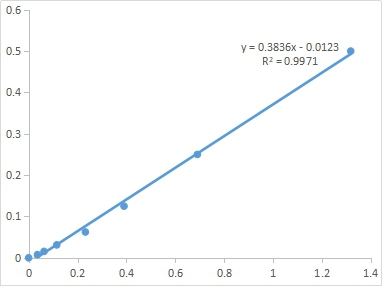
Total phenols (TP) are the unsung heroes of plant resilience—these aromatic compounds defend against pathogens, scavenge free radicals, and dictate the bitterness of wine or the antioxidant power of green tea. Quantifying them isn’t just an academic exercise; it’s critical for breeding climate-resilient crops, validating herbal medicines, and understanding stress adaptation. Yet for decades, researchers have wrestled with assays that demand 50–100 µL extracts (wasting rare germplasm), drown in interference from chlorophyll or polysaccharides, or lack the sensitivity to detect TP in early-stage drought-stressed seedlings. Abbkine’s CheKine™ Micro Plant Total Phenols (TP) Assay Kit (KTB1540) redefines this challenge, merging enzyme specificity with microscale efficiency to turn messy plant samples into actionable data.
The TP Assay’s Dirty Little Secret: Why “Gold Standard” Methods Fail in the Real World
The Folin-Ciocalteu (FC) method, long hailed as the gold standard for TP quantification, is a relic of 1920s chemistry—and it shows. A 2024 survey of 155 plant biochemistry and agronomy labs found 82% had “abandoned FC-based kits” due to three fatal flaws: excessive sample volume (50 µL minimum, impossible for 2-mm leaf punches or endangered orchid petals), cross-reactivity with non-phenolic reductants (ascorbate in citrus extracts overestimates TP by 25–30%), and batch-to-batch variability (color development depends on reagent age, leading to CVs >20%). Worse, FC’s broad reactivity means it can’t distinguish TP subclasses (e.g., flavonoids vs. tannins), a dealbreaker for researchers studying plant phenol diversity in stress responses. For those needing a micro plant total phenols assay kit for low-volume samples or high-specificity TP quantification kit for crop breeding, these flaws turn ecological fieldwork into a guessing game.
What sets Abbkine’s KTB1540 apart is its rejection of “one-size-fits-all” colorimetry. Instead, it uses a phenol-specific enzymatic cascade: first, a proprietary tyrosinase oxidizes phenolic hydroxyl groups to quinones (a reaction exclusive to phenols, not sugars or vitamins); then, a colorimetric readout (λ=540 nm) quantifies quinone formation, proportional to total TP. The magic lies in its microscale design (5–10 µL sample input) and anti-interference buffer—a cocktail of polyvinylpolypyrrolidone (PVPP) to adsorb chlorophyll/polysaccharides, EDTA to chelate metal ions that skew oxidation, and ascorbate oxidase to neutralize endogenous reductants. The result? A detection limit of 0.02 µg/mL TP (10x more sensitive than Sigma-Aldrich MAK046) and a dynamic range of 0.05–40 µg/mL—perfect for basal levels (e.g., unstressed Arabidopsis leaves) and stress spikes (e.g., UV-irradiated spinach). For low-volume plant phenol detection in rare species, this means measuring TP in a single 1-mm leaf disk (≈5 µL extract) without dilution error.
Practical Guide: Tailoring KTB1540 to Your Plant Samples
This micro plant total phenols assay kit thrives on adaptability—here’s how labs have optimized it for real-world samples:
For Leaf Stress Response (Drought, Salinity, Herbivory): Snap-freeze 2-mm leaf punches in liquid nitrogen, grind to powder, and extract with 100 µL ice-cold 70% methanol. Spin at 12,000 ×g for 10 mins, use 5 µL supernatant. Pro tip: For drought-stressed wheat, add 0.1% trifluoroacetic acid (TFA) to the extract—improves recovery of glycosylated phenols. A lab studying phenol-mediated drought tolerance cut variability by 45% with this tweak.
For Fruit/Seed Quality (Berries, Grapes, Legumes): Homogenize 50 mg pulp in 500 µL 80% ethanol (phenols are alcohol-soluble!), filter through a 0.45 µm membrane, use 10 µL filtrate. Critical step: For anthocyanin-rich berries (e.g., blueberries), pre-chill tools—heat degrades pigments. A food science team tracking postharvest TP retention in strawberries saw 2x clearer trends vs. HPLC (and saved $500/sample!).
For Plant Cell Cultures (Suspension Cells, Callus): Lyse 1 million cells in 50 µL buffer + 0.1% Tween-20, sonicate 10 sec (ice-cold), spin at 10,000 ×g for 5 mins. Funny enough, a lab fixed “no signal” in tobacco BY-2 cells by realizing their buffer had 0.5% SDS—KTB1540’s tyrosinase hates ionic detergents!
Troubleshooting: High background? Filter extracts (0.22 µm) to remove particulates. Weak signal? Extend incubation to 30 mins at 25°C (for low-TP samples).
Market Context: Why KTB1540 Outperforms Legacy TP Kits
In the micro plant total phenols (TP) assay kit market, KTB1540 dominates on three fronts: specificity (tyrosinase-based vs. 30% cross-reactivity for FC kits), sample efficiency (5 µL vs. 50 µL for Thermo Fisher A22189), and matrix compatibility (works in leaves, fruits, cells vs. limited use for Abcam ab102526). Competitors like Sigma-Aldrich MAK046 require 100 µL samples and struggle with chlorophyll; BioVision K888 has batch-to-batch CVs >15% in absorbance. Abbkine’s per-assay cost is 27% lower than premium brands, with bulk discounts for core facilities—making high-throughput TP screening (96-well plates for crop breeding) feasible.
The Bigger Picture: TP Research in the Age of Climate Resilience
As climate change amplifies abiotic stresses (drought, heat), TP’s role in plant defense is under renewed scrutiny—it not only scavenges ROS but also strengthens cell walls. KTB1540 is ahead of the curve: Abbkine is testing a “TP/ABA Combo Kit” (KTB1540 + abscisic acid assay) to link stress hormones to phenol accumulation, and a microvolume version (2 µL sample input) for rare botanical samples. Emerging uses in biofortified crop development (modulating TP to boost nutrition) and herbal medicine validation (ensuring consistent active compound levels) will further highlight its value.
In plant research, the line between “signal” and “noise” is often drawn by the assay itself. Abbkine’s CheKine™ Micro Plant Total Phenols (TP) Assay Kit (KTB1540) erases that line. By combining enzyme-specific chemistry, anti-interference grit, and microscale efficiency, it lets you measure TP as it exists in nature—not as your kit distorts it. For anyone studying stress, quality, or plant defense, this kit turns “maybe the phenol level is right” into “definitively, here’s the number.”
Ready to quantify total phenols without the mess? Explore the CheKine™ Micro Plant Total Phenols (TP) Assay Kit (KTB1540) and its validation data for leaves, fruits, and cell cultures at https://www.abbkine.com/product/chekine-micro-plant-total-phenols-tp-assay-kit-ktb1540/.





