




Stop Guessing in the Dark: Turn IP/Co‑IP into a Reproducible, 30‑Minute Routine with Abbkine’s Magnetic Beads Toolkit (KTD104-EN)
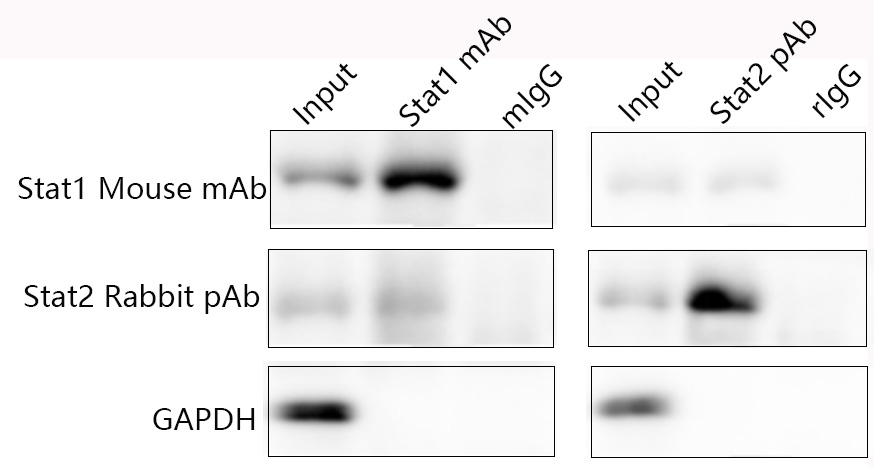
Most “failed Co‑IP” stories aren’t about your hypothesis—they’re about the workflow falling apart at the boring parts: bead slurries sticking to tube walls, skyrocketing background from messy lysates, antibody leaching, or spending three afternoons just titrating a resin you’ll use once. Immunoprecipitation and Co‑IP are still the kingmakers for proving protein–protein interactions and pulling down native complexes under physiologic conditions—but only when the system is clean, fast, and consistent across users. The Universal IP/Co‑IP Toolkit (Magnetic Beads) – KTD104-EN from Abbkine is built to solve exactly that: a magnetic bead–based, antibody‑coupled workflow that trades tedious spin‑column steps and fragile agarose pastes for quick magnetic separation, low‑volume washes, and a “universal” design that plays nicely with a wide range of antibodies and target types. If your current IP feels more like a ritual than a protocol, this toolkit is designed to modernize it without forcing you onto an expensive, brand‑locked automation platform.
Why IP/Co‑IP Still Wins (and Why It Keeps Breaking)”
Even in the ChIP‑seq / Cryo‑EM / AlphaFold era, native IP/Co‑IP remains the most direct way to ask: “Do these two proteins sit in the same complex inside a living cell?” It preserves PTMs, folding, and assembly states that denatured pull‑downs can miss, and it lets you validate antibodies, test mutants, or chase stimulus‑dependent interactions with the actual lysate—not just a synthetic tag.
The catch? The devil is in the matrix:
• Agarose resins need spinning, careful aspiration, and slurry volume math—one slip and you lose beads or suck them out.
• Non‑specific binding from overloaded lysate, sticky proteins, or “sticky”核酸/bead contacts turns your blot into a smear.
• Antibody leaching from Protein A/G (especially with certain species/subclasses) dumps heavy Ig bands right on top of your prey band.
What you actually want is a system that traps the complex firmly, washes gently but thoroughly, and releases a clean eluate—without inventing new problems.
What Makes This Toolkit “Universal” in Practice (Not Just Marketing)
The KTD104-EN kit is centered on magnetic beads pre-activated or optimized for antibody coupling (commonly via Protein A/G/N, depending on format), plus the supporting buffers/luminaries that let you adapt it to your antibody—whether you’re pulling down a tagged construct, a native protein, or screening for partners.
What “universal” really buys you:
• Antibody flexibility: Designed to work with both tagged and endogenous targets—you bring the antibody; the system grabs it.
• Sample flexibility: Suitable for cultured cell lysates, tissues (when properly homogenized/solubilized), and many secreted/secreted‑complex contexts, provided you respect solubility and detergent compatibility.
• Magnetic simplicity: No columns, no clogged frits—just a magnet stand and a few tilts. Beads stay pooled, supernatants stay clear, and wash volumes shrink.
(Exact bead chemistry—e.g. Protein A vs A/G vs A/G/N, or pre-coupled formats—should be confirmed from the official page/spec sheet; the “universal” design philosophy is consistent across Abbkine’s magnetic IP kits.)
The Workflow People Actually Want: Fast, Low-Loss, Low-Background
A clean magnetic IP usually follows a rhythm like this—and Abbkine’s toolkit is built to keep every step short:
- Lyse smart, not hard
Use a mild, non‑denaturing lysis buffer (often 25–50 mM Tris, pH 7.4–7.5, 150 mM NaCl, 0.5–1% NP‑40/IGEPAL or Triton X‑100, plus protease/phosphatase inhibitors). Keep it cold; clear by centrifugation. Save a bit of “Input.” - Couple the antibody to magnetic beads (unless you’re using a pre-coupled bead, which this kit can streamline)
• Wash beads once with buffer → resuspend.• Add your IP antibody → incubate (30 min – 1 h is common for many bead types; sometimes “overnight at 4°C” if you prefer).• Block/clear if recommended, to mop up sticky sites. - Capture: antibody–bead grabs your target from lysate
Add lysate to the antibody–bead suspension → rotate 1–4 h (or overnight at 4°C).
• The magnet pulls beads down in seconds. Remove supernatant cleanly. - Wash with intent (this is where background dies)
Typically 3–5 quick washes with your lysis buffer or a slightly higher-salt wash buffer. The magnetic format means you can wash without worrying about resin packing or accidental loss during aspiration. - Elute & preserve complex integrity
Options depend on your downstream readout:
• Denaturing elution (most common for WB): 2× Laemmli + heating → boil, spin, load.• Native elution (for activity/enzyme tests): gentle acidic Glycine pH ~2.5–3.0, then neutralize; or competitive elution if you’re using a tag system.• Always run Input and IgG control (bead-only or irrelevant IgG) alongside—Co‑IP lives or dies by those lanes.
Total hands‑on time after lysis? Often under 30–40 minutes of actual pipetting/spinning—then the rotator does the work.
Five “Silent Killers” This Toolkit Helps You Defeat
Problem How KTD104-EN’s magnetic workflow attacks it
Bead loss / slurry asymmetry Magnets keep beads pooled; no column clog, no “did I suck up beads?” panic
High background / smearing Controlled coupling + disciplined wash rhythm + optional supplemental washes = cleaner blots
Ig heavy/light bands eating your prey Antibody coupled to beads → less free Ig in eluate; plus bead format supports wash rigor
Scale friction (10 samples → 40?) Magnetic 96‑well mindset: same motions, parallelizable racks, fewer errors
Protocol drift between users Buffer system + defined coupling steps standardize the black art into a lab SOP
Best-Fit Use Cases (Where This Kit Earns Its Keep)
• Endogenous Co‑IP: Pull down your protein of interest with a validated antibody and hunt partners (signaling adaptors, transcription factors pulled into complexes, receptors + scaffolds).
• Tagged IP/Co‑IP: FLAG/HA/Myc or other common tags, where you want a non‑FLAG‑M2‑only route or an orthogonal confirmation.
• Post‑translational modification–dependent interactions: Phospho‑stimulus conditions (keep inhibitors on; keep cold; keep the complex native).
• Crosslinking-safe designs: Many labs crosslink antibody→bead (DSP/BS³) for extra stringency; magnetic beads tolerate the extra wash strength without falling apart.
• Teaching labs & core workflows: The “magnet + tube” simplicity is easier to train, easier to QC, and harder to ruin by accident.
Quick Lab-Hack Checklist Before You Start
• Detergent choice = fate: NP‑40/IGEPAL is gentler than Triton for some complexes; Triton can be harsher but sometimes necessary. Validate with a small pilot.
• Salt matters: 150 mM NaCl is a decent baseline; if background bites, push 200–300 mM during washes (not necessarily lysis).
• IgG control is non‑negotiable: If your “IP Ab” lane looks great but your “IgG” lane also lights up, you don’t have an interaction—you have stickiness.
• Magnet quality counts: Use a rack that actually pulls beads to the side of a 1.5 mL / 2.0 mL tube in <30 s; cheap magnets waste time and cost beads.
The Bottom Line
Good science shouldn’t hinge on whether a bead pellet stayed intact. The Universal IP/Co‑IP Toolkit (Magnetic Beads) – KTD104-EN from Abbkine is designed to strip away the fragile, old‑school bottlenecks and give you a magnetic workflow that’s fast, reproducible, and “universal” enough to handle your antibody—not just a catalog tag. If your current Co‑IP feels like a coin toss, this is the upgrade that turns it back into a method you can trust, replicate, and actually scale.
Product Link: https://www.abbkine.com/product/universal-ip-co-ip-toolkit-magnetic-beads-ktd104-en/





