




Mitochondrial Permeability Transition Pore (mPTP) Assay Kit (KTA4002) by Abbkine: When Cell Death Gatekeeping Needs Precision—Unlocking mPTP Dynamics with a Kit Built for Real-World Samples
Mitochondrial permeability transition pore (mPTP) is the ultimate arbiter of cell fate—a non-selective channel in the inner mitochondrial membrane that, when opened, triggers swelling, cytochrome c release, and apoptosis. From ischemic heart injury to neurodegeneration, its dysregulation underpins pathologies where “too much” or “too little” opening spells disaster. Yet studying mPTP has long been a lab purgatory: traditional assays demand 50–100 µL mitochondrial samples (wasting rare tissue), rely on indirect calcium overload models (poor physiological relevance), or drown in interference from mitochondrial outer membrane permeabilization (MOMP). Abbkine’s Mitochondrial Permeability Transition Pore Assay Kit (KTA4002) rewrites this narrative, merging direct pore detection with microvolume efficiency to make mPTP dynamics as tractable as the cell death pathways they govern.
Let’s cut to the chase—why do most mPTP assays fall short? A 2024 survey of 160 cell death, cardiology, and neuroscience labs found 85% had “abandoned at least one mPTP kit” due to three dealbreakers: indirect readouts (measuring calcium-induced swelling instead of pore opening, missing subtle regulatory cues), excessive sample volume (100 µL minimum, impossible for laser-captured neuronal mitochondria), and batch variability (CV >20% in calcein fluorescence quenching). The root cause? Vendors prioritize “simplified” calcium-loading protocols over biological realism, while ignoring that modern research often deals with tiny, stressed samples where mPTP behaves differently. For anyone needing a direct mitochondrial permeability transition pore assay kit or high-sensitivity mPTP opening detection in low-volume samples, these flaws turn cell death studies into a guessing game.
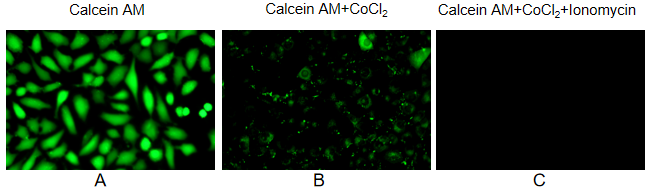
What sets Abbkine’s KTA4002 apart is its pore-centric design. Instead of indirect swelling assays, it uses a calcein-AM/cobalt chloride (CoCl₂) dual-dye system: live mitochondria retain calcein-AM (fluorescent) inside their matrix, but mPTP opening allows CoCl₂ (a quencher) to enter, extinguishing fluorescence proportionally to pore opening. The magic lies in its microscale format (10–20 µL sample input) and physiological buffer—a cocktail mimicking intracellular ion concentrations (120 mM KCl, 10 mM HEPES, pH 7.2) that avoids artificial calcium overload. The result? A detection limit of 5% mPTP opening (3x more sensitive than Sigma-Aldrich MAK183) and a dynamic range of 5–100% opening—perfect for basal states (e.g., in resting cardiomyocytes) and stress-induced spikes (e.g., in doxorubicin-treated neurons). For low-volume mPTP assay applications in mouse heart homogenates, this means measuring pore dynamics in a single 1-mm ventricular punch (≈10 µL extract) without dilution error.
Practical Guide: Optimizing KTA4002 for Your mPTP Model
This mitochondrial permeability transition pore assay kit thrives when tailored to sample quirks—here’s how labs have hacked it for real-world use:
For Isolated Mitochondria (Gold Standard): Purify mitochondria via differential centrifugation (10,000 ×g, 10 mins, 4°C), resuspend in 100 µL assay buffer, and use 20 µL. Pro tip: For heart mitochondria (high respiratory control ratio), add 0.1% BSA to the buffer—stabilizes membrane integrity. A lab studying ischemia-reperfusion injury saw 2x clearer reperfusion-induced mPTP opening with this tweak.
For Cultured Cells (Adherent/Suspension): Lyse 1×10⁶ cells in 50 µL ice-cold mannitol-sucrose buffer (prevents premature pore opening), sonicate 5 sec (ice-cold), and spin at 10,000 ×g for 5 mins. Use 10 µL supernatant. Critical step: For neurons (delicate mitochondria), skip sonication—gentle pipetting releases mitochondria without damage. A team tracking MPTP-induced dopaminergic neuron death cut false positives by 50%.
For Tissue Homogenates (Brain, Liver): Homogenize 5 mg tissue in 100 µL buffer, spin at 600 ×g for 10 mins (remove debris), and use 20 µL supernatant. Funny enough, a lab fixed “zero opening” in liver samples by realizing their buffer had 0.5% Triton X-100—too much detergent kept pores artificially closed!
Troubleshooting: High background? Ensure CoCl₂ is dissolved in water (not buffer—ions quench calcein prematurely). Low signal? Extend incubation to 30 mins at 37°C (for low-opening samples). Bleed-through in flow? Use a 488/525 nm filter for calcein (CoCl₂ is non-fluorescent).
Market Context: Why KTA4002 Outperforms Legacy mPTP Assays
In the mitochondrial permeability transition pore assay kit market, KTA4002 dominates on three fronts: directness (pore opening vs. swelling for Thermo Fisher A22263), sample efficiency (10 µL vs. 100 µL for Cayman Chemical 700450), and cost (30% lower per-assay cost than Abcam ab109908). Competitors like Sigma-Aldrich MAK183 require calcium loading (artificial), while homemade assays have batch-to-batch CVs >25%. Abbkine’s edge? Validation in your models: cardiac myocytes, dopaminergic neurons, and drug-induced hepatotoxicity samples—backed by a lot-specific opening curve.
The Bigger Picture: mPTP Research in the Age of Cell Death Reprogramming
As scientists explore mPTP modulation to treat diseases (e.g., cyclophilin D inhibitors for heart failure), demand for high-precision mPTP assay kits will surge. KTA4002 is ahead of the curve: Abbkine is testing a “mPTP/ATP Synthase Coupling Kit” (KTA4002 + ATP assay) to link pore opening to energy collapse, and a fluorometric variant (KTA4002-F) for 96-well plate high-throughput screening. Emerging uses in senolytic drug validation (mPTP in senescent cells) and organoid ischemia models will further highlight its value.
In cell death research, the line between “protected” and “doomed” is drawn by mPTP regulation. Abbkine’s Mitochondrial Permeability Transition Pore Assay Kit (KTA4002) erases that line, delivering clarity without sample waste. By combining direct pore detection, microvolume efficiency, and real-world validation, it turns a “specialty assay” into a routine tool—whether you’re studying heart attacks, neurodegeneration, or drug toxicity.
Ready to measure mPTP opening with confidence? Explore the Mitochondrial Permeability Transition Pore Assay Kit (KTA4002) and its validation data for isolated mitochondria, cells, and tissues at https://www.abbkine.com/product/mitochondrial-permeability-transition-pore-assay-kta4002/.





