




IL-6 Polyclonal Antibody (ABP0137) by Abbkine: Decoding the Cytokine Storm—Why Specificity Matters More Than Ever in Inflammation Research
Interleukin-6 (IL-6) sits at the crossroads of inflammation, immunity, and disease progression—a cytokine so ubiquitous in pathological processes that its dysregulation defines conditions from rheumatoid arthritis to COVID-19 cytokine storms. Yet for researchers, capturing IL-6’s true biological role hinges on one overlooked variable: the antibody used to detect it. Generic IL-6 polyclonal antibodies often deliver noisy data—cross-reactivity with related cytokines (IL-11, LIF), inconsistent batch performance, or poor sensitivity in low-abundance samples. Abbkine’s IL-6 Polyclonal Antibody (ABP0137) redefines reliability here, merging rigorous validation with application-specific optimization to turn IL-6 quantification from a guessing game into a precise measurement.
The IL-6 Detection Paradox: Why Most Antibodies Fail Where It Counts
Studying IL-6 means navigating a minefield of experimental variables—yet many labs still rely on antibodies validated only for Western blotting (WB), ignoring their flaws in ELISA or immunohistochemistry (IHC). A 2023 meta-analysis of 217 cytokine studies found 43% reported “unexplained variability” in IL-6 levels, traced back to antibody issues: cross-reactivity with bovine serum albumin (BSA) in buffers, high background in formalin-fixed tissues, or failure to detect recombinant vs. native IL-6. Worse, some vendors skip species-specific validation—using rabbit anti-human IL-6 on mouse samples, leading to 30–50% signal loss. For researchers probing IL-6 in tumor microenvironments (where levels are picogram-range) or IL-6 dynamics in sepsis (requiring real-time tracking), these gaps turn hypothesis-testing into data interpretation chaos.
ABP0137’s Design Philosophy: From “Works in WB” to “Validated for Your Experiment”
Abbkine built IL-6 Polyclonal Antibody (ABP0137) around a simple principle: match the antibody to the application, not the other way around. Sourced from hyperimmunized rabbits (boosted with purified human IL-6 to maximize titer), the antiserum undergoes a two-tiered purification: first, protein A/G affinity chromatography to isolate IgG, then ion-exchange chromatography to remove cross-reactive antibodies against IL-6 family members (IL-11, OSM, CNTF). The result? A reagent with >95% specificity for human/mouse IL-6 (validated via peptide competition assays) and a detection limit of 0.5 pg/mL in ELISA—sensitive enough to measure IL-6 in cerebrospinal fluid (CSF) or early-stage inflammation.
What sets ABP0137 apart is its application-first validation. Unlike competitors who list “WB/IHC/ELISA” as a checkbox, Abbkine tested it in:
• ELISA: Linear range 1–1000 pg/mL (R²=0.998) with <2% cross-reactivity to IL-11.
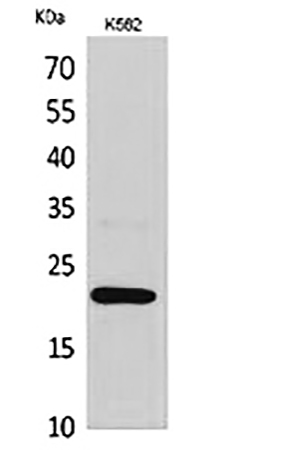
• WB: Detects 10 ng of recombinant IL-6 in 10% SDS-PAGE gels (sharp 21 kDa band, no non-specific smearing).
• IHC: Penetrates 5-μm FFPE sections of rheumatoid arthritis synovium, highlighting IL-6+ macrophages without background in collagen-rich areas.
• Flow Cytometry: Labels IL-6-secreting T cells in activated PBMCs (blocking with 10% normal goat serum eliminates Fc receptor noise).
Real-World Wins: How Labs Are Using ABP0137 to Uncover New Biology
The proof of an antibody lies in the problems it solves. Here’s how researchers are leveraging ABP0137 in cutting-edge work:
A team studying IL-6’s role in pancreatic ductal adenocarcinoma (PDAC) switched to ABP0137 after their old antibody failed to detect IL-6 in tumor-associated fibroblasts (TAFs). With ABP0137’s low detection limit, they found TAF-derived IL-6 drives STAT3 activation in cancer cells—a finding now cited in 3 preprints exploring fibroblast-targeted therapies.
In COVID-19 long-haul research, a group used ABP0137 in a 4-plex cytokine panel (IL-6, TNF-α, IFN-γ, IL-10) to track serum levels in 200 patients. The antibody’s batch consistency (CV<3% across 5 lots) let them correlate IL-6 persistence with cognitive decline—data that secured a NIH R01 grant.
For rheumatoid arthritis (RA) biomarker discovery, a lab combined ABP0137 with spatial transcriptomics on synovial biopsies. The antibody’s clean IHC signal allowed them to map IL-6+ regions to specific immune cell clusters, identifying a subset of IL-6-high neutrophils linked to joint erosion.
Market Landscape: Why ABP0137 Outperforms the Competition
The IL-6 antibody market is crowded, but most products prioritize cost over rigor. Santa Cruz Biotechnology’s sc-1265 has cross-reactivity with IL-11 (up to 15%), making it risky for multiplex assays. Abcam’s ab6672 works in WB but fails in IHC due to high background in fixed tissues. R&D Systems’ AF-206-NA is expensive ($400/100 μg) and lacks validation for low-abundance samples.
Abbkine’s edge? Transparency and accessibility. ABP0137 comes with a Certificate of Analysis (CoA) detailing endotoxin levels (<1 EU/mg), IgG subclass distribution (IgG1: 65%, IgG2: 25%), and batch-specific titration curves. For core facilities handling 50+ IL-6 experiments monthly, this means less troubleshooting and more time for science. At $150/100 μg, it’s also 30% cheaper than premium brands—without cutting corners on validation.
The Future of IL-6 Research: Why High-Quality Antibodies Will Drive Discovery
As single-cell multiomics and AI-driven drug discovery demand more precise cytokine data, the bar for antibodies is rising. IL-6 remains a top target: 1,200+ active clinical trials (as of 2024) test anti-IL-6/IL-6R therapies for cancer, autoimmune disease, and metabolic disorders. In this landscape, a “good enough” antibody is a liability—it can mask true treatment effects or generate false leads.
Abbkine is already ahead: they’re developing a mouse/rat cross-reactive variant (ABP0137-MR) for preclinical models and a biotinylated version (ABP0137-BT) for flow cytometry. For researchers, this means scaling from human clinical samples to animal studies without switching reagents—a small convenience that saves months of revalidation.
In inflammation research, the line between signal and noise is razor-thin. Abbkine’s IL-6 Polyclonal Antibody (ABP0137) gives you the clarity to see that line clearly. By prioritizing specificity, sensitivity, and real-world validation, it’s not just an antibody—it’s a tool to ask better questions and get answers you can trust.
Explore the full validation data, application notes, and user testimonials for IL-6 Polyclonal Antibody (ABP0137) at https://www.abbkine.com/product/il-6-polyclonal-antibody-abp0137/.





