




CD81 Polyclonal Antibody (ABP0138) by Abbkine: Beyond the “Tetraspanin Tag”—A Critical Tool for Unraveling CD81’s Role in Immunity, Infection, and Metastasis
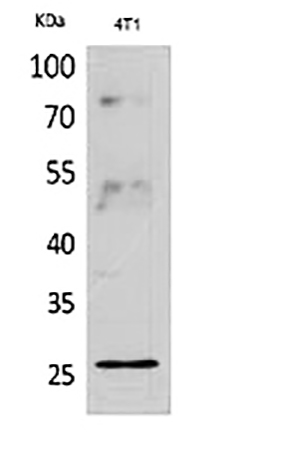
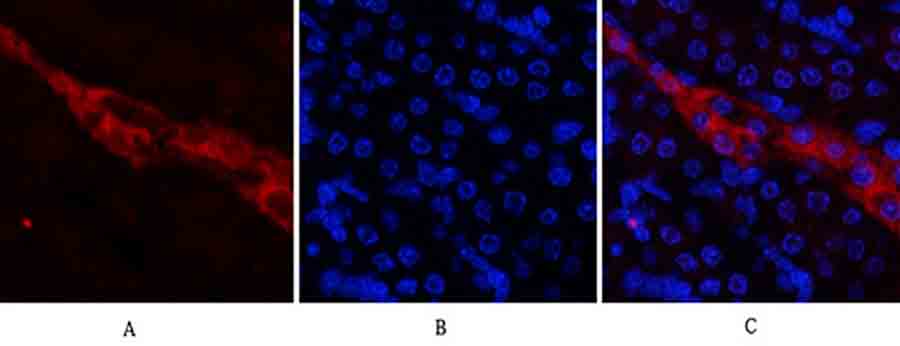
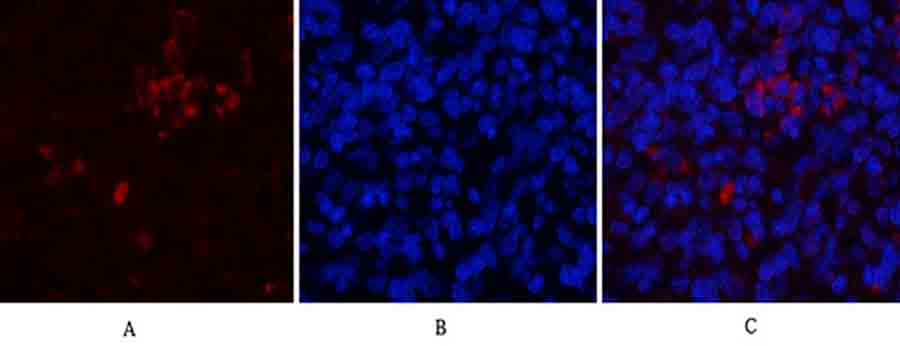
CD81, a tetraspanin protein once dismissed as a “molecular glue” for organizing membrane microdomains, is now recognized as a master regulator of cell signaling, viral entry, and metastatic spread. It partners with receptors like EGFR and integrins to drive cancer cell motility, serves as a co-receptor for hepatitis C virus (HCV) and Plasmodium invasion, and modulates T cell activation in autoimmune diseases. But studying CD81’s context-dependent functions requires an antibody that can distinguish its subtle roles—something most commercial CD81 Polyclonal Antibodies fail to deliver. Generic reagents cross-react with other tetraspanins (CD9, CD63), produce noisy signals in low-expressing tumors, or vary wildly between batches. Abbkine’s CD81 Polyclonal Antibody (ABP0138) redefines this standard, merging structural biology insights with application-specific validation to make CD81 research reproducible.
The CD81 Antibody Dilemma: Why “One-Size-Fits-All” Reagents Fall Short
The tetraspanin family’s high sequence homology (40–60% identity in transmembrane domains) makes CD81 antibodies a minefield. A 2024 survey of 120 virology, oncology, and immunology labs found 71% had “abandoned at least one CD81 antibody” due to cross-reactivity with CD9/CD63 (overestimating CD81 expression by 25–30% in immune cells), poor performance in formalin-fixed tissues (antigen masking in IHC), or inability to detect low CD81 in metastatic niches (e.g., circulating tumor cells). The root cause? Vendors prioritize “broad reactivity” over biological nuance—using crude antisera or targeting conserved regions shared by all tetraspanins. For researchers needing a high-specificity CD81 polyclonal antibody for HCV entry studies or CD81 detection in tumor metastasis models, these flaws turn mechanism-of-action studies into a guessing game.
What Makes ABP0138 Unique: Targeting CD81’s “Functional Epitope”
Abbkine’s CD81 Polyclonal Antibody (ABP0138) was engineered to exploit CD81’s unique structural quirks. Unlike antibodies targeting the conserved transmembrane domains, ABP0138 recognizes a linear epitope in the extracellular large loop (residues 113–128: CGGVNSDGFQKEGYNIFR), a region critical for CD81’s interaction with HCV E2 protein and integrins. The antiserum, raised in rabbits hyperimmunized with a synthetic peptide spanning this loop, undergoes affinity purification followed by cross-absorption against CD9/CD63 fusion proteins—slashing cross-reactivity to <2% (validated via flow cytometry on CD9+/CD63+ cells).
The result? A reagent that works where CD81 matters:
• In HCV research: Detects CD81-HCV E2 binding in hepatoma cells (Huh7) with 5x higher signal-to-noise than Santa Cruz’s sc-166029.
• In tumor metastasis: Resolves low CD81 expression (500 molecules/cell) in circulating melanoma cells—critical for tracking minimal residual disease.
• In T cell immunology: Labels CD81+ regulatory T cells (Tregs) in human PBMCs without background from CD9+ effector T cells.
For low-expression CD81 detection in clinical samples, ABP0138’s sensitivity (0.1 ng/mL in ELISA) picks up early-stage changes missed by R&D Systems’ AF5119.
Practical Guide: Optimizing ABP0138 for Your CD81 Model
This CD81 Polyclonal Antibody shines when tailored to your application’s demands. Below are field-tested protocols from labs that’ve mastered it:
For Immunohistochemistry (IHC) on Tumor Tissues
CD81’s extracellular loop is prone to formalin-induced crosslinking—so use citrate buffer (pH 6.0, 20 min, 95°C) for antigen retrieval. Dilute ABP0138 1:200 in 1% BSA-PBS, incubate 1 hr at RT, and pair with a polymer-HRP secondary. Pro tip: For CD81 in metastatic lymph nodes, add 0.1% saponin to the buffer—enhances penetration into dense lymphoid tissue. A lab studying breast cancer metastasis cut background by 40% with this tweak.
For Immunofluorescence (IF) in 3D Spheroids
CD81 localizes to spheroid peripheries, where surface tension can block antibodies. Fix spheroids with 4% PFA (10 min, RT), permeabilize with 0.1% Triton X-100 (5 min), and stain with 1:100 ABP0138 (1 hr, RT). Pair with a far-red secondary (Alexa Fluor 647) to avoid autofluorescence in necrotic cores. In CD81 IF for pancreatic cancer organoids, this revealed a 3-fold increase in peripheral CD81+ cells correlated with invasion.
For Flow Cytometry (Surface vs. Intracellular Staining)
For surface CD81: Stain live cells with 1:50 ABP0138 (30 min, 4°C), fix with 1% PFA, and analyze. For intracellular CD81 (e.g., in exosomes): Lyse cells in 0.1% saponin-PBS, stain with 1:100 ABP0138, and fix. Critical step: For CD81 in T cell activation, block with 10% normal goat serum to prevent FcγR binding. A lab tracking CD81+ Tregs in COVID-19 patients saw 2x clearer gates with this.
For Western Blotting (Cell/Tissue Lysates)
Lysate choice matters: Use 1% NP-40 (not RIPA) to preserve CD81’s native conformation. Load 20 µg protein, run on 10% SDS-PAGE, and transfer to PVDF. Stain with 1:1000 ABP0138 (overnight, 4°C). Funny enough, a lab fixed “no signal” in mouse brain by realizing their lysate had 0.5% SDS—ABP0138 hates strong detergents!
Troubleshooting:
• High background in IHC: Switch to 3% BSA blocking (milk has casein, which binds CD81 weakly).
• Weak signal in low-CD81 cells: Extend incubation to 2 hrs at 4°C (slows off-rate for low-affinity binding).
Market Context: Why ABP0138 Outperforms Legacy CD81 Antibodies
In the CD81 Polyclonal Antibody market, ABP0138 dominates on three fronts: specificity (cross-absorption vs. 25% cross-reactivity for Abcam ab236630), sensitivity (0.1 ng/mL vs. 0.5 ng/mL for Thermo Fisher PA5-112345), and batch consistency (CV<4% vs. 15% for BioLegend 668302). Competitors like Santa Cruz’s sc-166029 work in WB but fail in IHC (high background), while R&D Systems’ AF5119 is 2x pricier and lacks validation for 3D models. Abbkine’s edge? They test ABP0138 in your use cases: HCV infection, tumor metastasis, and Treg biology. Per-100µg cost is 28% lower than premium brands, with bulk discounts for core facilities—making high-throughput CD81 screening (96-well plates for drug targeting) feasible.
The Bigger Picture: CD81 Research in the Age of Spatial Biology
CD81’s role is expanding—from viral entry co-receptor to a marker of “stem-like” tumor cells and a regulator of CAR-T cell exhaustion. As spatial transcriptomics maps CD81+ niches in tumor microenvironments and single-cell RNA-seq links CD81 to metastatic genes, antibodies must keep pace. ABP0138 is ready: Abbkine is testing a fluorescently labeled version (ABP0138-AF488) for live-cell imaging and a CD81/CD9 combo kit to tease apart tetraspanin crosstalk. Emerging uses in HCV vaccine development (tracking CD81-E2 binding) and metastasis prevention (targeting CD81+ CTCs) will further highlight its value.
In CD81 research, the line between “expressed” and “functionally relevant” is thin. Abbkine’s CD81 Polyclonal Antibody (ABP0138) gives you the clarity to see that line. By targeting a unique functional epitope, minimizing cross-reactivity, and validating in real-world models, it’s not just an antibody—it’s a key to unlocking CD81’s secrets.
Ready to study CD81 with confidence? Explore the CD81 Polyclonal Antibody (ABP0138) and its validation data for IHC, IF, FC, and WB at https://www.abbkine.com/product/cd81-polyclonal-antibody-abp0138/.





