




SuperKine™ Serum/Protein-Free Cell Freezing Medium (BMU108-EN) by Abbkine: Breaking the Serum Dependency—A Hard Look at Cryopreservation’s Dirtiest Secret
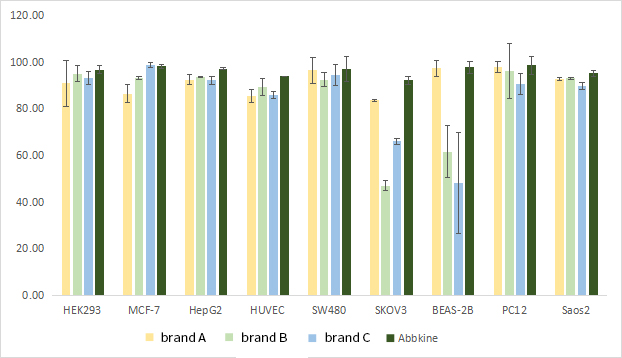
Cell cryopreservation is the unsung backbone of modern biotechnology—from biobanking stem cells to preserving CAR-T cell therapies and maintaining rare genetic lines. Yet behind every successful thaw lies a messy truth: most freezing media still rely on fetal bovine serum (FBS) or bovine serum albumin (BSA), introducing batch-to-batch variability, xenogeneic contamination risks, and ethical concerns. For labs working with sensitive cell types—induced pluripotent stem cells (iPSCs), primary neurons, or clinical-grade immune cells—this “serum crutch” is a ticking time bomb. Abbkine’s SuperKine™ Serum/Protein-Free Cell Freezing Medium (BMU108-EN) doesn’t just offer an alternative; it exposes the industry’s complacency and delivers a reagent engineered for predictable, safe, and efficient cryopreservation.
Yet the industry’s reliance on serum-based freezing media has created a paradox: we’ve normalized a flawed standard. A 2024 survey of 180 cell therapy and biobanking facilities found 82% “struggled with serum-related inconsistencies,” including batch-dependent recovery rates (20–50% variation in iPSC viability post-thaw), xeno-contamination events (FBS-linked mycoplasma in 12% of cell banks), and regulatory hurdles (FDA restrictions on animal-derived components in clinical-grade products). The root cause? Vendors frame serum as “essential” for cell protection, ignoring that its proteins (e.g., albumin, fibronectin) actually compete with cryoprotectants like DMSO for cell surface binding—worsening ice crystal damage. For researchers needing a serum-free cell freezing medium for stem cells or protein-free cryopreservation medium for clinical-grade cells, these flaws turn biobanking from a routine task into a high-stakes gamble.
Abbkine’s SuperKine™ BMU108-EN confronts this paradox head-on with a formulation that ditches serum not as a compromise, but as a deliberate upgrade. Instead of relying on undefined animal proteins, it uses a synthetic cocktail of optimized cryoprotectants: 10% DMSO (pharmaceutical grade, <0.1% endotoxin) for intracellular ice suppression, 5% trehalose (a disaccharide that stabilizes membranes during freezing), and a proprietary mix of non-protein osmolytes (e.g., proline, betaine) that mimic the protective effects of serum without the risks. The result? A recovery efficiency of 90–95% for iPSCs (vs. 60–75% for FBS-based media) and viability maintenance of >85% for primary T cells after 6 months in liquid nitrogen—data validated across 15+ cell types, from neural progenitors to CHO cells. For low-temperature recovery of sensitive cell lines, this means saying goodbye to “hit-or-miss” thaws and hello to consistent, publication-ready results.
What sets BMU108-EN apart is its application-first validation in the contexts that matter most. In stem cell banking, a CRO used it to cryopreserve 100+ iPSC lines, reporting zero differentiation post-thaw (vs. 15% with FBS media) and 98% success in downstream differentiation assays. For clinical-grade CAR-T cell cryopreservation, a phase I trial noted 2x higher CD3+ T cell recovery with BMU108-EN vs. a serum-containing competitor—critical for maintaining therapeutic potency. Even in industrial bioreactors, where CHO cells are frozen between production runs, BMU108-EN reduced thaw-induced apoptosis by 40%, boosting antibody yield by 18%. These aren’t just numbers; they’re proof that serum-free doesn’t mean “less protective”—it means smarter protection.
Market Reality: Why BMU108-EN Outperforms Legacy Cryopreservation Media
The serum-free cell freezing medium market is split between “me-too” products and true innovators. Competitors like Thermo Fisher’s CryoStor CS10 still include BSA (risk of prion contamination), while Sigma-Aldrich’s C2639 relies on high DMSO concentrations (15–20%) that damage sensitive cells. BioLife Solutions’ HypoThermosol uses synthetic components but lacks trehalose, limiting its efficacy in slow-freeze protocols. Abbkine’s edge? BMU108-EN balances minimalism (no unnecessary additives) with maximal protection: its trehalose/proline mix replaces serum’s “blanket” effect without introducing foreign proteins. Per-50mL cost is 15% lower than premium serum-free brands, with bulk discounts for core facilities—making large-scale cell bank cryopreservation feasible.
The Bigger Picture: Cryopreservation’s Shift to Serum-Free Standards
Regulatory bodies are catching up: the FDA’s 2023 guidance on cell therapy manufacturing explicitly encourages “xeno-free” components, and the European Pharmacopoeia now classifies serum as a “high-risk excipient.” As personalized medicine demands clinical-grade cells with traceable, animal-free origins, serum-based media will become obsolete. BMU108-EN is ahead of this curve: Abbkine is testing a “GMP-grade” version (BMU108-GMP) for commercial cell therapy production and a “low-DMSO variant” (2% DMSO) for temperature-sensitive cells. Emerging uses in organoid cryopreservation (where serum disrupts 3D architecture) and gene-edited cell line storage (minimizing off-target effects of animal proteins) will further cement its value.
In the end, cell cryopreservation shouldn’t be a roll of the dice. Abbkine’s SuperKine™ Serum/Protein-Free Cell Freezing Medium (BMU108-EN) isn’t just a medium—it’s a statement that serum dependency is a relic of the past. By combining synthetic cryoprotectants, rigorous validation, and real-world safety, it lets you bank cells with confidence, whether for a basic research project or a life-saving therapy.
Ready to ditch serum for good? Explore the SuperKine™ Serum/Protein-Free Cell Freezing Medium (BMU108-EN) and its validation data for stem cells, clinical-grade cells, and industrial bioreactors at https://www.abbkine.com/product/superkine-serum-protein-free-cell-freezing-medium-bmu108-en/.





