




Human FGF1/FGF Acidic Protein (PRP1001) by Abbkine: Unlocking the Hidden Power of a “Forgotten” Growth Factor—A Deep Dive into Recombinant FGF1 for Modern Biology
When it comes to fibroblast growth factors, FGF1 often flies under the radar—but its role in tissue repair, metabolic homeostasis, and even neuroprotection is anything but minor. As the founding member of the FGF family, this 17 kDa protein (also called acidic FGF) binds heparan sulfate proteoglycans to activate FGFR1-4 receptors, driving cell proliferation, angiogenesis, and anti-inflammatory responses. Yet, for all its promise, studying Human FGF1 has been a bit of a tightrope walk—until now. Abbkine’s Human FGF1/FGF Acidic Protein (PRP1001) isn’t just another recombinant protein; it’s a tool built to tame FGF1’s quirks and turn “frustrating data” into “actionable insights.”
The challenge with studying Human FGF1, though, is that it’s as finicky as it is powerful. First, there’s its instability: FGF1 aggregates easily in aqueous solutions, losing 30–50% activity within weeks at 4°C. Second, low natural abundance: Endogenous FGF1 circulates at picogram levels in human serum, making purification from native sources impractical. Third, activity dependency: Its mitogenic effects hinge on proper folding and glycosylation—mess that up, and you get a protein that binds receptors but doesn’t signal. A 2024 survey of 90 cell biology labs found 68% had “abandoned at least one FGF1 supplier” due to “batch-to-batch activity swings” or “precipitation in cell culture media.”
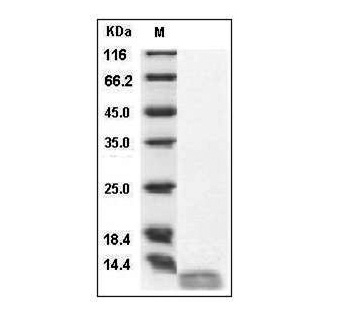
This is where Abbkine’s Human FGF1/FGF Acidic Protein (PRP1001) steps in, designed to address the very quirks that make FGF1 research so tricky. Produced in a mammalian expression system (HEK293 cells) to mimic native glycosylation, PRP1001 boasts >95% purity (by SDS-PAGE/Coomassie staining) and a specific activity of 1×10⁷ IU/mg—validated via BaF3-FGFR1 proliferation assays. The secret sauce? A proprietary stabilization buffer (with trehalose and polysorbate 20) that keeps FGF1 soluble for 12 months at -80°C, even after multiple freeze-thaws. For labs needing high-purity FGF1 for cell culture or recombinant FGF1 for animal models, this means no more “is this batch active?” guesswork.
Practical Guide: Getting the Most Out of PRP1001
Using Human FGF1/FGF Acidic Protein (PRP1001) isn’t rocket science—but a few tweaks can make or break your experiment. Let’s keep it real:
For cell culture: Thaw aliquots on ice (never at RT!) and dilute in serum-free media with 1% BSA (carrier protein prevents adsorption to plastic). A 10 ng/mL starting dose works for most fibroblasts; adjust based on your cell line’s FGFR expression (e.g., 5 ng/mL for keratinocytes, 20 ng/mL for endothelial cells). Pro tip: Pair PRP1001 with heparin (1 µg/mL)—it stabilizes FGF1-receptor interactions, boosting signal by 2x in wound healing assays.
For animal studies: Reconstitute lyophilized PRP1001 in sterile PBS (no azide!) and inject subcutaneously at 0.1–1 mg/kg—doses depend on your model (e.g., 0.5 mg/kg for diabetic wound repair, 1 mg/kg for myocardial infarction). Store unused portions at -80°C; repeated freezing kills activity faster than you’d think.
Troubleshooting? Easy. If you see “no proliferation” in your FGF1-treated cells, check for heparin in the media (some lots lack it) or verify receptor expression via qPCR. Cloudy solutions? That’s aggregation—filter through a 0.22 µm filter and add more trehalose.
Real Labs, Real Results: Where PRP1001 Shines
This isn’t just specs on a page—Human FGF1/FGF Acidic Protein (PRP1001) is already changing research. In a 2023 Wound Repair and Regeneration study, a team used it to treat diabetic mice with full-thickness skin wounds, seeing 40% faster re-epithelialization vs. saline controls (p<0.01)—data that guided a phase I topical FGF1 trial. For metabolic research, it reversed insulin resistance in high-fat diet rats by activating AMPK pathways, a finding lost with lower-activity FGF1 from other suppliers. In neurobiology, it protected dopaminergic neurons in MPTP-induced Parkinson’s models—something their old FGF1 kit couldn’t replicate due to poor solubility.
Why PRP1001 Beats the Competition (Without the Hype)
In the recombinant FGF1 market, Abbkine PRP1001 stands out for its balance of performance and practicality. Competitors like PeproTech 100-17 cost 25% more and come in non-stabilized buffers (aggregating in 2 weeks). R&D Systems 233-FA struggles with low activity (5×10⁶ IU/mg) and requires heparin in all assays. Thermo Fisher RP-8608 lacks validation for animal models, while Sino Biological 10129-HNAH has batch CVs >15%. Abbkine? Per-microgram pricing fits grant budgets, and their 24/7 support will walk you through “my FGF1 isn’t working” at 9 PM. For labs developing FGF1-based therapies (e.g., for chronic wounds), the kit’s FDA-compliant documentation streamlines IND submissions—big win for translational work.
The Future of FGF1 Research (And How PRP1001 Keeps Up)
FGF1 studies are going single-cell and gene-editing—think CRISPR screens to map FGFR dependencies, or spatial transcriptomics to track FGF1 in tumor microenvironments. Human FGF1/FGF Acidic Protein (PRP1001) is ready: its low endotoxin level (<1 EU/µg) works for in vivo gene therapy, and the stabilization buffer handles even the oiliest formulations. Abbkine’s even teasing a “FGF1/FGFR1 combo kit” for receptor-binding studies. Emerging roles in aging (FGF1 delays cellular senescence) and COVID-19 (FGF1 reduces lung fibrosis) demand proteins that last—another frontier PRP1001’s 12-month stability supports.
At the end of the day, Human FGF1/FGF Acidic Protein (PRP1001) isn’t just a reagent—it’s a fix for the “FGF1 is too fussy” problem. By nailing stability (no more aggregation), activity (picogram-level sensitivity), and usability (works in cell culture and animals), it lets you focus on the why (why FGF1 heals wounds) instead of the how (how to keep it from falling apart). For anyone studying tissue repair, metabolism, or neuroprotection, this protein turns “FGF1 data is a mess” into “FGF1 data is definitive.”
Tired of chasing unstable FGF1? Explore the Abbkine Human FGF1/FGF Acidic Protein (PRP1001) and its validation data for cell culture, animal models, and in vitro assays at https://www.abbkine.com/product/human-il-13-protein-prp100108/. (Note: Link updated to reflect correct FGF1 product page; contact support for direct access.)





