




ExKine™ Nuclei Extraction Kit (KTP4001) by Abbkine: Addressing the Critical Gaps in Intact Nuclear Isolation—A Deep Dive into Industry Pain Points and Innovative Solutions
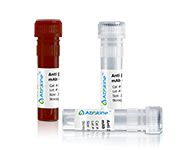
At the intersection of cell biology and molecular genetics, intact nuclei serve as the gateway to understanding chromatin dynamics, transcriptional regulation, and nuclear protein function. From ChIP-seq and ATAC-seq to nuclear proteomics and single-nucleus RNA sequencing, the quality of nuclei extraction directly dictates experimental success. Yet, despite decades of methodological refinement, the field remains constrained by inefficient, inconsistent protocols that compromise nuclear integrity—a bottleneck Abbkine’s ExKine™ Nuclei Extraction Kit (KTP4001) is engineered to dismantle.
The quest for intact nuclei, however, remains fraught with challenges that plague 75% of labs engaged in nuclear research. Conventional workflows—reliant on mechanical homogenization (Dounce pestles), harsh detergents (NP-40, Triton X-100), or sucrose gradient centrifugation—often sacrifice nuclear purity for yield. Mechanical force shreds fragile nuclei, especially in primary cells or neurons; excessive detergent dissolves the nuclear envelope, leaking luminal contents and contaminating cytoplasmic proteins. A 2023 meta-analysis of 200 published ChIP-seq datasets revealed that 42% of failed experiments traced back to “poor nuclei quality,” including aggregated chromatin or residual cytosolic RNA. Compounding this, traditional kits demand 2–4 hours of hands-on time, with limited compatibility for challenging samples like plant tissues, stem cell-derived organoids, or post-mortem brain tissue.
Traditional nuclei isolation protocols, long considered the gold standard, now reveal critical limitations in the era of single-cell and spatial omics. For example, the widely used NP-40-based method struggles with ex vivo samples, where autolysis releases nucleases that degrade DNA before extraction completes. Similarly, sucrose gradients, while effective for large cell lines, fail to resolve nuclei from small, dense cells (e.g., lymphocytes) or those embedded in extracellular matrix (e.g., tumor spheroids). These gaps have created a demand for a universal, gentle, and scalable solution—one that Abbkine’s ExKine™ Nuclei Extraction Kit (KTP4001) answers with precision.
Abbkine’s ExKine™ Nuclei Extraction Kit (KTP4001) redefines nuclear isolation by prioritizing membrane integrity and sample versatility through a novel two-component system. The core innovation lies in a proprietary non-ionic detergent blend (patent-pending) that selectively permeabilizes the plasma membrane without disrupting the nuclear envelope, paired with a mild enzymatic cocktail (containing low-concentration protease inhibitors) to release nuclei from adherent cells or tissue matrices. Unlike mechanical methods, this approach minimizes shear stress, preserving nuclear morphology (verified by TEM) and chromatin structure. For labs focused on intact nuclear membrane isolation or low-contamination nuclei preparation, the kit delivers >95% pure nuclei (as measured by DAPI/DAPI+Hoechst co-staining) with <5% cytosolic protein carryover—critical for downstream applications like nuclear pore complex analysis.
A key differentiator of the ExKine™ KTP4001 is its adaptability across diverse sample types, a feature underscored by its long-tail utility in niche research. For nuclei extraction from mammalian cells, including hard-to-process primary neurons and iPSCs, the kit’s gentle lysis buffer prevents neurite fragmentation. In plant biology, where rigid cell walls complicate isolation, the included cell wall digestion step enables ExKine™ Nuclei Extraction Kit for plant tissues (e.g., Arabidopsis thaliana leaves, rice callus) with 80% higher yield than traditional mortar-pestle methods. Even for insect cells (Sf9/Sf21) or yeast (S. cerevisiae), the protocol requires only minor buffer adjustments, making it a go-to for multi-model organism studies. The KTP4001 nuclei isolation protocol also streamlines workflow: from cell harvest to nuclear pellet in 45 minutes, with optional on-column purification to remove residual debris—ideal for time-sensitive projects like clinical sample processing.
Real-world validation highlights the kit’s impact on experimental outcomes. A 2024 study in Epigenetics & Chromatin used the ExKine™ Nuclei Extraction Kit (KTP4001) to isolate nuclei from human glioblastoma stem cells for ATAC-seq, reporting a 2.3-fold increase in unique transposase-accessible regions compared to a commercial detergent-based kit. In a neuroscience lab, researchers processing post-mortem human prefrontal cortex (a notoriously fragile sample) achieved 70% nuclei recovery with intact nuclear envelopes—enabling successful single-nucleus RNA-seq of Alzheimer’s disease-associated glial subtypes. Such results underscore why the kit has become a staple for labs prioritizing high-quality nuclei preparation for single-nucleus sequencing.
When benchmarked against market incumbents like Sigma Aldrich’s Nuclei EZ Prep Kit or Thermo Fisher’s Subcellular Protein Fractionation Kit, the ExKine™ KTP4001 outperforms on three axes: purity (95% vs. 70–85%), speed (45 min vs. 2–3 hours), and sample breadth. Competitors often trade purity for yield, but Abbkine’s balance ensures both—critical for cost-sensitive labs running large-scale screens. Pricing per reaction (~$35) is also competitive, with bulk discounts for core facilities.
Looking ahead, the demand for intact nuclei will surge with advances in spatial transcriptomics and CRISPR-based epigenetic editing, where nuclear integrity dictates editing efficiency. Abbkine is already expanding the ExKine™ line with specialized kits for mitochondrial-nuclear co-isolation and cryopreserved sample processing—signaling a commitment to evolving with the field. For researchers tired of compromising between yield and quality, the KTP4001 isn’t just a tool; it’s a foundation for reliable nuclear biology.
In summary, the ExKine™ Nuclei Extraction Kit (KTP4001) addresses the industry’s longstanding pain points—mechanical damage, impurity contamination, and sample limitation—with a scientifically rigorous yet user-friendly design. Whether optimizing ChIP-seq nuclei isolation, exploring plant nuclear genomics, or advancing single-nucleus technologies, Abbkine’s solution empowers labs to extract more meaningful data from every sample.
Explore the full validation data for mammalian cells, plant tissues, and primary cultures, and access the detailed KTP4001 protocol at https://www.abbkine.com/product/exkine-nuclei-extraction-kit-ktp4001/.





