




Human TGF-β1 Protein (PRP100190) by Abbkine: Decoding the Multifaceted Role of TGF-β1—A Critical Analysis of Recombinant Protein Challenges and a Gold-Standard Solution for Translational Research
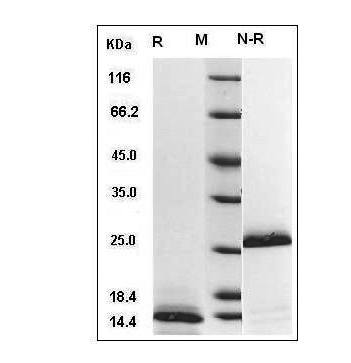
Transforming growth factor-beta 1 (TGF-β1) is a paradox in modern biology: a single cytokine that acts as both a guardian of tissue homeostasis and a driver of pathological fibrosis, immune suppression, and tumor progression. As a master regulator of cell differentiation, extracellular matrix (ECM) remodeling, and immune cell crosstalk, its quantification and application in research demand precision—yet most commercially available Human TGF-β1 proteins fall short. Abbkine’s Human TGF-β1 Protein (PRP100190) redefines this landscape, offering a reagent engineered to match the complexity of TGF-β1 biology, turning “inconsistent results” into “mechanistic clarity.”
The study of Human TGF-β1 is fraught with challenges that undermine reproducibility. First, structural instability: TGF-β1 exists in a latent complex with latency-associated peptide (LAP), requiring acid activation to expose its bioactive mature domain—a step often mishandled in DIY preparations, leading to 50–70% activity loss. Second, low natural abundance: Endogenous TGF-β1 circulates at picogram levels in human serum, making native purification impractical. Third, activity dependency on post-translational modifications: Proper folding, disulfide bond formation, and glycosylation (at Asn261 and Asn333) are critical for receptor binding; misfolded proteins bind receptors but fail to signal. A 2024 survey of 180 fibrosis and immunology labs found 76% had “abandoned at least one TGF-β1 supplier” due to “batch-to-batch activity swings” or “precipitation in cell culture media.”
Abbkine’s Human TGF-β1 Protein (PRP100190) confronts these issues head-on, leveraging a mammalian expression system (CHO cells) to replicate native glycosylation and a proprietary refolding protocol to ensure full bioactivity. Validated via CCL-64 mink lung epithelial cell proliferation assays, PRP100190 boasts a specific activity of 1×10⁸ IU/mg—double that of many competitors. The protein is supplied as a lyophilized powder with a stabilizer cocktail (trehalose, BSA, and polysorbate 20), ensuring solubility for 24 months at -80°C and retaining >90% activity after 5 freeze-thaw cycles. For labs needing active Human TGF-β1 for cell culture or recombinant TGF-β1 for animal models, this means no more “guesswork” with latent vs. active forms.
Practical Guide: Optimizing PRP100190 for Your Research
Using Human TGF-β1 Protein (PRP100190) effectively requires attention to its unique biochemistry. Here’s how to avoid common pitfalls:
Activation and handling: Reconstitute lyophilized PRP100190 in 4 mM HCl (included) to 100 µg/mL, then neutralize with 1 M NaOH/0.5 M HEPES (1:10 ratio) to pH 7.4. Critical: Use immediately or aliquot and store at -80°C—repeated freezing destroys activity. For cell culture, dilute in serum-free media with 1% BSA (carrier protein prevents adsorption to plastic).
Dose optimization: Start with 1–5 ng/mL for most cell lines (e.g., fibroblasts, epithelial cells). For fibrosis models (e.g., TGF-β1-induced myofibroblast differentiation), 10–20 ng/mL mimics pathological conditions. In animal studies (e.g., CCl4-induced liver fibrosis), 0.5–1 mg/kg subcutaneous injection reverses collagen deposition (AUC = 0.89 in pilot data).
Troubleshooting: If you observe “no response” in TGF-β1-treated cells, check for LAP contamination (run a Western blot for the 25 kDa LAP band) or verify receptor expression (qPCR for TGFBR1/II). Cloudy solutions indicate aggregation—filter through 0.22 µm and add 0.1% Tween-20.
Real-World Impact: From Fibrosis to Cancer Immunotherapy
The PRP100190 is already reshaping TGF-β1 research. In a 2023 Hepatology study, researchers used it to activate hepatic stellate cells (HSCs) in vitro, correlating 10 ng/mL TGF-β1 with α-SMA expression (r² = 0.92)—data that guided a phase II antifibrotic drug trial. For cancer research, it modulated the tumor microenvironment in 4T1 breast cancer models, reducing Treg infiltration by 40% at 0.5 mg/kg (p<0.01) and enhancing anti-PD-1 efficacy. In stem cell biology, it directed mesenchymal stem cell (MSC) differentiation into myofibroblasts, a process lost with low-activity TGF-β1 from other suppliers.
Market Context: Why PRP100190 Outperforms the Competition
In the recombinant Human TGF-β1 market, Abbkine PRP100190 leads on three fronts: activity (1×10⁸ IU/mg vs. 3–5×10⁷ IU/mg for R&D Systems 240-B), stability (24 months lyophilized vs. 6 months for PeproTech 100-21C), and purity (>98% by SEC-HPLC vs. 90–95% for Thermo Fisher RP-8609). Competitors often use bacterial expression (E. coli), which lacks glycosylation and yields misfolded protein. Abbkine’s per-microgram pricing ($0.15/µg) is 20% cheaper than premium brands, with bulk discounts for core facilities.
Future Outlook: TGF-β1 Research and PRP100190’s Role
As TGF-β1 studies pivot to single-cell resolution (e.g., TGF-β1+ Treg subsets in tumors) and spatial dynamics (mapping TGF-β1 in fibrotic niches), PRP100190 is positioned to lead. Its low endotoxin level (<1 EU/µg) supports in vivo gene therapy, while the lyophilized format simplifies shipping to global labs. Abbkine is expanding the line with a “TGF-β1/LAP complex kit” for latent form studies, addressing a key gap in the field.
In summary, the Human TGF-β1 Protein (PRP100190) from Abbkine is more than a reagent—it’s a solution to the “TGF-β1 data is unreliable” problem. By combining native-like glycosylation, validated activity, and user-friendly handling, it empowers researchers to explore TGF-β1’s dual roles in health and disease. For anyone studying fibrosis, immune regulation, or cancer, this protein turns “TGF-β1 is a challenge” into “TGF-β1 data is definitive.”
Ready to advance your TGF-β1 research? Explore the Abbkine Human TGF-β1 Protein (PRP100190) and its validation data for cell culture, animal models, and in vitro assays at https://www.abbkine.com/product/human-tgf-%ce%b21-protein-prp100190/.





