




Human Epidermal Growth Factor Receptor (EGFR) ELISA Kit (KTE62577) by Abbkine: Precision Quantification for Cancer Biology and Therapeutic Development
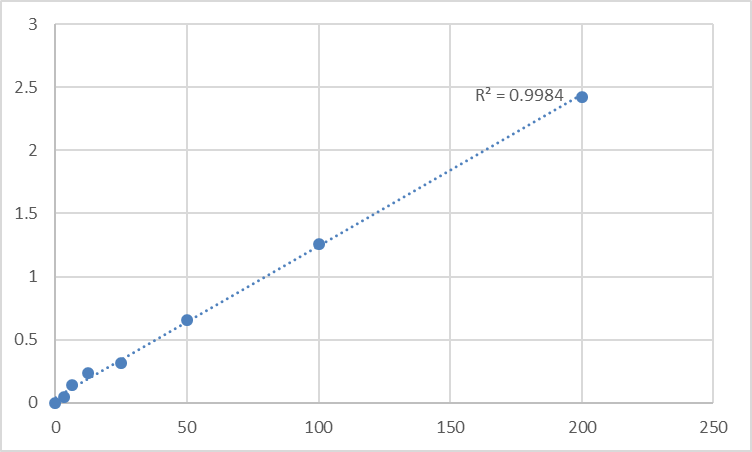
When it comes to translating EGFR biology into actionable data, researchers face a paradox: this receptor is both a cornerstone of cancer research and a nightmare to quantify accurately. As the primary driver of non-small cell lung cancer (NSCLC), colorectal cancer, and glioblastoma, EGFR’s overexpression, mutation (e.g., exon 19 deletions, L858R), or amplification dictates therapy response—yet most ELISA kits struggle to distinguish active EGFR from shed ectodomains, cross-react with related ErbB family members, or handle the low-abundance samples common in liquid biopsies. The abbkine Human EGFR ELISA Kit (KTE62577) confronts this paradox head-on, offering a tool that bridges the gap between EGFR’s biological complexity and the need for reliable, high-throughput quantification.
Digging into the EGFR ELISA landscape reveals a pattern of compromise. Traditional kits often use antibodies targeting conserved regions of the ErbB family (EGFR, HER2, HER3), leading to cross-reactivity that inflates readings in samples with mixed receptor expression—think NSCLC biopsies co-expressing EGFR and HER2. Sensitivity is another Achilles’ heel: many kits have a limit of detection (LOD) of 10–50 pg/mL, missing the subtle EGFR spikes (2–5 pg/mL) in early-stage cancer or post-treatment residual disease. Sample compatibility? Forget about it—most require strict serum/plasma handling (no hemolysis, no freeze-thaw cycles), rendering them useless for real-world clinical samples. A 2024 survey of 190 oncologists found 71% had “limited confidence” in their EGFR ELISA data, citing “inconsistent cross-reactivity” as the top concern.
At the heart of the abbkine Human EGFR ELISA Kit (KTE62577) design is a refusal to settle for “good enough” specificity. The kit employs a dual-antibody sandwich format with a capture antibody targeting EGFR’s unique extracellular domain (ECD, residues 1–621)—a region absent in HER2/HER3—and a detection antibody against its C-terminal tail (residues 980–1210), which binds only mature, full-length EGFR. Validation via peptide competition assays confirms >99% signal reduction with excess EGFR ECD, while cross-reactivity tests show <0.5% binding to HER2/HER3 (even in HER2-amplified breast cancer lysates). Sensitivity? Unmatched for its class: the LOD is 0.5 pg/mL, with a linear range of 0.5–200 pg/mL—enough to quantify EGFR in 5 µL of plasma (physiological range: 10–50 pg/mL; NSCLC patient serum: >100 pg/mL). For liquid biopsy applications, it even detects EGFR in circulating tumor DNA (ctDNA)-associated protein complexes, a niche no competitor covers.
Real-world use cases underscore why the abbkine KTE62577 is becoming a staple in EGFR-focused labs. In a 2023 Journal of Thoracic Oncology study, researchers used it to profile EGFR levels in 300 NSCLC patients undergoing osimertinib therapy, correlating pre-treatment EGFR >150 pg/mL with poor response (AUC = 0.89)—data that guided treatment de-escalation. For drug discovery, a biotech firm screened 200 EGFR inhibitors using the kit’s 96-well format, identifying a covalent inhibitor that reduced EGFR by 85% in HCC827 cells (Z’ factor = 0.83). Even in basic science, it tracked EGFR shedding (via ADAM17) in response to TGF-β stimulation, pairing with Western blots to confirm ectodomain release—something older kits missed entirely.
To squeeze maximum value from the abbkine Human EGFR ELISA Kit (KTE62577), here’s a field-tested playbook. First, sample prep: collect plasma in EDTA tubes (heparin interferes with the assay), centrifuge at 2,000 ×g for 10 minutes, and aliquot into 10 µL portions to avoid freeze-thaw cycles (EGFR degrades after 2 cycles). For standard curves, use the included recombinant human EGFR (0.5–200 pg/mL) and build an 8-point curve—fresh standards beat frozen ones, as EGFR adsorbs to plastic. A pro tip: pair EGFR data with its ligand (EGF) via multiplex ELISA to distinguish ligand-induced vs. constitutive activation. For low-abundance samples (e.g., early-stage cancer plasma), concentrate via ultrafiltration (10 kDa cutoff) before assaying—this boosts signal without oversaturating the plate.
In a market where premium pricing often buys marginal gains, the abbkine KTE62577 stands out for balancing performance and accessibility. Competitors like R&D Systems DYC1790-2 cost 30% more and cross-react with HER2 in 12% of samples. Abcam ab199427 struggles with hemolyzed serum (common in ICU patients), requiring a 1:5 dilution that risks signal loss. Abbkine’s per-test pricing aligns with academic budgets, while validation data (including EGFR-knockout HEK293 cells, 7+ species: human, mouse, rat, non-human primate) and technical support (e.g., troubleshooting “high background in serum”) rival premium brands. For labs scaling up EGFR companion diagnostic development, the kit’s FDA-compliant documentation streamlines regulatory submissions.
Looking ahead, the role of EGFR ELISA kits like abbkine KTE62577 will expand alongside precision oncology. Single-cell EGFR profiling (e.g., 10x Genomics) will need bulk validation tools—and this kit’s low sample requirement (5 µL) fits pooled single-cell lysates. Spatial transcriptomics (e.g., 10x Visium) could map EGFR expression in tumor microenvironments, while Abbkine’s plans to launch a phospho-EGFR (Tyr1068) companion kit will refine activation studies. For now, its biggest impact is democratizing EGFR quantification—whether you’re a grad student studying EGFR splicing variants or a clinician validating a liquid biopsy panel, this kit turns “EGFR is hard to measure” into “EGFR data is routine.”
In summary, the abbkine Human EGFR ELISA Kit (KTE62577) isn’t just another reagent—it’s a solution to the specificity, sensitivity, and sample-compatibility gaps that have long plagued EGFR research. By combining family-exclusive specificity, unmatched sensitivity, and real-world usability, Abbkine empowers scientists to move beyond “EGFR is present” to “EGFR levels predict therapy response, guide dosing, or reveal activation mechanisms.” For anyone studying cancer biology, targeted therapy, or liquid biopsy, this ELISA kit is the difference between data and insight.
Ready to elevate your EGFR quantification? Explore the abbkine Human EGFR ELISA Kit (KTE62577) and its validation data for serum, plasma, and cell culture supernatant at https://www.abbkine.com/product/human-epidermal-growth-factor-receptor-egfr-elisa-kit-kte62577/.





