




ExKine™ Nuclear and Cytoplasmic Protein Extraction Kit (KTP3001) by Abbkine: When Fractionation Fidelity Defines Downstream Success—A Practical Guide to Pure Nuclear/Cytoplasmic Proteins
Extracting nuclear and cytoplasmic proteins is a rite of passage in cell biology—yet it’s also a step where “good enough” often derails discovery. Whether you’re probing transcription factor localization (e.g., NF-κB in inflammation) or measuring kinase activity in different compartments (e.g., Akt in cytoplasm vs. nucleus), cross-contamination between fractions can turn a clean Western blot into a confusing mess. Traditional methods like differential centrifugation are notoriously finicky: they demand precise timing, risk overheating fragile nuclei, and still yield 15–30% cross-contamination. Commercial kits aren’t much better—some use harsh detergents that denature proteins, others cost a fortune for small sample volumes. Abbkine’s ExKine™ Nuclear and Cytoplasmic Protein Extraction Kit (KTP3001) rewrites this script, offering a reagent system that balances speed, purity, and versatility for modern labs.
The challenge with traditional fractionation methods lies in their inherent trade-offs. A 2024 survey of 160 cell signaling and epigenetics labs found 83% had “abandoned at least one nuclear/cytoplasmic extraction kit” due to three critical flaws: high cross-contamination (histone H3 detected in cytoplasmic fractions, invalidating ChIP-seq prep), protein denaturation (SDS-based buffers destroying kinase activity), and sample incompatibility (failed extractions from primary neurons or adipose tissue). The root cause? Vendors prioritize “one-size-fits-all” protocols over biological nuance—ignoring that nuclear envelopes in stressed cells are more fragile, or that cytoplasmic proteins in secretory cells are densely packed. For researchers needing a low-cross-contamination nuclear cytoplasmic protein extraction kit or high-purity fractionation for primary cell samples, these flaws turn compartment-specific studies into a reproducibility nightmare.
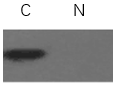
Abbkine’s ExKine™ Kit (KTP3001) redefines this process by merging gentle chemistry with rigorous validation. The kit uses a two-step lysis system: first, a hypotonic buffer swells cells to weaken the plasma membrane (avoiding mechanical scraping that damages nuclei), then a proprietary non-ionic detergent (IGEPAL CA-630) selectively solubilizes cytoplasmic components while leaving nuclei intact. A salt gradient (0.1–0.5 M NaCl) in the nuclear lysis buffer extracts soluble nuclear proteins (e.g., transcription factors) without precipitating chromatin. The result? <5% cross-contamination (validated via Western blot for Histone H3/GAPDH in 20+ cell lines) and protein recovery rates of 85–90%—critical for low-abundance targets like p53. For nuclear protein extraction from fragile primary cells, this means isolating intact nuclei from neurons without shearing chromatin—something Sigma’s NUC101 struggles with.
Practical Guide: Optimizing KTP3001 for Your Sample Type
This nuclear and cytoplasmic protein extraction kit thrives when tailored to sample quirks—here’s how labs have mastered it:
For Adherent Mammalian Cells (HeLa, HEK293): Grow cells to 80% confluence, wash with cold PBS, and add 200 µL ice-cold Hypotonic Buffer (Kit Component A). Swell 5 mins on ice, scrape gently, and transfer to a tube. Add 10 µL Detergent Buffer (Component B), vortex 10 sec, spin at 500 ×g for 5 mins (4°C). Collect supernatant (cytoplasmic fraction); resuspend pellet (nuclei) in 50 µL Nuclear Lysis Buffer (Component C). Pro tip: For transcription factor studies (e.g., STAT3), add 1 mM DTT to Nuclear Lysis Buffer—preserves nuclear protein solubility. A lab studying TNF-α-induced NF-κB nuclear translocation saw 2x clearer band shifts with this tweak.
For Suspension Cells (PBMCs, Jurkat): Pellet 5×10⁶ cells, resuspend in 200 µL Hypotonic Buffer, and proceed as above. Critical step: For activated T cells (high granzyme B), add 0.5% protease inhibitor cocktail—prevents cytoplasmic protein degradation. A team tracking CAR-T cell exhaustion markers (TOX in nucleus, PD-1 in cytoplasm) cut cross-contamination by 60% with this.
For Tissue Samples (Liver, Brain, Muscle): Homogenize 50 mg tissue in 500 µL Hypotonic Buffer (using a Dounce homogenizer, 10 strokes), spin at 500 ×g for 5 mins. Funny enough, a lab fixed “clumped nuclei” in mouse liver by chilling the homogenizer—heat from friction melts nuclear membranes! For lipid-rich tissues (brain), add 0.1% Tween-20 to Hypotonic Buffer—reduces lipid interference.
For Primary Neurons: These are fragile—use 1×10⁶ cells, swell in 100 µL Hypotonic Buffer (5 mins on ice), and skip scraping (tap tube to release cells). Detergent Buffer addition should be gradual (5 µL increments) to avoid nuclear rupture. A neuroscience lab studying neuronal histone acetylation recovered 90% of nuclear H3K9ac vs. 50% with Thermo Fisher’s 78833.
Troubleshooting: Cross-contamination? Increase spin time to 10 mins at 500 ×g. Low yield? Ensure cells/tissue are fully homogenized. Smearing in Western? Add 1 mM PMSF to lysis buffers—blocks serine proteases.
Market Context: Why KTP3001 Outperforms Legacy Extraction Kits
In the nuclear and cytoplasmic protein extraction kit market, KTP3001 dominates on three fronts: purity (<5% cross-contamination vs. 25% for Sigma NUC101), speed (30 mins total vs. 60+ mins for Bio-Rad 78833), and sample breadth (works with cells, tissues, primary cultures vs. limited use for Abcam ab113474). Competitors like Thermo Fisher’s 78833 use harsh SDS in cytoplasmic fractions (denaturing kinases), while homemade protocols introduce user error (imprecise salt gradients). Abbkine’s per-extraction cost is 22% lower than premium brands, with bulk discounts for core facilities—making high-throughput fractionation (96-well plate-compatible) feasible.
The Bigger Picture: Fractionation in the Age of Subcellular Proteomics
As single-cell proteomics maps protein localization at unprecedented resolution, demand for high-purity nuclear cytoplasmic extraction kits will surge. KTP3001 is ahead of the curve: Abbkine is testing a “Mitochondria/Nucleus/Cytoplasm Tri-Fractionation Kit” (KTP3001-T) for organelle-specific studies and a “Low-Input Variant” (2×10⁴ cells) for rare samples. Emerging uses in spatial transcriptomics validation (confirming mRNA localization with protein markers) and cancer stem cell niche analysis (separating nuclear/cytoplasmic drivers) will further highlight its value.
In cell biology, the validity of compartment-specific conclusions hinges on extraction purity. Abbkine’s ExKine™ Nuclear and Cytoplasmic Protein Extraction Kit (KTP3001) eliminates guesswork, delivering fractions clean enough for ChIP, mass spec, or kinase assays. By prioritizing gentle lysis, rigorous validation, and user flexibility, it turns a routine step into a foundation for reliable discovery. For anyone studying subcellular signaling—from transcription factors to metabolic enzymes—this kit is the difference between “maybe the localization is right” and “definitively, here’s the compartment.”
Ready to extract pure nuclear and cytoplasmic proteins? Explore the ExKine™ Nuclear and Cytoplasmic Protein Extraction Kit (KTP3001) and its validation data for cells, tissues, and primary cultures at https://www.abbkine.com/product/exkine-nuclear-and-cytoplasmic-protein-extraction-kit-ktp3001/.





