




Your “SOD Activity” WST‑1 Readout Is Hiding the Real Antioxidant Budget: Why a Human SOD Sandwich ELISA (KTE62765) Is the Only Way to Separate CuZn‑SOD, Mn‑SOD, and “We Don’t Actually Know Which SOD Moved”
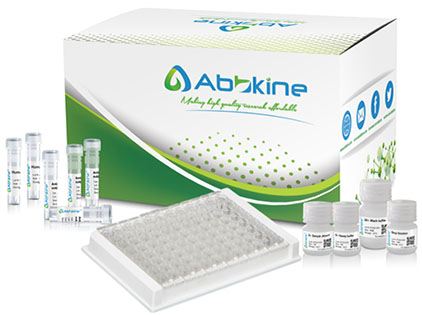
If your oxidative‑stress paper still treats Superoxide dismutase as a single number inside a WST‑1 inhibition curve (“total SOD = 45% inhibited, therefore protected”), you’re measuring a reaction rate and calling it a *biomarker_. The dirty secret of the field is that SOD isn’t one molecule—it’s a compartmentalized enzyme family whose Cu/Zn‑SOD (SOD1) and Mn‑SOD (SOD2) live in completely different organelles, carry different metal cofactors, and respond to different stresses (hypoxia, irradiation, redox‑cycling drugs, mitochondrial uncoupling, aging). When your WST‑1 tube says “SOD went up,” you still can’t tell whether the cytoplasm gained more SOD1, the mitochondrion stabilized SOD2, or your lysis buffer just extracted better. The Human Superoxide dismutase (SOD) ELISA Kit (KTE62765) from Abbkine is the reagent that stops the guesswork: a two‑site sandwich ELISA that reads SOD protein mass (ng/mL) from a calibrated curve, so the antioxidant story becomes a quantity you can normalize, replicate, and—crucially—attribute to the right compartment.
SOD in one clean pass: the enzyme that turns O₂⁻ into H₂O₂, split between cytosol and mitochondria
At its core, SOD does the simplest possible redox math:
2 O₂⁻ + 2H⁺ → H₂O₂ + O₂
But biology makes it messy by splitting the job across metal‑dependent isozymes with distinct addresses:
Isoform Gene / Symbol Metal Localization Why it matters
SOD1 (Cu/Zn‑SOD) SOD1 (P00441) Cu/Zn Cytosol + mitochondrial intermembrane space (via CCS/Cu chaperone) Dimer ~32 kDa/subunit; first line against cytoplasmic superoxide; ALS‑linked when it aggregates/misfolds
SOD2 (Mn‑SOD) SOD2 (P04179) Mn Mitochondrial matrix Tetramer ~96 kDa; the only thing standing between the ETC and runaway matrix O₂⁻; radio/IR/ischemia sentinel
SOD3 (EC‑SOD, optional extra) SOD3 (P08294) Cu/Zn Extracellular / ECM (heparan‑sulfate‑tethered) Longer N‑terminal proline‑rich/proline‑glycine “hinge” domain, secretion signal; protects endothelium
The clinical punchline is that where SOD changes, things break:
• SOD2↓/KO → mitochondrial O₂⁻ spikes → MPTP opening, lipid peroxidation, cardiomyocyte/neuron vulnerability.
• SOD1 aggregation/misfolding → not just “less activity,” but toxic species tied to ALS pathobiology.
• SOD3 loss/remodeling → vascular wall oxidative susceptibility.
Why an immunoassay — and why “total SOD activity” keeps failing peer review
Every reviewer now knows the two classic activity tricks:
- NBT (nitroblue tetrazolium) → blue formazan @ ~560 nm — cheap, but colour, not molecule.
- WST‑1/cytochrome c/xanthine‑xanthine oxidase systems — better, but still a proxy for catalytic turnover, not for how much SOD protein is actually there.
Those assays suffer three fatal paper‑grade flaws:
• They can’t distinguish SOD1 vs SOD2 vs SOD3 unless you run KCN controls (Mn‑SOD KCN‑insensitive; CuZn‑SOD KCN‑sensitive) — and even that’s messy.
• Inhibitors, chelators, detergents, hemoglobin leakage, or residual ascorbate in the sample skew the rate, so “U/mg” drifts between labs.
• They miss the regulatory dimension: SOD can be present but post‑translationally modified, sequestered, or poorly metallated (apo‑SOD1), which still matters biologically even if the “activity” looks low.
A sandwich ELISA sidesteps all three by asking the only question your model actually needs answered first:
How much SOD antigenic mass is in this lysate / supernatant / tissue extract, and did my treatment change that mass?
Once you have the mass (ng SOD / mg protein), you can then overlay an activity assay to ask “is it functional?” — which is the correct hierarchy.
What KTE62765 Actually Does (and what to confirm on your CoA)
Because “SOD” can refer to multiple isozymes, the kit’s value depends on which antibody specificity it ships with (total SOD broad‑reactive vs SOD1‑focused vs SOD2‑focused). Most Abbkine listings for KTE62765 frame it as a sandwich ELISA using a pre‑coated capture antibody and a biotinylated detection antibody against human SOD antigens, developed via Streptavidin‑HRP → TMB → 450 nm.
A sensible, conservative spec envelope to cite (and to verify against your lot’s datasheet/CoA) looks like:
Parameter Typical KTE62765‑class spec (confirm on your shipped sheet)
Target Human Superoxide dismutase (SOD1 / SOD2 context; check if the kit is “total SOD” broad or isoform‑specific)
Format 96‑well sandwich ELISA, pre‑coated capture
Detection Biotin‑Ab → SA‑HRP → TMB, read 450 nm
Dynamic range Commonly 0.156–10 ng/mL (or comparable low‑ng window)
Sensitivity / LOD Approx. 0.05–0.10 ng/mL
Intra‑Assay CV < 8%
Inter‑Assay CV < 10–12%
Samples Tissue homogenates, cell lysates, cell culture supernatants/lysates, serum/plasma (context‑dependent)
Assay time ~3–5 h
Status For Research Use Only
If your goal is isoform resolution (SOD1 vs SOD2), you’ll usually want to pair KTE62765’s mass readout with either:
• an isoform‑specific second ELISA (SOD1‑only / SOD2‑only), or
• Western/IF anchors (SOD1 vs SOD2 vs COX‑IV/VDAC) so the “total SOD” number can be interpreted as “mostly mitochondria‑matrix vs mostly cytosolic.”
The prep rule that decides whether your SOD is real or a lysis artifact
SOD1 and SOD2 sit in different kingdoms: one is largely cytosolic (+IMS), the other is matrix, so your buffer decides what you measure.
• For total‑cell pictures: use RIPA or 50 mM Tris pH 7.4, 150 mM NaCl, 0.5–1% Triton X‑100/NP‑40 + protease inhibitors, keep cold, brief sonication (low power, on ice, 2–3× short pulses), spin 12,000–16,000 ×g, 15 min, 4°C, and express as ng SOD / mg total protein (BCA).
• If you explicitly want the mitochondrial pool: do a differential spin (crude nuclei/ debris → 10,000–12,000 ×g pellet = mitochondria‑rich) and re‑lyse that pellet. SOD2/Mn‑SOD will dominate; SOD1 will be the minor IMS contaminant you can subtract with an IMS marker if needed.
• Serum/plasma: only useful if the kit’s antibody can see SOD3/EC‑SOD or cell‑release fragments; always EDTA, cold chain, aliquot, –80°C, avoid >1 freeze–thaw.
Where a Human SOD ELISA actually carries the paper
- Ischemia–Reperfusion (heart, brain, kidney): the mitochondrial O₂⁻ firewall
This is the canonical SOD2 story. Clamp → reperfusion → ETC leak → matrix superoxide spikes. SOD2 protein mass (ng/mg, ELISA) dropping during the early reperfusion window is the structural red flag; if your “protective drug” didn’t preserve SOD2 mass (or didn’t stop SOD2 from oxidizing/aggregating), then “lipid peroxidation fell” might just be a dose artifact. Pair with MDA/4‑HNE, GSH/GSSG, and JC‑1/ΔΨm so the antioxidant claim has a compartment anchor.
- Neurodegeneration / ALS mechanistics (when SOD1 stops being “antioxidant” and starts being toxic)
In mutation‑linked ALS (SOD1A4V, G93A, etc.), the field has accepted that the problem isn’t “loss of activity” alone—it’s misfolded/aggregated SOD1 species interacting with mitochondria, axonal transport, and proteostasis networks. Reading SOD1 mass in spinal cord / motor neuron lysates (ng/mg) plus aggregate fractions (Triton‑soluble vs sarkosyl‑insoluble) lets you say “total SOD1 didn’t vanish, but it partitioned into the wrong fraction”—which is the sentence that upgrades a transgenic paper.
- Radiation & redox‑cycling drug tox (paraquat, doxorubicin, anthracyclines)
Paraquat is basically a mitochondrial superoxide hose, and doxo’s iron‑bound metabolites pile ROS at the matrix/cardiomyocyte level. Tracking SOD2 mass + GSH (colorimetric/HPLC) + cTnI/CK + TEM ultrastructure is the minimal triad that explains “why the heart scarred,” not just “MDA rose.”
- Aging, caloric restriction & mitohormesis
The counterintuitive truth: mild mitochondrial ROS induces SOD2 (and catalase/GPx) via FoxO/PGC‑1α/Nrf2, so “SOD went up” can mean adaptive priming, not damage. A plate‑read SOD mass curve across age or CR timepoints lets you separate induction from collapse—and you do it with CVs instead of “we scanned a blot and measured band density.”
- Plant‑polyphenol / nutraceutical “antioxidant” claims (the rigor filter)
If your compound is sold as “antioxidant,” the modern bar is: mass‑based SOD (ELISA) + GSH/GSSG + catalase/GPx activity + a ROS sensor (DCF/hydroethidine/Liperfluo). That’s the quad that proves the molecule acted on the system, not just quenched a dye in a cuvette.
- CRISPR / shRNA validation (SOD1/SOD2 knockdowns)
Editing SOD1 or SOD2? Don’t stop at “survival dropped.” Report % SOD protein remaining ± SEM from the calibrated curve (ng/mg), confirm with IF (SOD2 matrix rim vs Tom20/VDAC), and tie it to Mn‑SOD activity (native PAGE‑NBT in‑gel if you like) or aconitase decay so the phenotype has a metallo‑enzyme denominator.
Bottom line
Superoxide dismutase isn’t one magic “antioxidant number”—it’s a compartmentalized metalloenzyme family (CuZn‑SOD/SOD1 in the cytosol/IMS, Mn‑SOD/SOD2 in the mitochondrial matrix, EC‑SOD/SOD3 outside) whose protein mass and localization decide whether your cell survives superoxide or slowly cooks from the inside. Measuring it as a calibrated sandwich‑ELISA variable instead of a “percent inhibition” in a WST‑1 tube changes your redox paper from atmospheric to defensible. The Human Superoxide dismutase (SOD) ELISA Kit — KTE62765 from Abbkine gives you that variable: pre‑coated capture → biotin detection → HRP–TMB → 450 nm → ng/mL, in a ~3–5 h workflow that scales across I/R timecourses, neurodegeneration lysates, and nutraceutical panels without chaining you to a 560‑nm guess.
Product reference: KTE62765 – Human Superoxide dismutase (SOD) ELISA Kit
Learn more / order: https://www.abbkine.com/product/human-superoxide-dismutase-sod-elisa-kit-kte62765/
(For Research Use Only; not for diagnostic procedures in humans.)





