




The 119-Amino-Acid Cognitive Currency That Vanishes in Ten Minutes: Why "Depression = Low BDNF" Is a Cartoon — And How KTE62780 Puts the proBDNF/mBDNF Equilibrium on a Plate You Can Actually Defend
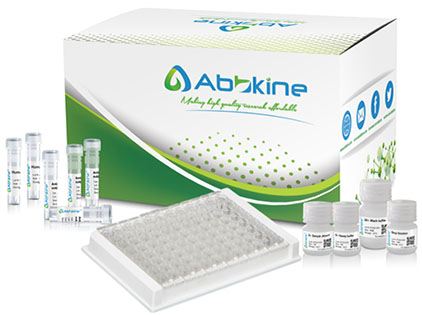
BDNF (Brain-Derived Neurotrophic Factor) has spent the last two decades as the most famous molecule in neuroscience that almost no one actually measures correctly. Everyone drops the line: "stress/depression = low BDNF, exercise/antidepressants = BDNF goes up, therefore neuroplasticity." It sounds elegant — and it's not wrong — but it's a cartoon of a vastly subtler system. The reality is that BDNF isn't one molecule with one arrow direction; it's synthesized as a 247-aa prepro-peptide (preproBDNF, 32–35 kDa) that gets cleaved to proBDNF (28–32 kDa) and then — intra- or extracellularly — to the mature 119-aa (~13.5 kDa) dimer that actually binds the high-affinity receptor TrkB (NTRK2). And here's the twist that rewrites the whole story: proBDNF and mBDNF have opposing biological signatures, because proBDNF binds p75NTR + sortilin and drives long-term depression, synaptic pruning, and pro-apoptotic signaling, while mBDNF binds TrkB and drives LTP, dendritic arborization, and survival. That means your "total BDNF" readout is really the balance of two antagonists — and the only way to treat it like a quantitative science instead of a slogan is to measure it as a calibrated sandwich-ELISA concentration (pg/mL). The Human Brain-Derived Neurotrophic Factor (BDNF) ELISA Kit (KTE62780) from Abbkine is built for exactly that: pre-coated anti-BDNF capture → biotin detection → HRP–TMB → 450 nm, over a 31.25–2000 pg/mL working range with LOD ~18.75 pg/mL, so your stress/resilience, antidepressant-screen, or exercise-neuroscience paper rests on interpolated numbers, not a hand-waved neurotrophin trope.
BDNF in One Paragraph: The 13.5-kDa Mature Dimer, the 28-kDa Pro-Form, and the Ratio That Is the Actual Signal
The BDNF gene (BDNF, UniProt: P23560, Chr 11p14.1) is unusual — it has ≥ 9 exons with alternative promoters, but only exon IX codes the mature peptide, which means the same final 119-aa (~13.5 kDa) mature domain can arrive under different transcriptional promoters in cortex, hippocampus, amygdala, hypothalamus, thalamus, spinal dorsal horn, and even non-neural sites (lung, heart, immune cells). The biosynthetic chain is:
Biosynthetic Stage Name Apparent MW Compartment Fate
preproBDNF Signal peptide (aa 1–18) + pro-domain (aa 19–128) + mature domain (aa 129–247) ~32–35 kDa Synthesized in rough ER Signal sequence cleaved immediately
proBDNF Pro-domain (110 aa) + mature domain ~28–32 kDa Golgi → secretory vesicles; also released as intact precursor Intracellular: furin/convertases → mBDNF; Extracellular: plasmin, MMP-2, MMP-9 → mBDNF
mature BDNF (mBDNF) 119 aa homodimer (disulfide-linked) ~13.5 kDa monomer / ~27 kDa dimer Dense-core secretory vesicles → activity-dependent release Binds TrkB → PI3K/AKT, MAPK, PLCγ → survival/LTP/spine formation
The clinical pivot: it's the proBDNF : mBDNF ratio — not "BDNF went up" — that tracks whether a synapse is strengthening or pruning. Stress, glucocorticoids, and pro-inflammatory cytokines (IL-1β, TNF) shift the balance toward proBDNF/p75NTR (pruning/apoptosis), while enriched environment, exercise, and effective antidepressants favor TrkB signaling (restoration of synaptic architecture).
Why a Sandwich ELISA — And Why "It's Only 13 kDa, How Do You Catch It?" Misses the Point
Two clarifications upfront:
- Yes, mature BDNF is
13.5 kDa — but it circulates/displays as a disulfide-stabilized homodimer (27 kDa), and more importantly, the pro-domain cleavage site and surrounding conformation create two non-overlapping immunogenic surfaces (pro-domain epitopes vs. mature-domain epitopes) that allow a properly selected capture/detection mAb pair to form a genuine two-site sandwich that reads total immunoreactive BDNF (pro + mature, depending on antibody selectivity). - The number you need is not "BDNF exists" — it's how much, in which matrix, under which sampling condition. Plasma BDNF is pg/mL, has a plasma half-life < 10 minutes, adsorbs to plastic, and gets eaten by proteases if you linger at room temperature. That's why your "ELISA" lives or dies by the cold chain, not the antibody.
The KTE62780 architecture (confirmed across Abbkine distributor/technical listings) is the classic format:
- Microplate pre-coated with capture anti-BDNF (specific to human BDNF mature/pro-domain accessible determinants).
- Standards (recombinant human BDNF) + samples — serum, plasma (EDTA preferred), tissue homogenates, cell culture supernatants/lysates, other biological fluids — added → BDNF binds.
- Wash → biotinylated anti-BDNF detection (different epitope) → Streptavidin–HRP → TMB → color ∝ bound BDNF.
- Stop → 450 nm → interpolate pg/mL from the standard curve.
Parameter KTE62780-class Specification
Target Human BDNF / Brain-Derived Neurotrophic Factor (UniProt P23560, Gene 627)
Format 96-well sandwich ELISA, pre-coated capture
Detection Biotin-Ab → SA-HRP → TMB, 450 nm
Dynamic Range 31.25 – 2,000 pg/mL
Sensitivity / LOD ~18.75 pg/mL
Intra-Assay CV < 8%
Inter-Assay CV < 10%
Specificity No significant cross-reactivity with NGF, NT-3, NT-4/5 at physiological levels
Samples Serum, plasma (EDTA), tissue homogenates, cell culture supernatants
Assay time ~3–3.5 hours
(Lock Methods to the shipped Abbkine datasheet/CoA for KTE62780; confirm whether your specific lot's antibody pair reports predominantly mature BDNF vs. total pro+mBDNF immunoreactive mass.)
The Collection Rule That Decides If Your BDNF Is Real or an EDTA-Plastic Artifact
BDNF is ~13.5 kDa, basic-ish, and present in fasting human plasma at roughly 10–50 pg/μL (= ng/mL range, i.e. ~10–50 pg/μL = ~200–2500 pg/mL depending on assay sensitivity and subject) — which means it's right at the edge where adsorption losses and ex vivo protease degradation can wreck replicates.
Golden protocol:
- EDTA tubes (chelates Ca²⁺, reduces platelet α-granule exocytosis artifacts that artificially inflate "serum BDNF" from platelet-stored pools — serum BDNF is ~10–20× higher than EDTA plasma because platelets pack BDNF and dump it during clotting).
• If you must compare with prior literature that used serum, state that clearly — but EDTA plasma is the preferred contemporary standard for peripheral BDNF because it reflects circulating, not clot-release, pools. - Keep on wet ice, spin ≥ 1,500–2,000 ×g, 4°C, 10–15 min within 30–60 min, aliquot, snap -80°C, avoid >1 freeze–thaw (BDNF adheres to naked polystyrene at low ng/mL — low-binding tubes for neat dilutions).
- Standardize draw conditions (time of day matters: BDNF has circadian/diurnal variation, and exercise within 4–6 h before draw spikes it enormously).
Where BDNF Quantification Actually Carries the Paper
- Depression, Antidepressant Response & the "Neurotrophin Hypothesis" — Finally Measured, Not Just Asserted
The classic meta-analyses show plasma BDNF modestly lower in MDD, and effective antidepressant treatment (SSRIs/SNRIs, ECT, ketamine, CBT) associates with BDNF rise — but the field's replication crises forced a necessary humility: it's platelet effects, sampling inconsistency, and assay variance driving more of the scatter than biology. The fix is methodological rigor: EDTA plasma, cold-chain, single-thaw, low-bind tubes, sandwich ELISA with CVs reported, and — whenever tissue is available — a second readout confirming TrkB phosphorylation / p-CREB / synaptic markers (PSD-95, synaptophysin) so "BDNF moved" connects to a synaptic payoff. KTE62780 gives you the plate-scale, batchable readout to do that across baseline → week 2 → week 6 → remission without booking a mass-spec slot.
- Exercise Neuroscience: The Only Reliable Natural BDNF Surge
This is BDNF's most reproducible systemic story: single bout of aerobic exercise (≥ 60–65% VO₂max, ~20–40 min) ↑ plasma BDNF 2–3×, mediated partly by muscle contraction → PGC-1α/β / lactate / catecholamine axis, and brain-derived spillover + platelet interactions. Pre-post exercise designs (fasted morning, pre, +0 min, +30 min, +60 min post) are the cleanest natural experiment in human neuroplasticity — and they require the pg-sensitivity and cold-chain discipline above, or the "surge" dissolves into noise.
- Stress, Glucocorticoids & the proBDNF : mBDNF Shift
Chronic stress → ↑CRH/↑cortisol → ↑proBDNF / ↓TrkB signaling in hippocampus/ prefrontal circuits → dendritic atrophy, anhedonia-like phenotypes. The sophisticated readout (usually in animal tissue lysates or microdissection) pairs total BDNF ELISA (KTE62780, ng/mg protein) with:
• proBDNF (28 kDa) vs. mBDNF (13 kDa) by Western (or a separate proBDNF-optimized ELISA if available) → computes pro/m ratio
• p75NTR and sortilin (proBDNF receptor axis)
• p-TrkB(Y⁷⁰⁶/⁵¹⁶) and downstream p-CREB/PSD-95 (the anabolic arm)
That triad is what elevates a stress paper from "BDNF changed" to "the plasticity switch flipped the wrong way."
- Ketamine & Rapid-Acting Antidepressants: The BDNF–TrkB–mTORC1 Cascade
The mechanistic consensus on ketamine's pro-plasticity effect runs through mTORC1 → translation → dendritic spine regrowth, but BDNF–TrkB signaling is the permissive/enabling layer (ketamine disinhibits interneurons → ↑glutamate → ↑BDNF release → TrkB). Measuring hippocampal/temporal-cortex BDNF (ng/mg, ELISA) alongside synaptogenesis markers (PSD-95, GluA1, dendritic spine density) is the structural argument that the drug rebuilt connections, not just "moved a behavior."
- Neurodegeneration (AD, PD, ALS): BDNF Decline as a Canary in the Synaptic Coal Mine
In Alzheimer's, hippocampal BDNF production/sorting declines with aging–pathology progression (amyloid oligomers impair activity-dependent BDNF release), and plasma BDNF trends downward in moderate–severe stages. In Parkinson's, BDNF's dopaminergic striatal targets (medium spiny neurons) lose trophic support. The ELISA's job here is longitudinal tracking: baseline → 6mo → 12mo alongside MoCA/MMSE, volumetric MRI, and inflammatory cytokines, to test whether an intervention (exercise prescription, intranasal BDNF-delivery experiments, MAO-Bi) actually preserved the neurotrophin environment.
- Val66Met (rs6265) Stratification
The BDNF Val66Met polymorphism (Met carriers ~20–30% in many populations) impairs activity-dependent secretion and sorting of BDNF into dense-core vesicles → weaker hippocampal memory consolidation and blunted antidepressant-plasticity responses. Any human cohort BDNF paper gains immediate reviewer currency if you genotype rs6265 and show: "Met carriers had systematically lower inducible BDNF / poorer plasticity marker response," because it proves you're not just measuring a random pg/mL — you're seeing a variant–protein–phenotype chain.
A Minimal Protocol You Can Paste Into Materials & Methods
- Collect in EDTA tubes, invert gently, keep on wet ice, spin ≥ 2,000 ×g, 4°C, 10–15 min within 30–60 min. Aliquot immediately, snap -80°C, label, avoid >1 freeze–thaw; use low-binding polypropylene for neat dilutions.
- For brain/temporal-cortex tissue (animal or autopsy biopsy): homogenize cold in 50 mM Tris pH 7.4, 150 mM NaCl, 0.5% Triton X-100 + protease inhibitors, clarify 12,000–16,000 ×g, 15 min, 4°C → supernatant → BCA → ng BDNF / mg total protein.
- Warm kit reagents ≥ 30 min RT before opening; protect TMB from light; stop uniformly; read 450 nm promptly; fit 4-PL; run full standard curve on every plate.
The Bottom Line
BDNF is the 247-aa prepro-neurotrophin whose mature form is a 119-aa (~13.5 kDa), disulfide-stabilized homodimer that binds TrkB to drive everything we admire about the adaptable brain — LTP, dendritic spine density, survival — but whose uncleaved precursor (proBDNF) binds p75NTR/sortilin and pushes the exact opposite program (pruning, LTD, pro-apoptotic signaling), making the proBDNF:mBDNF ratio the actual biological variable, not a cartoon of "more BDNF = good." Measuring it as a calibrated sandwich-ELISA variable — with EDTA cold-chain, single-thaw, low-bind tubes — changes your neuropsych paper from atmospheric to quantitative. The Human Brain-Derived Neurotrophic Factor (BDNF) ELISA Kit — KTE62780 from Abbkine gives you that readout: pre-coated anti-BDNF capture → biotin detection → HRP–TMB → 450 nm → pg/mL, over a 31.25–2,000 pg/mL working range with LOD ~18.75 pg/mL, in a ~3–3.5 hour workflow that scales from an exercise-pre-post to a 60-sample depression-cohort without chaining you to a gel scan.
Product Reference: KTE62780 – Human Brain-Derived Neurotrophic Factor (BDNF) ELISA Kit
Learn more and order: https://www.abbkine.com/product/human-brain-derived-neurotrophic-factor-bdnf-elisa-kit-kte62780/
(For Research Use Only; not for diagnostic procedures in humans.)





