




The Mosquito-Borne Arbovirus That Crossed the Red Sea — And Why Your RVF Surveillance Strategy Is Worthless Without a Quantitative IgG Baseline (KTE62978 Explains Why)
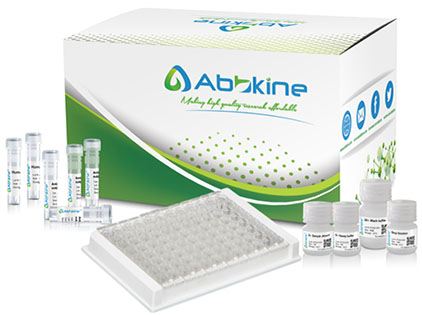
If you work in arboviral surveillance, zoonotic spillover modeling, or tropical-medicine field epidemiology, you already know the nightmare scenario: a virus that simmers in naïve ruminant herds (calves dropping dead from hepatic necrosis before they're even weaned), rides the wind on Aedes storm fronts, jumps to humans handling animal tissues/blood, and — when it chooses to — detonates into hemorrhagic fever, encephalitis, or blinding retinitis. That virus is Rift Valley Fever Virus (RVFV) — a single-stranded, negative-sense, tripartite RNA virus in the genus Phlebovirus (family Phenuiviridae, formerly Bunyaviridae), transmitted principally by floodwater Aedes spp. mosquito vectors that hatch en masse after heavy rains and can carry infected eggs desiccated for years. What most people don't realize is that the real surveillance prize isn't catching the acute viremia (which lasts days and needs cold-chain RNA extraction) — it's mapping the IgG seroprevalence that tells you who's already been exposed, who's protected, and where the virus has already circulated silently years before the next big eruption. The Human Rift Valley Fever IgG (RVF IgG) ELISA Kit (KTE62978) from Abbkine is the tool that turns that map into hard data: an indirect ELISA that coats purified RVFV antigen on the plate, captures patient/donor anti-RVFV IgG, and reads it via an HRP-conjugated anti-human IgG → TMB → 450 nm signal — so your serosurvey, vaccine-trial immunogenicity panel, or outbreak-investigation actually measures exposure rather than guessing from a headline.
RVFV in One Paragraph: A Triple-Segmented Phlebovirus That Uses Livestock as Its Amplifier and Humans as Its Accidental Host
RVFV's genome is split across three segments — L (large, ~6.4 kb, encodes the RNA-dependent RNA polymerase), M (medium, ~3.9 kb, encodes the envelope glycoproteins Gn/Gc and the NSm non-structural protein), S (small, ~1.7 kb, ambisense coding for N nucleoprotein and NSs virulence factor) — all wrapping inside an 80–120 nm enveloped particle decorated with hexagonal glycoprotein gnomon grids you could pick out on any EM. Its transmission ecology is brutally efficient:
Link in the Chain Mechanism Why It Matters
Primary amplifier Naïve sheep, cattle, goats, camels — vertical transmission + abortion storms + near-100% neonatal mortality in lambs/calves Large-animal outbreaks are the first visible signal (mass abortions = sentinel event)
Vector engine Floodwater Aedes (eggs survive dry years → hatch synchronously → amplify horizontally) + secondary bridge vectors (Culex, Anopheles, Mansonia) Explains the sudden regional eruptions after abnormal rainfall
Human spillover Direct contact with infected animal tissues/blood/fluids, aborted fetal material, or bites from infected mosquitoes Most human cases are mild febrile illness, but 1–2% progress to: retinitis (permanent vision loss ~10% of cases), meningoencephalitis, hepatic necrosis, or hemorrhagic fever with DIC/SHF
The geography is the other reason this virus never stayed "African": major outbreaks in Egypt (1977–78 Nile Delta), Mauritania/Senegal (1987), Kenya/Somalia (1997–98, 2006–07), Yemen/Saudi Arabia (2000 cross-Red-Sea incursion), Mayotte/Madagascar/Comoros (Indian Ocean SWIO) have proven RVFV can move on monsoon anomalies and livestock trade routes — and climate-change forecasts keep pushing its Aedes habitat north.
Why IgG — And Why the IgM/IgG Timing Rule Decides Everything
RVFV infection triggers a textbook humoral clock:
Marker When It Appears What It Means How Long It Lasts
IgM (RVF IgM) ~4–7 days post-onset, peaks week 1–2 Recent / acute / re-infection window Usually fades ~2–3 months
IgG (RVF IgG) ~7–14 days, overlaps IgM tail Established exposure / seroconversion / vaccine-induced immunity Years to decades (possibly lifelong in many individuals)
PCR / virus isolation Days 1–5 of symptoms only Acute viremia Gone before IgM even peaks
This is why any serious RVF program needs both: a molecular arm (real-time RT-PCR for acute cases / dead-animal sampling) and a serological arm (IgG ELISA for the big picture). The IgG readout answers the questions PCR cannot:
- What % of this district/region has already been exposed? (seroprevalence map → herd-immunity estimation)
- Did the vaccine campaign actually seroconvert the at-risk pastoralist cohort? (pre-vax vs. 21–42-day post-vax IgG)
- Is this "sudden cluster" an old-endemic area or a true new incursion? (high IgG in over-40s + low in teens = historic circulation; uniform low = truly naive = dangerous)
Why an Indirect ELISA (Antigen-Coated Plate + Anti-Human IgG–HRP) — And Why This Architecture Is Exactly Right for Antibody Detection
You can't "sandwich" an antibody the way you sandwich IL-6 — the analyte here is anti-RVFV IgG in the patient's serum, which means the plate must supply the known viral antigen and the detection must read the human Fc. The KTE62978 format is the classic, field-hardened indirect ELISA:
The Step-by-Step Logic
- Microplate wells are pre-coated with purified RVFV antigen — typically the nucleoprotein (N, ~28 kDa, most abundant and immunodominant internal antigen) and/or envelope glycoprotein fragments (Gn/Gc) that carry the linear/conformational epitopes human IgG actually recognizes after infection/vaccination.
- Patient/donor serum or plasma sample is added → any anti-RVFV IgG present binds to the immobilized viral antigen.
- Wash → HRP-conjugated anti-human IgG (Fcγ-specific, goat/rabbit polyclonal) is added → binds the Fc portion of the captured human IgG.
- Wash → TMB → blue → stop → yellow → read 450 nm.
- Result is interpreted qualitatively (Cut-off = ODc = mean neg + 2–3 SD, or mean neg × 0.1 + mean pos × 0.2) or — when calibrated against a positive-control serum standard curve — semi-quantitatively as an index value (Sample OD / Cut-off OD) or relative units/mL.
From the consolidated distributor/technical data aligned with KTE62978:
Parameter KTE62978-class Specification
Target Human anti-RVFV IgG (reactive against RVFV N/Gn/Gc antigens coated on plate)
Assay Type Indirect competitive/sandwich-hybrid ELISA — antigen pre-coated, detect via HRP-anti-human IgG (Fc)
Detection Anti-human IgG–HRP → TMB, 450 nm
Calibration Qualitative (Negative/Positive) by cut-off, with semi-quantitative OD ratio / standard-curve option
Sample Types Serum, plasma (EDTA/heparin), whole blood (permitted in some protocols), cell culture supernatants, other biological fluids
Assay time ~2.5–4 hours
Storage 2–8°C (unopened), opened reagents per manual; desiccated unused wells at 4°C in sealed bag
Status For Research Use Only; not for diagnostic procedures in humans
(As always, lock your Methods section to the shipped Abbkine CoA/datasheet for your specific lot — pay special attention to the recommended cut-off formula and whether your batch is validated for qualitative (N/P) vs. semi-quantitative index reporting.)
Where RVF IgG Quantification/Serotyping Actually Carries the Paper
- Seroprevalence Mapping & Silent-Circulation Discovery (The "Endemic Belt" Question)
This is the single most impactful use. Cross-sectional surveys in pastoralist zones, nomadic corridors, and peri-urban livestock markets consistently find 10–30% IgG seroprevalence in humans living near positive herds — often in districts that have never reported an outbreak, because mild cases never reached a clinic. The PLOS ONE 2021 external quality assessment of 18 labs across 13 countries showed that commercial RVFV-IgG ELISAs — when run to cut-off — achieved 100% sensitivity/specificity concordance with the virus neutralization test (VNT) reference. KTE62978 gives you the same field-deployable readout without needing a BSL-3 virus-isolation suite for every sample.
- Vaccine Immunogenicity & Coverage Verification (Smithburn Live-Attenuated / Inactivated / Next-Gen)
Multiple RVF vaccines exist for livestock (the old Smithburn neurotropic live-attenuated = effective but safety baggage; newer inactivated adjuvanted, MP-12 derivatives in vet pipelines), and human-use candidate strategies rely on documenting seroconversion. The readout chain is:
• Day 0 (pre-vax) → Day 21–28 (post-1st) → Day 42–56 (post-2nd/boost) → anti-RVFV IgG OD index or relative units
• Tie to virus neutralization titers (PRNT₅₀) on a subset for the gold-standard correlation
That's the evidence package regulators and WHO-path reviewers expect.
- Outbreak Investigation: Distinguishing "New Incursion" From "Old Endemic"
During an alert (abortion storm in a sheep camp → human febrile cluster), the key epidemiologic discriminant is age-stratified IgG:
• High IgG in adults 40+, low in kids = historic endemicity (virus has been here; this cluster is re-emergence or new amplification focus)
• Uniformly low across all ages = truly naïve population (means the risk of explosive spread is much higher — changes the public-health response from "control the farm" to "cordon, vector-control, livestock movement ban")
The indirect ELISA on a 10 µL–100 µL serum panel is what feeds that stratification.
- One Health / Livestock Sentinel Programs (The Real Early-Warning System)
RVFV is fundamentally a veterinary-first disease: humans get it as an accident of animal contact. Sustainable surveillance means sentinel herd sampling (monthly bleed of marker calves/goats, mosquito trapping, abattoir serosurvey) paired with human cohort checks from the same households. Anti-RVFV IgG in the human household members (measured by plate ELISA) is the distal proxy that says "the herd was positive ~2–8 weeks ago" — the early-warning margin you can't see with PCR alone.
- Imported / Travel-Associated Case Investigation
With global travel and RVFV-import events (Angola → China, 2016; Gulf transit hubs), ruling in or out prior exposure in a returning febrile traveler means running anti-RVFV IgG as part of the differential arboviral panel (alongside dengue NS1/IgM/IgG, chikungunya, Zika, Crimean-Congo HF). A plate-based format lets you stack 40–60 returned-traveler sera in one run with a negative-control well + positive-control reference serum for a defensible "exposure-never / exposure-in-past" call.
- Academic/Pathogenesis Labs: Small-Animal Model Seroconversion
Mouse or hamster models of RVFV infection (often BSL-3) use anti-RVFV IgG kinetics (days 7/14/21/28 post-inoc) to quantify vaccine take or neutralizing mAb protection. Running KTE62978 on cardiac-puncture serum from terminally bled animals → normalized OD index → dose–response curve is the immunologic denominator that connects "mouse survived" to "mouse mounted specific humoral immunity."
Sample-Handling Notes (Simple but Non-Negotiable)
• Serum (gold-standard) or EDTA plasma — collect, allow minimal clot time if serum, spin ≥ 2,000 ×g, 10 min, 4°C, aliquot, -20 / -80°C, avoid >1 freeze–thaw.
• Whole blood on filter paper (DBS) is sometimes used in field surveys, but for a plate ELISA you want clean clarified serum/plasma — the Hb absorbance at 414 nm can drift your 450 if you're sloppy.
• Follow the cut-off formula in the manual (don't invent your own threshold midway through a 96-well run). Run blank well, neg control, pos control on every plate — the "index value" is only meaningful if the denominator is identical across plates.
The Bottom Line
Rift Valley Fever Virus is the ssRNA(−) Phlebovirus that turns unusual rainfall → Aedes egg-hatch → ruminant abortion storm → human spillover into a regional public-health and livestock-economy shock — and its IgG antibody is the only durable, cold-chain-tolerant, plate-scalable signature that tells you who's already been through it, who's immune, and where the virus has been circulating under the radar. The Human Rift Valley Fever IgG (RVF IgG) ELISA Kit — KTE62978 from Abbkine puts that signature on your bench via the correct architecture: RVFV antigen pre-coated → sample anti-RVFV IgG captured → HRP-anti-human IgG (Fc) → TMB → 450 nm, giving you a qualitative Negative/Positive call with semi-quantitative OD-index capability, in a ~2.5–4 hour workflow that scales from a border-district serosurvey to a vaccine-trial immunogenicity panel without a BSL-3 for every tube.
Product Reference: KTE62978 – Human Rift Valley Fever IgG (RVF IgG) ELISA Kit
Learn more and order: https://www.abbkine.com/product/human-rift-valley-fever-igg-rvf-igg-elisa-kit-kte62978/
(For Research Use Only; not for diagnostic procedures in humans.)





