




The Camel-to-Human Betacoronavirus That Doesn't Care About Borders: Why MERS-CoV Serology Lives or Dies by a Proper Spike/Nucleocapsid IgG ELISA — And How KTE62987 Puts the Exposure Map on a 450 nm Plate
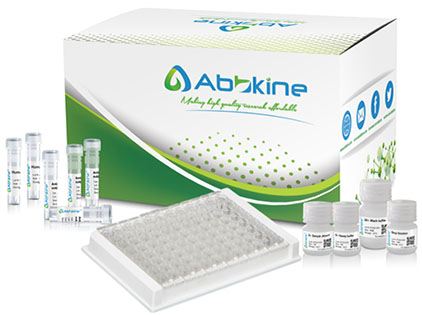
If SARS-CoV-2 taught the world one ugly lesson, it's that a zoonotic coronavirus with a dromedary reservoir can go from "regional curiosity" to "global pandemic" in a single aircraft boarding queue. But the original warning shot — Middle East Respiratory Syndrome coronavirus (MERS-CoV; species Betacoronavirus cameli, subgenus Merbecovirus) — never went away. First identified in 2012 in Saudi Arabia, it has since caused ~2,700+ confirmed cases across 27+ countries with a case-fatality rate of ~34–36% (one of the highest of any emergent coronavirus), and its true ecological engine — asymptomatic/presymptomatic dromedary camels shedding virus in nasal secretions/urine — is still trading across the Arabian Peninsula, Horn of Africa, Egypt, and increasingly monitored parts of South Asia. The clinical iceberg is small but sharp: most human cases arrive via close contact with infected camels or human-to-human nosocomial amplification, and while mild febrile illness is common, progression to severe pneumonia, ARDS, multiorgan failure, and death happens fast. The Human Middle East Respiratory Syndrome–coronavirus IgG (MERS IgG) ELISA Kit (KTE62987) from Abbkine is the reagent that lets you read the silent side of that iceberg — prior exposure, seroconversion, and herd-level history — by capturing patient anti-MERS-CoV IgG on a viral-antigen–coated plate and converting it into a colorimetric OD₄₅₀ signal you can cut, batch, and map, instead of pretending a single RT-PCR during flu-season admission week tells you everything you need to know.
MERS-CoV in One Paragraph: A dromedary betacoronavirus with a Type Ib (+)ssRNA genome, a furin-cleaved Spike, and a surveillance problem
MERS-CoV shares the basic coronavirus blueprint — +ssRNA ~30.1 kb (largest RNA virus genome known), 5′ cap, 3′ poly(A), four structural proteins — but its ecology is uniquely camel-centric:
Structural Protein Function
Spike (S, ~150 kDa trimer) Binds host DPP4 (CD26) — not ACE2 — via the S1 C-terminal receptor-binding domain (RBD, ~210 aa); contains the S1/S2 furin site (unique among zoonotic CoVs, enables trypsin-like activation in the human airway)
Nucleocapsid (N, ~50 kDa) Most abundant internal protein; RNA-binding; dominant linear/cross-reactive B-cell epitopes → the workhorse coating antigen for screening ELISAs
Envelope (E) & Membrane (M) Virion assembly / budding at ERGIC
The zoonotic chain is the story: camels carry MERS-CoV asymptomatically → nasal/eye contact during herding/milking/slaughter → human index case → hospital-acquired amplification (≤ 2–3 generations before Rt falls). Which means the real question for public health is never just "who's sick today" (that's PCR's job) — it's who's already been exposed, seroconverted, and recovered without ever being counted in the national line-list.
Why an Antigen-Coated / Indirect ELISA — And Why "PCR-Positive Today" ≠ "Exposure History Mapped"
MERS-CoV diagnostics split cleanly into two jobs:
Tool What It Answers Time Window
Real-time RT-PCR (upE, ORF1a, N targets) "Is live virus in this respiratory swab right now?" Days 1–5 of illness (viremia brief; after week 1, PCR drops fast)
Anti-MERS IgM Recent acute exposure window Days 4–7 → ~2–3 months
Anti-MERS IgG (N and/or S1-based) Established exposure / seroconversion / historical prevalence Appears ~7–14 d, persists years → the surveillance & vaccine-trial currency
The format inside KTE62987 is the classic indirect ELISA for antibody detection (vendors sometimes lazy-tag it "sandwich," but the mechanism is antigen-down):
- Microplate wells are pre-coated with purified recombinant MERS-CoV antigen — typically the nucleocapsid (N) protein and/or the S1 subunit of spike (the immunodominant, DPP4-binding RBD-bearing domain that carries the most specific, non–cross-reactive epitopes).
- Diluted patient serum/plasma added → any anti-MERS-CoV IgG present binds to the immobilized antigen.
- Wash → HRP-conjugated anti-human IgG (Fcγ-specific) added → binds captured human IgG.
- TMB → stop → 450 nm → OD ∝ bound anti-MERS IgG.
- Interpreted against a cut-off (ODc = mean neg + 2SD or validated threshold) → reported Negative / Positive, or as a semi-quantitative index (Sample OD / Cut-off OD) for titers.
From the consolidated distributor/technical data for KTE62987:
Parameter KTE62987-class Specification
Target Human anti-MERS-CoV IgG (reactive to coated recombinant MERS-CoV antigen: N and/or S1/S ectodomain)
Format Antigen pre-coated / indirect ELISA (detect via anti-human IgG–HRP)
Detection Anti-human IgG–HRP → TMB, read 450 nm
Sample Types Serum, plasma (EDTA/heparin), cell culture supernatants, other biological fluids
Assay time ~2.5–4 hours
Reactivity Human
Status For Research Use Only; not for diagnostic procedures in humans
(The clinisciences/Abbkine-channel listing also quotes a calibration-alignment range of 5–80 pg/mL tied to a protein standard, but the practical readout for serology is the OD/cut-off classification; confirm lot-specific cut-off formula on your shipped CoA.)
The CDC Algorithm & the N-vs.-S1 Choice (Why the Antigen You Coat With Matters)
The scientific literature is extremely clear on this point — and it's why you need to know which recombinant antigen KTE62987 uses:
• Nucleocapsid (N) ELISAs = more sensitive early (Days 1–28) because N is abundant, highly immunogenic, and raises strong IgM/IgG quickly — but N epitopes can cross-react with other circulating Betacoronavirus (OC43, HKU1) in some sera, leading to rare false-positives that require confirmation.
• S1 subunit (RBD-bearing) ELISAs = more specific (DPP4-binding domain is unique to MERS-CoV among human coronaviruses) and agrees better with microneutralization (MN) & PRNT. Sensitivity peaks later (Weeks 3–6+) but gives you the specific seroprevalence number you can defend in a zoonotic-belt survey.
The optimal published algorithm is therefore:
- Screen with N-ELISA (high sensitivity, catches early/low-titer)
- Confirm positives (and resolve equivocals) with S1-ELISA and/or neutralization assay
Many commercial kits (including the antigen-coating philosophy behind the KTE62987 family) use N ± S1 combo coating to get both breadth and specificity in one plate — which is exactly what a serosurvey needs.
Sample Handling for MERS IgG: Simpler Than RNA, But Still a Cold-Chain Discipline
Compared to PCR (which dies if you breathe on the tube wrong), serology is forgiving — but:
• Serum preferred (clot activator tubes okay; allow clot, spin ~3,000 ×g, 10 min, 4°C, aliquot, -20/–80°C)
• EDTA/heparin plasma acceptable for many protocols (EDTA often preferred for paired PCR panels)
• Avoid gross hemolysis (free Hb absorbs at 414 nm and can drag your 450 nm baseline)
• Label acquisition date / location / camel-contact history — serology without an exposure questionnaire is just a number with no map
Where MERS IgG Serology Actually Carries the Paper
- Dromedary-Contact & One-Health Sero-Surveillance (The Only True Early-Warning System)
This is the raison d'être. The endemic belt's actual control lever isn't the ICU — it's knowing which herds, which abattoir workers, which Bedouin-camp clusters, and which livestock-market districts already carry seroprevalence. Running KTE62987 on 200–500 human sera from:
• Camel owners / herders / milkers / slaughterhouse staff
• Vet teams & animal-market traders
• Border-region nomad camps
…and mapping % IgG+ vs. distance-to-nearest-camel-density is the spatial epidemiology that precedes the next cluster. The published validation work shows S1-based and N-based IgG ELISAs achieving 92–94% sensitivity and ~100% specificity against neutralization-confirmed panels.
- Health-Care Worker (HCW) & Nosocomial Outbreak Investigations
MERS-CoV's most famous amplification pathway is nosocomial: a single unrecognized case → ward → secondary cases among patients on dialysis/oncology wards with comorbidities. Post-exposure serosurveys of HCWs + patient-contacts (7–14 days post-last-exposure and again at 21–28 d) tell you:
• Who seroconverted (had a real exposure that took)
• Who remained IgG− (reassuring; transmission was less efficient than feared)
• Whether IPC breaches created a silent ripple
The ELISA gives you a batchable, BSL-2-safe readout that doesn't require you to hunt live virus from every contact.
- Vaccine & Therapeutic Candidate Immunogenicity Panels
Any MERS vaccine candidate (vectored MV-MERS, ChAdOx1 MERS, subunit S1-Fc, nanoparticle RBD, camelid VHH intranasals) needs a serology anchor: pre-vax → day 21 → day 42 → month 6 anti-MERS IgG readout as OD index or relative titer, ideally paired with PRNT₅₀/PRNT₈₀ on a subset for functional correlation. KTE62987's format fits that timeline without custom antigen production.
- Regional Seroprevalence "Iceberg" Studies (The 3–5% vs. 0.1% Question)
Saudi, Jordanian, Egyptian, Omani, Qatari, Kenyan, Somali, and Emirati studies have shown human seroprevalence ranging from ~0.1% in urban low-contact groups up to 3–15% in high-contact camel-exposed cohorts — numbers that PCR never sees because those infections were either subclinical or never sought. KTE62987 lets you run those 96-well panels in a research-lab setting without a BSL-3 live-virus workflow for every sample.
- Imported / Return-Traveler Rule-Out (The Differential Stack)
A returning traveler from Riyadh/Dubai with febrile respiratory illness → your lab runs MERS-CoV PCR (immediate, on sputum/nasopharyngeal swab) + a MERS IgG on the paired convalescent bleed (if available). An IgG+ in a traveler with no known camel contact is the red flag that says "local acquisition possible" — and justifies escalated contact tracing. The indirect ELISA is fast enough (~3 h) to be actionable.
- Academic: Dromedary-Reservoir Sero-Epi & Spillover Modeling
If your group works on camel serum (anti-MERS IgG in camels is a parallel industry), you already know the spillover model needs the human side quantified the same way — so the ratio of camel-seroprevalence : human-seroprevalence becomes the transmission-efficiency parameter that risk maps live on.
A Minimal Protocol Skeleton You Can Paste Into Methods
- Serum: collect in plain or SST tubes, allow 30–60 min clot at 4°C, spin ≥ 3,000 ×g, 10–15 min, 4°C, aliquot, -20/–80°C, avoid >1 freeze–thaw.
- Dilute serum into kit assay buffer per the manual (indirect ELISAs often land around 1:50–1:200 for human sera to drop rheumatoid factor/RBC-adsorbed background).
- Warm reagents ≥ 30 min RT before opening; protect TMB from light; stop uniformly; read 450 nm promptly; calculate Cut-off OD = mean Neg OD + 2SD (or kit's stated formula); report Negative if Sample OD < Cut-off, Positive if ≥ Cut-off and, optionally, index = Sample OD / Cut-off for semi-quantitative ranking.
The Bottom Line
MERS-CoV is the DPP4-using, dromedary-maintained betacoronavirus whose ~35% case-fatality and intermittent nosocomial explosions make it the most dangerous extant zoonotic coronavirus on Earth — and whose true public-health story is written in who already seroconverted, not just who shows up febrile at the ED today. The Human Middle East Respiratory Syndrome–coronavirus IgG (MERS IgG) ELISA Kit — KTE62987 from Abbkine gives you that story as a plate-readout: recombinant MERS-CoV antigen (N and/or S1) pre-coated → patient anti-MERS IgG captured → anti-human IgG(Fc)–HRP → TMB → 450 nm → cut-off-classified Positive/Negative with semi-quantitative index, in a ~2.5–4 hour workflow that scales from a 48-sample camel-handler survey to a 300-sample border-district seroprevalence map without touching live virus for every tube.
Product Reference: KTE62987 – Human Middle East Respiratory Syndrome–coronavirus IgG (MERS IgG) ELISA Kit
Learn more and order: https://www.abbkine.com/product/human-middle-east-respiratory-syndrome-coronavirus-igg-mers-igg-elisa-kit-kte62987/
(For Research Use Only; not for diagnostic procedures in humans.)





