




The 335-kDa Mitochondrial Gatekeeper That Leaks Before ALT Even Blinks: Why Hepatocyte Necrosis — Not Just Fibrosis — Demands You Track Glutamate Dehydrogenase (GDH/GLDH) Protein, and How KTE62729 Finally Puts It on a 450 nm Curve
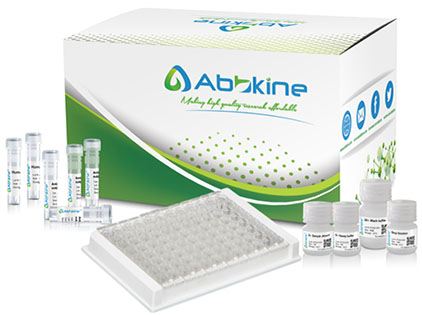
ALT and AST have been the "liver enzymes" for so long that everyone forgets they're actually cytosolic enzymes — which means they leak during any membrane permeability event, apoptotic or necrotic, drug-induced or hemolytic, and they share space with skeletal muscle and RBCs. The enzyme that doesn't play that game is Glutamate dehydrogenase (GDH/GLDH, official gene symbol GLUD1, UniProt: P00367, EC 1.4.1.3) — a ~55–56 kDa homodimer-of-dimers (functional homotetramer ~335 kDa) tucked so deep inside the mitochondrial matrix that the only way it reaches your serum is when the inner mitochondrial membrane AND the outer membrane AND the hepatocyte plasma membrane have all catastrophically failed — in other words, true necrosis, not orderly apoptosis or membrane-blebbing stress. That's why clinical hepatology services in Europe have quietly kept GDH/GLDH as a necrosis-specific comparator to ALT/AST for decades, and why acetaminophen (paracetamol) tox models track it as the earliest "mitochondria popped" alarm. The Human Glutamate dehydrogenase (GDH/GLDH) ELISA Kit (KTE62729) from Abbkine gives you this matrix enzyme as a calibrated sandwich-ELISA readout (U/L or ng/L–ng/mL interpolated), so your DILI, liver-transplant reperfusion, or mito-stress paper can separate necrotic death from everything else with a number — not a "AST was also up" hand-wave.
GDH/GLDH in One Paragraph: The NAD(P)-Linked Gate Between Amino Acids and the Krebs Cycle
GDH sits at the literal intersection of nitrogen and carbon metabolism:
L-Glutamate + NAD(P)⁺ + H₂O ⇌ α-Ketoglutarate (α-KG) + NH₄⁺ + NAD(P)H
(reversible; favors glutamate synthesis direction when energy is high / ADP low / GTP high)
The architecture is elegant and intimidating: six-stranded β/α-sheet core (GluDH_N + GluDH_C domains) forming each ~55 kDa subunit, assembling into a symmetrical homotetramer (D₂ symmetry, ~335 kDa) held together by interlocking NTD–CTD contacts across subunits. The regulation is the part students forget:
• Allosteric activators: ADP, leucine (binds an allosteric site distinct from the catalytic site)
• Allosteric inhibitors: GTP, ATP, NADH
• Covalent modulator: SIRT4-mediated ADP-ribosylation (silences GDH during calorie restriction)
In the GLUD1 gain-of-function story (activating mutations S445L, H454Y, T413M, G446D etc.), leucine hyper-activates GDH → glutamate → α-KG → TCA flux ↑ → ATP ↑ → KATP closure → insulin hypersecretion even when glucose is low → hyperinsulinism/hypoglycemia + mild hyperammonemia (because glutamine synthetase can't keep up). It's one of the cleanest monogenic metabolic-disorder narratives in clinical genetics — and it starts with an enzyme that lives nowhere near the plasma membrane.
Why a Sandwich ELISA for a ~335-kDa Tetramer — And Why "Activity Units" and "Protein Mass" Are Two Different Stories
Here's the subtle point every lab mixing up GDH assays needs to hear: you can measure GDH two ways, and they measure two different things:
Approach What's Measured Unit Limitation
Enzymatic activity assay (NADH @ 340 nm) Catalytic function (glutamate → α-KG + NADH, followed spectrophotometrically) U/L (µmol/min/L) Measures function, not mass; unstable/denatured GDH won't register even if protein is there; needs ultra-fresh, untampered-with serum
Sandwich ELISA (KTE62729) Antigenic protein mass (anti-GDH capture + biotin detection) ng/mL or U/L (calibrated against a recombinant GDH standard) Won't tell you if the enzyme is catalytically active, but detects the leaked protein regardless of cofactor state; far more robust to freeze–thaw, transport, and sample prep
The ELISA's advantage is the real world: clinical/experimental samples are rarely processed within 30 min on wet ice with NADH-ready cuvettes. The protein survives; the cofactors and instant activity don't. A sandwich ELISA lets you run batched, frozen, banked serum/plasma with plate-level CVs — which is exactly why biobanks and DILI-cohort studies need it.
From the distributor/technical listings aligned with KTE62729:
Parameter KTE62729-class Specification
Target Human GDH/GLDH (GLUD1 product, UniProt P00367, homotetramer ~335 kDa, subunit ~55.4 kDa)
Format 96-well sandwich ELISA, pre-coated capture (two-site, HRP–TMB, 450 nm)
Range Typically presented as 0.625 – 40 U/L (mass-calibrated; some datasheets also frame it as 12.5–200 ng/L equivalents depending on standard)
Sensitivity / LOD 0.1 U/L (1 ng/L range)
Intra-Assay CV < 8–10%
Inter-Assay CV < 10–15%
Specificity No significant cross-reactivity with other dehydrogenases (LDH, MDH, IDH) at physiological levels
Samples Serum, plasma (EDTA/citrate), tissue homogenates, cell culture supernatants/lysates, other biological fluids
Assay time ~3–5 hours
(Confirm exact dilution scheme, standard identity, and unit convention — mass vs. activity-calibrated — on the shipped Abbkine datasheet/CoA for KTE62729.)
The Prep Rule: GDH Is Mitochondrial — So the Only Way It's in Your Serum Is Because Something Broke
This is the conceptual punchline: you don't "prepare" GDH to be in plasma — you prepare everything else so you don't artificially rupture mitochondria during the draw and create a false leak.
• Collect in EDTA or citrate (not heparin if you plan parallel activity work; EDTA is fine for ELISA).
• Keep on wet ice, spin ≥ 2,000 ×g, 4°C, 10–15 min within 30–60 min, aliquot, -80°C, avoid >1 freeze–thaw.
• Note hemolysis: even heavy hemolysis adds cytosolic contaminants, but GDH is mitochondrial, so mild hemolysis actually underestimates the drama (the RBCs themselves have no GLUD1/GDH1 — they have negligible GDH — so the signal is genuinely hepatocyte-derived, not RBC-contamination noise like LDH).
• For tissue (liver biopsy, I/R model): homogenize cold in 50 mM Tris pH 7.4, 150 mM NaCl, 0.5% Triton X-100 + protease inhibitors, clarify → BCA → express as ng GDH / mg total protein or compare mitochondrial enrichment markers (VDAC/COX IV).
Where GDH/GLDH Quantification Actually Carries the Paper
- Drug-Induced Liver Injury (DILI) & Acetaminophen (APAP) Toxicity — The Necrosis Clock
This is the canonical. APAP overdose → N-acetyl-p-benzoquinone imine (NAPQI) → mitochondrial oxidative stress → inner-membrane collapse → MPT (mitochondrial permeability transition) pore opening → GDH pours into circulation — hours before ALT/AST peak and far more specific to hepatocyte necrosis than AST (which is 40% skeletal muscle). In mouse APAP models, GDH tracks the necrotic core better than ALT; in human toxicology settings, adding a GDH readout to the standard INR/ALT/Bilirubin (King's College Criteria) is the "is the mitochondrion dead?" flag. The ELISA lets you run timepoints 0–3–6–12–24–48 h on frozen aliquots with plate-level precision.
- Liver Transplant & Reperfusion Injury (The "Cold Ischemia → Warm Reperfusion" Problem)
Graft reperfusion after cold storage is when the donor organ's residual mitochondrial pool takes the biggest hit: Ca²⁺ overload → MPT → GDH leaks into perfusate / early post-anastomosis serum. Tracking GDH (U/L or ng/mL, ELISA) alongside lactate, citrate synthase (if you probe perfusate), and early graft-function markers (INR, bile output, AST slope) makes the reperfusion argument quantitative — you're not just "watching enzymes go up," you're tracking a matrix marker that cannot leak without catastrophic membrane failure.
- Acute Liver Failure / Fulminant Hepatitis — The Prognostic Stratifier
In massive hepatic necrosis (viral, autoimmune, Budd–Chiari, mushroom — Amanita phalloides α-amanitin), the GDH : ALT ratio is sometimes used to gauge the necrotic fraction vs. sublethal injury, because ALT leaks from reversible permeability, while GDH only shows up when cells actually die. Serial GDH trended alongside NH₃, INR, and HE-grade is the metabolic portrait of a liver that's not just inflamed — it's structurally gone.
- Hyperinsulinism/Hyperammonemia & GLUD1 Gain-of-Function (The Rare-Disease Angle)
This is the molecular-genetics hook: activating GLUD1 mutations → leucine-hypersensitive GDH → ↑insulin secretion → post-prandial/leucine-provoked hypoglycemia + mild persistent hyperammonemia (due to ↑glutamate→↑ammonia release). While the diagnosis is genetic (sequencing GLUD1), the leucine-provocation test and metabolic labs frame the functional collateral — and measuring GDH protein (or using GDH as a tissue-biomarker in biopsied/resected islet-hyperplasia contexts) is part of the broader metabolic-workup narrative.
- Ischemia–Reperfusion in Myocardial/Stroke Models (The "Mitochondria Die First" Axiom)
Although GDH is most clinically associated with liver necrosis, the same rule applies to any high-oxidative-demand tissue under I/R: if you're quantifying lactate dehydrogenase (LDH) vs. GDH in tissue homogenates or perfusate, GDH's strictly mitochondrial origin makes it the cleaner "organellar rupture" index — provided you control for the tissue's baseline GDH content (liver >> heart > brain > kidney).
- Cell Culture: Necrosis vs. Apoptosis Validation
If your paper claims "the drug killed cells by apoptosis," the negative control is necrotic lysis (freeze–thaw, Triton X-100 positive control). Checking supernatant GDH (ELISA) vs. caspase-3/7 activity + annexin V is the biochemical gate that proves the death was controlled, not just "well the cell body detached."
A Minimal Protocol You Can Paste Into Materials & Methods
- Serum/plasma: collect in EDTA, invert, keep on wet ice, spin ≥ 2,000 ×g, 4°C, 10 min within 30–60 min, aliquot immediately, -80°C, label, single thaw.
- Liver tissue: homogenize cold in 50 mM Tris pH 7.4, 150 mM NaCl, 0.5% Triton X-100 + protease inhibitors, spin 12,000 ×g, 15 min, 4°C, take supernatant → BCA → ng GDH / mg protein. (Optional: separate a mitochondrial fraction via differential spin if you want organelle-specific pools.)
- Warm kit reagents ≥ 30 min RT before opening; protect TMB from light; stop uniformly; read 450 nm promptly; fit 4-PL; run full standard curve on every plate.
The Bottom Line
GDH/GLDH is the ~335-kDa mitochondrial-matrix homotetramer (subunit ~55 kDa, GLUD1 gene) that sits at the glutamate↔α-ketoglutarate nitrogen–carbon hinge, regulated by ADP/leucine vs. GTP/ATP, and only appears in serum when the inner AND outer mitochondrial membranes AND the hepatocyte plasma membrane have all catastrophically failed — true necrosis, not membrane-bleb stress or orderly apoptosis. That's why it's the most necrosis-specific of the classic liver enzymes, and why APAP tox models, reperfusion-injury studies, and fulminant-failure monitoring benefit from tracking it as a protein-mass readout that survives freezing and batching. The Human Glutamate dehydrogenase (GDH/GLDH) ELISA Kit — KTE62729 from Abbkine gives you that readout: pre-coated anti-GDH capture → biotin detection → HRP–TMB → 450 nm, over roughly a 0.625–40 U/L calibrated envelope (mass-equivalent ~ng/L–ng/mL range), with LOD ~0.1 U/L, in a ~3–5 hour workflow that turns a mitochondrial blowout into a plotted curve you can defend next to your ALT/AST.
Product Reference: KTE62729 – Human Glutamate dehydrogenase (GDH/GLDH) ELISA Kit
Learn more and order: https://www.abbkine.com/product/human-glutamate-dehydrogenase-gdh-gldh-elisa-kit-kte62729/
(For Research Use Only; not for diagnostic procedures in humans.)





