




Your IL-8 Chemotaxis Story Is Solid—So Why Does Your ELISA Plateau at the Worst Possible Moment? The KTE6018 Fix Every Inflammation & Tumor Microenvironment Lab Should Know
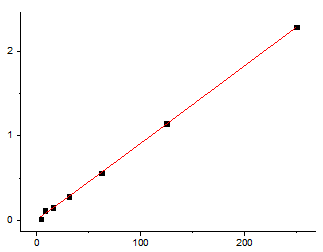
There's a very particular kind of post-review despair that sets in when Reviewer #2 circles your IL-8 (CXCL8) panel and writes: "The authors are encouraged to provide additional validation regarding the specificity and sensitivity of their cytokine quantification method." Nine times out of ten, the biology is real—neutrophil recruitment, tumor-associated angiogenesis, airway smooth muscle remodeling, psychiatric drug response—but the readout is riding on a sandwich ELISA that wasn't built to handle the dynamic range, matrix complexity, or low-end sensitivity your samples actually demand. The result? A plateaued standard curve, bloated error bars, and a supplementary figure that looks more like a Rorschach test than publication-grade data.
Why IL-8 Punishes "Good Enough" ELISA Setups
IL-8 (gene CXCL8, UniProt P10145, ~8–9 kDa secreted CXC chemokine) is the original neutrophil-activating protein (NAP-1 / MDNCF) and a central orchestrator of innate immune traffic. It's the go-to readout for:
• NLRP3 and sterile inflammation models (LPS ± ATP/nigericin → IL-1β and IL-8 co-release from monocytes/macrophages)
• Tumor microenvironment profiling (stromal fibroblast–derived IL-8 drivesangiogenesis, chemoresistance, and myeloid infiltration)
• Airway hyperresponsiveness & COPD research (epithelial + smooth muscle cells are prolific IL-8 secretors)
• Sepsis & cytokine storm monitoring in pre-clinical models
The catch is that IL-8 operates across a brutally wide concentration span—baseline in healthy human serum is often near or below 10 pg/mL, while an LPS-stimulated THP-1 or primary macrophage supernatant can hit thousands of pg/mL. If your assay's LOD is ~10 pg/mL and your top standard caps at 100 pg/mL, you're flying blind at the low end and saturating at the high end. That's not a "data interpretation problem"—that's an instrument problem.
Enter EliKine™ Human IL-8 ELISA Kit — KTE6018 (Abbkine)
Unlike generic sandwich kits that repurpose pan-chemokine antibodies and hope for the best, KTE6018 is engineered as a quantitative two-site (sandwich) ELISA with an anti-IL-8 / anti-IL-8 architecture mapped to the specific epitopes that matter:
Parameter KTE6018 Specification
Assay type Quantitative sandwich ELISA (two-site)
Target Human IL-8 / CXCL8 (UniProt P10145, Gene ID 3576)
Aliases NAF · GCP-1 · NAP-1 · MDNCF · MONAP · LECT · LUCT · SCYB8
Samples Cell culture supernatants · Serum · Plasma (heparin/citrate) · other biological fluids
Sensitivity (LOD) 2 pg/mL
Dynamic range 3.9 – 250 pg/mL (7-point standard curve)
Detection TMB → 450 nm read (620–650 nm reference optional)
Key reagents supplied Pre-coated anti-IL-8 96-well plate · IL-8 protein standard · Biotin-anti-IL-8 detection Ab · EliKine™ Streptavidin-HRP · Sample/standard diluent · Wash buffer · TMB substrate · Stop solution · Sealing films
Storage / Ship 2–8°C (unopened); ship blue-ice gel pack; research use only
The real differentiator isn't just the 2 pg/mL floor—it's the pre-coated plate + lot-controlled standard system. Plate-to-plate binding consistency is the single largest source of CV creep in cytokine ELISAs, and removing the manual coat/block step is what lets your inter-assay precision survive a multi-plate, multi-donor experiment without turning into a statistics nightmare.
What Changes in Practice (Beyond the Marketing Sheet)
① You stop throwing away the most informative samples.
That "undetectable" donor supernatant or baseline serum sample? With a 2 pg/mL floor and a proper 3.9 pg/mL lower-quant limit, it becomes a real datapoint you can actually model—instead of a left-censored <LOD pile that forces you into survival-analysis workarounds for what should be a straightforward bar plot.
② Your stimulated supernatants land on the curve, not past it.
The 3.9–250 pg/mL window captures a huge chunk of the LPS-stimulated macrophage/THE-1/THP-1 secretion range without mandatory 1:100 dilution gymnastics. When you do need to dilute (extreme secretors, concentrated conditioned media), the biotin–Streptavidin-HRP amplification gives you enough signal headroom to keep the interpolated value trustworthy.
③ The Methods section becomes reviewer-proof.
You can write:
IL-8 was quantified using a sandwich ELISA (EliKine™ Human IL-8 ELISA Kit, KTE6018; Abbkine) per manufacturer protocol. A biotinylated anti-IL-8 detection antibody and Streptavidin-HRP were used with TMB development, read at 450 nm (620 nm reference), and values interpolated from the supplied recombinant IL-8 standard curve.
Clean. Traceable. No "we used a homemade coating buffer" ambiguity.
Quick Bench Rules That Keep Your 450 nm Signal Honest
• RT balance matters: Bring all components to room temp (≥30 min) before opening. Cold reagents on a warm platereader lid = condensation + drift.
• Never cross-mix lot numbers. Not reagents, not wash buffer, not standard. Your curve is lot-calibrated—respect that boundary.
• Fresh tips, every well. IL-8 is sticky and tiny; one contaminated tip cascades through the entire standard curve.
• Seal unused strips immediately back into the foil pouch with desiccant, 2–8°C. Moisture is the silent killer of pre-coated plates.
• Gentle mixing is enough: low-speed orbital shaking or a manual tap every ~10 min during incubations is recommended—no vigorous vortexing the plate.
Where KTE6018 Earns Its Spot in Real Papers
Research Context Why IL-8 + This Kit Format Works
NLRP3 / inflammasome panels Run IL-1β and IL-8 from the same conditioned-medium harvest; 2 pg/mL sensitivity means you catch partial inhibition others code as "undetectable"
TME & angiogenesis screens Fibroblast- or tumor-derived IL-8 drives tube formation assays; quantifying the secretome requires a serum-compatible sandwich ELISA
Airway / COPD models Epithelial IL-8 (smoke extract, TLR agonist, viral mimic) needs a pre-coated system that survives 30+ sample batches
Psychoneuroimmunology LPS-challenge + antidepressant/antipsychotic studies routinely track IL-8 as a proxy for peripheral innate activation; clean CVs = grant-renewal data
Explore the EliKine™ Human IL-8 ELISA Kit (KTE6018) full specs, manual & ordering options here:
🔗 https://www.abbkine.com/product/elikine-human-il-8-elisa-kit-kte6018/
(For research use only. Not for human or clinical diagnostic use.)





