




Why Your Stress-Physiology Data Keeps Getting Side-Eyed by Reviewers: The Proline Problem—and How Abbkine's KTB1430 Makes the Readout Actually Bulletproof
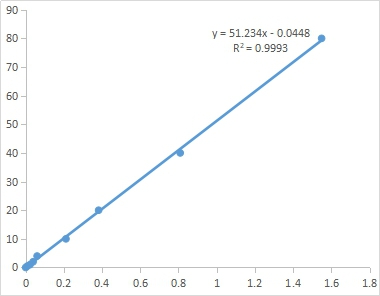
There is a quiet embarrassment that every plant-stress, crop-improvement, and even clinical-metabolism lab knows too well: you can see the stress response in your plants or cells, but the one "classic" osmolyte everyone expects you to quantify—proline (PRO)—keeps giving you data that feel… soft. You run the ninhydrin reaction by hand, juggle sulfosalicylic-acid extractions in a half-improvised fumehood routine, try to read it in a cuvette before the color fades, and then spend two hours convincing yourself the standard curve isn't drifting. By the time you sit down to write the Methods section, you realize you can't fully reproduce what you yourself did three weeks ago.
Here's the uncomfortable truth: proline isn't the problem. Your assay system is.
Proline isn't just a "plant thing"—and that's exactly why the assay must be rigidly standardized
Proline (Pro / l-Proline / C₅H₉NO₂) is the textbook compatible solute. Under drought, salinity, chilling, or heat, many species deliberately accumulate it to protect membranes, buffer cytoplasmic osmotic balance, and mop up reactive species . In translational contexts, PRO also shows up in animal tissues, cultured cells, microbes, and even serum/plasma investigations where osmolyte or metabolic-stress pathways intersect with pathology or engineered biosynthesis .
But because proline chemistry is sensitive—acidic ninhydrin conditions, heating steps, and an organic-extraction phase—it punishes loose protocols. Small variances in extraction pH, heating time/temperature, toluene (or equivalent) phase separation, and how quickly you read will quietly drag your CV upward until the biological signal drowns in technique noise.
Enter CheKine™ Micro Proline (PRO) Assay Kit (KTB1430) — the "stop winging it" solution
Abbkine's KTB1430 packages the classic, well-validated principle—sulfosalicylic acid (SA) extraction → proline reacts with acidic ninhydrin to form a red chromophore → organic-phase extraction → colorimetric readout—into a microplate-ready, component-controlled system your whole lab can repeat without "that one person who always gets the curve to work" .
What the kit explicitly gives you
• Extraction Buffer (SA-based, keeps PRO soluble and stable during homogenization)
• Assay Buffer I (acidic ninhydrin reaction environment)
• Chromogen (ninhydrin-side chemistry, light-sensitive—handled correctly in-kit)
• Pro Standard (so you build a real calibration curve instead of leaning on a theoretical ε)
Performance envelope that matters on paper
• Detection method: Colorimetric (visible), designed for a 96-well UV microplate
• Readout wavelength: ~520 nm (standard-curve plots are OD₅₂₀ vs. µg/mL PRO)
• Linear working range: roughly 0.5–80 µg/mL with a stated sensitivity of 0.5 µg/mL
• Sample scope: plant tissue, animal tissue, cells, bacteria, serum/plasma — not just "leaf homogenate"
• Storage / logistics: 4°C, protect from light; shelf life ~6 months from shipment; ships blue-ice packs; research use only
What changes the moment you stop free-styling ninhydrin
Labs that move PRO quantification onto KTB1430 tend to notice three practical shifts almost immediately—none of them flashy, all of them decisively useful when you're staring down a deadline or a revise-and-resubmit:
- Your standard curve stops being a negotiation.
Because the extraction buffer, assay buffer, chromogen, and standard are co-validated, your OD₅₂₀-vs-concentration relationship settles into a reproducible line instead of a new shape every Tuesday. That alone is often the difference between "strong trend" and "statistically defensible claim." - You stop burning scarce material on cuvette drama.
The microplate format is there for a reason: you can run 48T/48S or 96T/96S configurations, replicate smartly, and keep the rest of your precious extract frozen (once you've learned what your preferred dilution sweet-spot is). - Your Methods section finally reads like a professional protocol, not a memoir.
You can state clearly that free proline was quantified using a sulfosalicylic-acid extraction followed by acidic ninhydrin reaction and organic-phase colorimetry at 520 nm (CheKine™ Micro Proline Assay Kit, KTB1430, Abbkine)—and then point reviewers to a consistent, lot-controlled reagent system instead of a photocopy of someone's 1997 lab notebook.
The "boring" operational rules that actually protect your data (and sanity)
None of this works if you treat the reagents like shelf-stable pantry items. The kit documentation and distributor summaries are unusually explicit about the discipline side—because ninhydrin chemistry will expose sloppy habits :
• Light is the enemy of reproducibility here: store 4°C, protected from light; keep tubes/plates shielded when you can.
• Don't cross the streams: never mix components across different lot numbers or different vendors—buffer ionic strength and chromogen prep are part of the calibration, not interchangeable parts.
• Treat it like a trace-analysis workflow: change tips religiously, avoid bubbles when mixing/resuspending, and make sure your plate reader + incubation temps are stabilized before you start.
• Fresh-process when possible: the guidance emphasizes running the determination under controlled timing and keeping the chain-of-custody (homogenization → centrifugation → reaction → read) tight.
And yes—96-well UV microplate compatiblity is noted for a reason: if you try to shortcut onto the wrong plastic, you'll fight haze and inconsistent pathlengths for no good reason .
Where PRO data actually carries the paper (and why KTB1430 fits there)
If your story is any of the following, proline isn't optional decoration—it's a mechanistic/physiological linchpin:
• Abiotic-stress physiology & breeding: drought, salinity, chilling, and osmotic stress all lean on PRO accumulation as both readout and functional protector; a stable 0.5–80 µg/mL microplate assay lets you run genotype × treatment grids without turning your freezer into a graveyard of "maybe we can re-extract it" tubes .
• Microbial & engineered-strain work: when you're tuning osmolyte pathways in bacteria or yeast, serum/plasma/cell-sample compatibility means you aren't buying three different kits for three kingdoms.
• Cross-kingdom stress comparisons (plant ↔ animal cell model ↔ microbe): having one validated colorimetric anchor—OD₅₂₀, standard curve included—keeps units and normalization sane across sample types.
The bottom line
Proline is simple in concept and annoying in practice—until the reagents stop being the variable. CheKine™ Micro Proline (PRO) Assay Kit (KTB1430) takes the classic ninhydrin–organic extraction workflow and bakes in the things peer reviewers care about most: defined buffers, a supplied standard, a 520 nm microplate readout, and a reproducible 0.5–80 µg/mL envelope .
If your Figure 4 currently depends on a hand-drawn standard curve and a prayer, it's time to retire that risk.
Explore the product details:
👉 https://www.abbkine.com/product/chekine-micro-proline-pro-assay-kit-ktb1430/
(For research use only; not for human clinical diagnostic use.)





