




ProDH Is the “Silent Variable” in Your Stress & Nitrogen Experiments—Here’s the Microplate Fix (KTB1431)
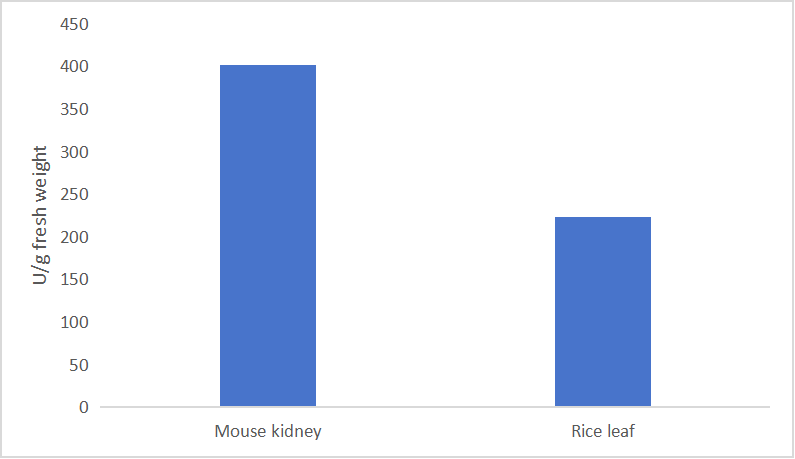
If your abiotic-stress story keeps hitting the same wall—strong phenotype, messy enzymology—there’s a decent chance you’re treating proline dehydrogenase (ProDH) like a footnote instead of the kinetic bottleneck it actually is. ProDH (mitochondrial, proline catabolism) controls the exit ramp from proline accumulation back into central metabolism (glutamate/TCA feed-in), which means its activity directly frames how cells/organisms reset after osmotic shock, salt stress, or nitrogen-limited growth. Miss the dynamics here, and your “osmolyte model” ends up half-built.
The irony? Everyone measures proline (PRO). Far fewer labs track ProDH activity with a plate-ready, reproducible readout—mostly because the classical approach (manual reagent timing + cuvette sprints) is brittle, and “just run an NAD+/340 nm assay” doesn’t always love crude extracts, particulates, and the exact buffer ghosts that come with tissue/plant lysates.
Why ProDH assays drift—and why the 600 nm DCPIP lane exists
A robust, widely used workaround is to couple ProDH to a PMS–DCPIP (phenazine methosulfate / 2,6-dichlorophenolindophenol) system: ProDH oxidizes L-proline, the electron flow is shuttled via PMS, and DCPIP is reduced—which you follow as a drop in absorbance at ~600 nm (DCPIP’s characteristic peak). That ΔA₆₀₀ kinetic readout is the workhorse behind many published ProDH/PRO catabolism modules because it’s compatible with crude, colored, or slightly turbid supernatants that would ruin a strict 340 nm NADH/NAD⁺ method.
The catch is reagent stability + timing + light: PMS is light-sensitive, DCPIP needs consistent ionic strength and pH, and if your “reaction mix” is three different bottles from three different eras, your slope will carry your bench habits more than your biology.
CheKine™ Micro Proline Dehydrogenase (ProDH) Activity Assay Kit KTB1431 (Abbkine)
This is the “stop winging it” package: the DCPIP/PMS chemistry is pre-balanced into numbered Reagents (I–V + Extraction Buffer) so your plate behaves the same on Monday that it did on Thursday.
What the kit is built to do (principle, as described)
Inside the tube: ProDH catalyzes L-proline dehydrogenation; electrons move through PMS to reduce DCPIP, and you monitor the decrease in A₆₀₀ to derive activity.
Readout: colorimetric / visible, centered on 600 nm.
Samples: plant tissue, animal tissue, bacteria, cells—exactly the messy matrix mix stress/physiology labs live in.
Logistics that matter: store 4°C, protected from light, listed shelf ~6 months; ships blue-ice packs.
What actually improves when you stop DIY-ing the PMS/DCPIP chain
• Slopes stabilize. Because Reagents I–V are co-optimized, your ΔA₆₀₀/min stops depending on “who pre-warmed what.”
• You protect the light-sensitive links. PMS/DCPIP systems punish casual lighting; the kit workflow + “keep from light” storage is basically a seatbelt for your CV.
• You can finally run a real series: genotypes × treatments × time-course in one plate, instead of one cuvette-at-a-time heroics.
Typical common-sense workflow (as implied by the extraction → reaction → kinetic-read structure): homogenize tissue/cells in the supplied Extraction Buffer (cold) → centrifuge → transfer supernatant → set up the Reagent I/II/III/IV/V reaction mix → track A₆₀₀ over time → calculate activity normalized to protein (BCA) or tissue weight per your lab’s standard formulas.
ProDH data that actually carry a paper
If your narrative touches any of these, ProDH isn’t optional trivia—it’s the hinge:
• Plant abiotic stress / recovery: salt, drought, chilling—where proline accumulates during stress and must be catabolized during recovery; ProDH is the gateway enzyme for that reset.
• Nitrogen-use / nutrient-limitation physiology: proline acts as N-store + redox buffer; ProDH activity tells you when the tap is open.
• Pathogen–host metabolic tug-of-war & redox: proline flux is increasingly tied to immune metabolism and barrier/inflammation models; having a clean catabolic enzyme assay helps separate “pool size” from “turnover.”
• Microbial/synthetic-bio proline circuits: if you’re selecting strains or tuning pathways that push proline ↔ glutamate, you want the activity readout, not just an endpoint pool.
Quick bench rules that keep ΔA₆₀₀ honest
• Fresh > frozen whenever possible; if you must freeze, -80°C and avoid repeat freeze–thaw; if thawing at room temp, keep it ≤ ~4 h before you process.
• Pre-equilibrate reagents/plate reader to the assay temperature you’ll declare in Methods; ProDH kinetics don’t forgive “cold rotor → warm reader” drift.
• Shield PMS/DCPIP steps from strong light; “4°C, protected from light” isn’t aesthetic—it’s error-control.
Explore the kit details / ordering options for CheKine™ Micro Proline Dehydrogenase (ProDH) Activity Assay Kit (KTB1431) here:
https://www.abbkine.com/product/chekine-micro-proline-dehydrogenase-prodh-activity-assay-kit-ktb1431/
(For research use only; not for human clinical diagnostic use.)





