




TUBB4: The "Quiet" Cytoskeleton Marker Driving Neuro-Degeneration and Taxane Resistance Discoveries—And Why Your Current Detection Method Is Costing You Real Data
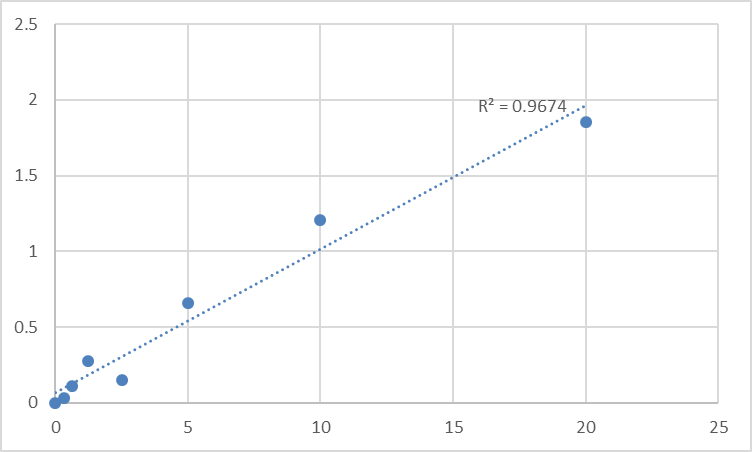
Walk into any lab studying neuronal development, myelin disorders, or why paclitaxel stops working after six weeks, and you'll find one protein family sitting at the center of the conversation: tubulin beta isotypes. Specifically, Tubulin beta-4 chain (TUBB4 / TUBB4B)—the structurally critical isoform that holds the microtubule cytoskeleton together in neurons, ciliated cells, and a surprisingly wide range of tumor lineages. The problem isn't that researchers don't know TUBB4 matters. It's that quantifying it in real, messy human samples—CSF, snap-frozen brain punches, patient serum, or clinical biopsy homogenates—has traditionally meant choosing between a 3-day Western blot treadmill and an ELISA kit so noisy you can't defend the numbers in peer review.
The science behind the stakes is genuinely compelling. Heterozygous missense mutations in TUBB4 are now recognized as causative for devastating neurodevelopmental syndromes—most notably H-ABC (Hypomyelination with Atrophy of the Basal Ganglia and Cerebellum) and progressive dystonia. On the oncology side, TUBB4 (along with sibling isotypes like TUBB3) is increasingly implicated in the microtubule-dynamics axis that dictates whether a tumor will cave to taxanes or pump them out and adapt. In short: if you're studying neuronal differentiation, oligodendrocyte maturation, sensory hair cell integrity (TUBB4B mutations → autosomal dominant hearing loss), or chemoresistance mechanisms, TUBB4 isn't a "nice-to-have" readout. It's the mechanistic hinge your entire figure set pivots on.
Where Traditional TUBB4 Detection Falls Apart
Here's what experienced labs already know: β-tubulin isotypes are ~90% identical at the sequence level. That 10% divergence is exactly where the biology lives—and exactly where generic "anti-β-tubulin" reagents fall apart. Cross-reactivity with TUBB2, TUBB3, TUBB6, and other β-chain paralogs smears your signal into a cloudy composite that can't distinguish isotype-specific regulation. You end up with a band on a blot that says "tubulin changed" without telling you which tubulin or how much, which is useless when your hypothesis depends on TUBB4-specific dynamics.
Add the practical headaches—large sample volumes (50–100 µL per well), 4+ hour workflows, and plate-to-plate drift that turns your "normalized" ratios into statistical Swiss cheese—and you've got a recipe for revise-and-resubmit purgatory.
Enter Abbkine's Human Tubulin Beta-4 Chain (TUBB4) ELISA Kit — KTE60116
Abbkine's Human TUBB4 ELISA Kit (KTE60116) is purpose-built around a two-site sandwich ELISA architecture that solves the three problems that actually ruin TUBB4 data: specificity, sensitivity, and workflow reproducibility.
The microplate comes pre-coated with a capture antibody specific for human TUBB4. Samples and standards go in; TUBB4 binds. After a wash, a biotin-conjugated anti-TUBB4 detection antibody locks in the sandwich. Streptavidin-HRP follows, TMB substrate develops the blue → yellow signal, and you read at 450 nm (620–650 nm reference optional). The result? Color intensity proportional to TUBB4 concentration—no band-smearing, no isotype-guessing.
Key technical specs that matter on a Methods line:
Parameter KTE60116 Specification
Assay type Quantitative sandwich ELISA (two-site)
Reactivity Human (Homo sapiens)
Sample types Serum, plasma, tissue homogenates, cell culture supernatants & other biological fluids
Detection Colorimetric (TMB → stop solution → 450 nm read)
Kit components Pre-coated 96-well microplate · TUBB4 standard · Biotin-detection Ab · Streptavidin-HRP · Assay/Standard diluents · TMB substrate · Stop solution · Wash buffer · Plate seals
Working time ~3–5 hours (multi-step, standard sandwich protocol)
Storage 2–8°C unopened; opened components per protocol; ship blue-ice gel pack
Status For research use only — not for clinical/diagnostic use
What Makes KTE60116 a "Publishable" Choice vs. Generic Alternatives
① Isotype specificity you can actually defend. The dual-antibody sandwich format (capture + biotin-detection, both TUBB4-directed) creates a selectivity gate that a single anti-pan-β-tubulin WB antibody simply can't match. No significant cross-reactivity with analogues means your signal is TUBB4, not "tubulin-ish."
② Microliter-scale sample economy. When you're working with precious material—CSF taps, microdissected basal ganglia, or limited patient serum panels—the last thing you want is a kit that drinks 50 µL per data point. The sandwich format is optimized for the volumes real human-sample logistics actually allow.
③ Built-in standardization. Having a supplied TUBB4 standard curve means you're not calculating nanograms from a Coomassie-stained gel band that may or may not be in linear range. Your data rides on a calibrated reference, which reviewers consistently rank as higher-quality evidence than arbitrary "fold-change vs. loading control" assertions.
④ Batch-controlled reproducibility. The pre-coated plate format eliminates the single biggest source of ELISA variance—manual coating inconsistency. Combined with the explicit usage note to never mix reagents across different lot numbers, your inter-assay CV stays in the defensible range.
Real-World Use Cases Where KTE60116 Earns Its Spot
Research Domain Why TUBB4 Matters Here How KTE60116 Fits
Neurodevelopmental genetics / H-ABC research TUBB4 mutations → defective microtubule dynamics → hypomyelination & cerebellar atrophy Quantify residual/wild-type TUBB4 protein levels in patient-derived cell models vs. mutation carriers
Neuronal differentiation & iPSC-neuron QC TUBB4 (and β-tubulin isotype switching) marks commitment to neuronal lineage Track TUBB4 upregulation during differentiation with a plate-readable readout instead of endless Westerns
Oncology / taxane resistance Altered β-tubulin isotype expression patterns modulate paclitaxel sensitivity Profile TUBB4 alongside TUBB3 in resistant vs. sensitive lines; quantitative ELISA feeds directly into dose–response correlation tables
Sensory / inner-ear biology TUBB4B mutations → autosomal dominant hearing loss (hair cell microtubule integrity) Measure TUBB4 in inner ear-derived cultures or biopsy-level material where sample is inherently limited
Protocol Essentials (Bench-Quick Reference)
Prep: Bring all components to room temperature (≥30 min) before opening. Protect unused wells in the sealed desiccated bag at 4°C. Use fresh pipette tips every transfer—cross-contamination here is the silent killer of ELISA precision.
Workflow snapshot: Add standards/samples → incubate → wash → add biotin-anti-TUBB4 → wash → add Streptavidin-HRP → wash → add TMB substrate (develop in dark/minimize light) → stop with provided stop solution → read 450 nm immediately.
Golden rules from the manual: Do NOT mix components from different kit lots. Mix thoroughly (low-frequency oscillator or gentle hand-shake every ~10 min during incubation steps). Run duplicates or triplicates for every standard and sample.
The bottom line is refreshingly simple: TUBB4 is no longer a niche cytoskeletal curiosity—it's a tractable, quantifiable biomarker sitting at the intersection of developmental neurobiology, neurodegeneration, and cancer drug response. The only thing standing between your current data and a defensible, reviewer-ready figure is the quality of the assay backing it.
Explore the full specification sheet and ordering options for Human Tubulin Beta-4 Chain (TUBB4) ELISA Kit (KTE60116) here:
👉 https://www.abbkine.com/product/human-tubulin-beta-4-chain-tubb4-elisa-kit-kte60116/
(For research use only. Not intended for human or clinical diagnostic use.)





