




When Stress Becomes a Signal: Quantifying Human Sestrin-3 (SESN3) with a Dedicated Sandwich ELISA
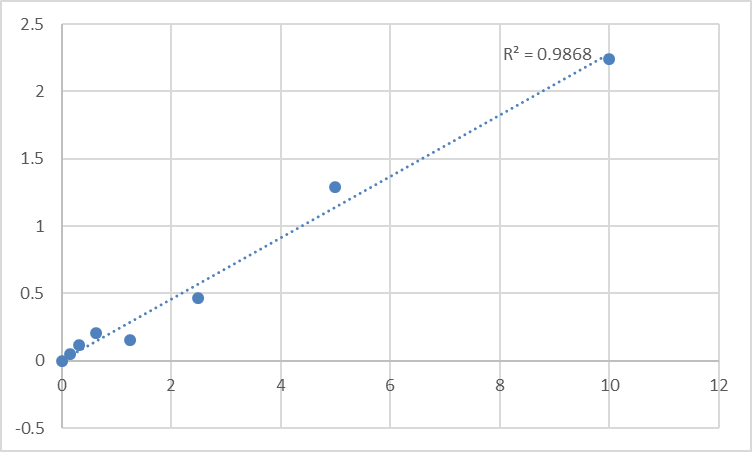
If you've spent any time in metabolism or stress-biology circles, you already know the Sestrin family by reputation — especially Sestrin-2, the darling of AMPK–mTORC1 crosstalk, p53 stress responses, and the redox sensor KEAP1/Nrf2 axis. But tucked right next to it in the genome sits the quieter, more elusive sibling: Sestrin-3 (SESN3). Smaller, less constitutively expressed, and far more selective in when it shows up, SESN3 has carved out its own identity as a hypoxia-inducible, stress-gated metabolic modulator that answers to HIF-1α rather than p53, positions itself at the intersection of nutrient stress and oxygen sensing, and — increasingly — is showing up in cancer-metabolism and ischemia-reperfusion contexts where the "big" senescence markers don't tell the whole story. The problem? SESN3 is low-abundance, stress-inducible rather than housekeeping, and easy to miss if you're relying on casual Western blots and densitometry. The Human Sestrin-3 (SESN3) ELISA Kit (KTE60685) from Abbkine is built to fix exactly that blind spot: a two-site sandwich ELISA that turns this elusive stress-response protein into a calibrated, plate-readable concentration (ng/mL) you can actually replicate, normalize, and put in a table with error bars.
SESN3 in Context: Not "Sesn2-Lite," But a Distinct Stress Sensor
The three human Sestrins (SESN1, SESN2, SESN3; also called PA26/Sestrin-3) share the conserved Sestrin domain (pfam 12991) and the GTPase-activating protein (GAP)-like region toward the C-terminus (historically noted for weak similarity to GAP for Rag GTPases, tying into the GATOR2–Rag–mTORC1 nutrient-sensing nexus). But their regulatory logic diverges sharply:
Feature SESN2 SESN3
Primary inducer p53, oxidative stress, amino acid stress HIF-1α, hypoxia, glucose deprivation
Basal abundance Moderate (detectable at steady state) Very low at baseline, spikes under specific stresses
Chromosome locus (human) 11p11.2 11q21
Dominant context Chronic DNA damage, oxidative stress, mTORC1 tuning Hypoxia/ischemia, HIF-driven metabolic rewiring
SESN3 is transcriptionally driven by HIF-1α (hypoxia response element–like regions upstream), meaning it climbs fast when O₂ drops or when cells are pushed into glycolytic overdrive, and it sits functionally alongside the machinery that decides whether a cell invests in growth (mTORC1) or retreats into conservation. Some studies also tie SESN3 to autophagy modulation and 调节 of MAPK/ERK signaling under metabolic strain, though — importantly — the field still treats SESN3 as a discovery-space target where careful, protein-level quantification is the bottleneck.
Why "Just Probe SESN3 on a Gel" Isn't Good Enough
There are three practical reasons SESN3 fights back when you try to measure it casually:
- Low basal expression — in unstressed cells, the band can be near the detection floor, so your "control lane" becomes mostly noise and your fold-change lives in the shadows of film exposure.
- Stress-specific, not constitutive — unlike GAPDH or Actin, SESN3 only makes sense as a stress time-course, which means you need multiple timepoints × replicates, and that's where a plate-based ELISA scales and a gel slog doesn't.
- Antibody specificity matters more than usual — because SESN family members share the conserved Sestrin domain (~40-50% identity in places), any single antibody that isn't mapped to a unique epitope can bleed into SESN1/SESN2 territory; a sandwich ELISA solves this with a second orthogonal epitope.
Assay Principle: The KTE60685 Sandwich ELISA
Like Abbkine's other targeted-protein sandwich ELISAs, KTE60685 follows the proven architecture:
- A microplate is pre-coated with a capture antibody specific for human SESN3.
- Standards and samples (serum, plasma, tissue homogenates, cell lysates, cell culture supernatants, other biological fluids) are added; SESN3 present binds.
- After washing, a biotinylated anti-SESN3 detection antibody (different epitope) forms the sandwich complex.
- Streptavidin–HRP → TMB → color ∝ [SESN3].
- Stop solution → read Absorbance at 450 nm → interpolate from the recombinant SESN3 standard curve.
Assay duration is typically ~3–5 hours, making it realistic to pair with a hypoxia time-course, a drug-stress panel, or a tissue-banking cohort in one sitting.
Performance Snapshot (representative for this kit class)
Parameter Typical Specification
Target Human Sestrin-3 / SESN3 (UniProt Q8IYS0, Gene ID 11147)
Format 96-well sandwich ELISA, pre-coated capture
Detection Biotin-Ab → Streptavidin–HRP → TMB, 450 nm read
Dynamic Range 0.156 – 10 ng/mL (7-point standard)
Sensitivity (LOD) ~0.06–0.10 ng/mL
Intra-Assay CV < 8% (often ≤ ~5%)
Inter-Assay CV < 10–12%
Recovery ~90–108% in validated matrices (serum/lysate)
Sample Types Serum, plasma, tissue homogenates, cell lysates, culture supernatants, other biological fluids
(Always anchor your Methods section to the lot-specific CoA that ships with your kit.)
Where Quantifying SESN3 Actually Moves the Story
- Hypoxia & ischemia–reperfusion (I/R) models
If your project lives in HIF-1α territory — cardiac I/R, stroke penumbra, renal ischemia, or tumor pseudohypoxia — SESN3 is one of the cleaner protein readouts that says "the cell actually mounted a HIF-driven metabolic defense," independent of just measuring HIF-1α stabilization (which is itself necessary but not sufficient evidence of downstream effector deployment).
- Cancer metabolism & the Warburg periphery
Some tumor subtypes and metastatic microenvironments tune SESN3 as part of their adaptive hypoxia program. Quantifying it in lysates from xenografts, patient-derived organoids, or FACS-sorted tumor subpopulations gives you a protein-level anchor alongside LDHA, CA9, and GLUT1.
- Nutrient/amino-acid stress panels
Because Sestrins sit near the GATOR2–Rag–mTORC1 nutrient-sensing hub, tracking SESN3 across amino-acid withdrawal, leucine restriction, or Torin/rapamycin responses can help you separate "general stress" from "HIF-specific metabolic reprogramming."
- siRNA/sgRNA validation
Knockdown or CRISPR editing of upstream regulators (HIF1A, VHL, MTOR pathway nodes)? Don't just show a ladder — show SESN3 protein (ng/mg total protein) ± SEM from a calibrated curve so the reviewer sees a number, not a judgement call.
- Exploratory biomarker feasibility
Although SESN3 is largely intracellular, stress-induced release (efferocytosis debris, exosomes, membrane vesicles) means there's a legitimate exploratory path for plasma/serum or wound-fluid surrogates — and that needs a sensitive, two-epitope ELISA to avoid false attribution.
A Minimal "Clean Data" Workflow
- Lyse in cold, protease-inhibitor-supplemented buffer (RIPA or PBS + 0.5–1% NP-40); clarify by centrifugation; keep on ice.
- Run BCA on the same lysate so you can express SESN3 as ng / mg total protein.
- Warm all kit reagents to RT (≥30 min) before opening; protect TMB from light.
- Add standards + samples per protocol; incubate; follow wash cycle exactly (under-washing = background, over-drying = edge effects).
- Develop TMB; stop uniformly; read 450 nm promptly; fit a 4-PL; back-calculate dilutions.
The Bottom Line
SESN3 may not have the citation count of SESN2 — yet — but that's exactly why it's the kind of target that rewards labs willing to measure it properly instead of assuming "if it's a Sestrin, the Western for Sesn2 already told us everything." The Human Sestrin-3 (SESN3) ELISA Kit — KTE60685 from Abbkine gives you a pre-coated sandwich ELISA with the sensitivity for a low-abundance, stress-inducible protein and the throughput to run time courses, treatments, and cohorts without chaining yourself to a gel rig. When your hypothesis says "hypoxia and metabolic stress are reshaping this cell," SESN3 is one of the proteins that should be backing that claim — and now you can quantify it like one.
Product Reference: KTE60685 – Human Sestrin-3 (SESN3) ELISA Kit
Learn more and order: https://www.abbkine.com/product/human-sestrin-3-sesn3-elisa-kit-kte60685/
(For Research Use Only; not for diagnostic procedures in humans.)





