




The Wnt "Decoy" You Can Finally Quantify: SFRP2 ELISA for Angiogenesis, Fibrosis, and the Tumor–Stroma Axis
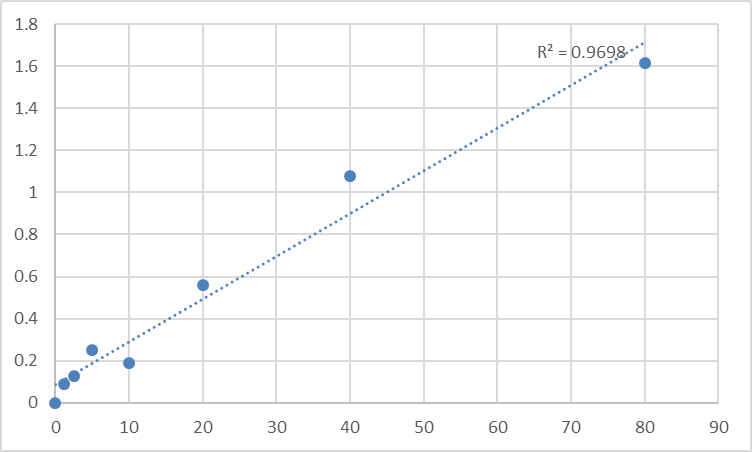
The Wnt pathway is one of the most heavily policed signaling highways in human biology — and Secreted frizzled-related protein 2 (SFRP2) is one of its most intriguing traffic cops. Unlike the transmembrane Frizzled (FZD) receptors that receive the Wnt signal, SFRP2 belongs to a family of soluble decoy regulators that lack the membrane-anchoring seven-transmembrane domain. Instead, SFRP2 is actively secreted into the extracellular space, where its cysteine-rich domain (CRD) physically binds Wnt ligands (Wnt-1, Wnt-3a, Wnt-5a, etc.) — and can also interact with Frizzled receptors — effectively sequestering the signal away from the cell surface. In a clean, elegant stroke, it dampens both canonical β-catenin-driven transcription and certain non-canonical (planar cell polarity / Ca²⁺) branches. But the real fascination is that SFRP2 refuses to behave like a simple on/off tumor suppressor: it is frequently silenced by CpG-island hypermethylation in carcinomas (freeing Wnt to run wild), yet overexpressed in cardiac tissue, healing wounds, and tumor-associated fibroblasts, where it paradoxically promotes angiogenesis, modulates fibroblast activation, and supports tissue repair. That push–pull — Wnt antagonist on paper, pro-repair/pro-angiogenic in context — is exactly why measuring SFRP2 protein itself, in the right compartment, changes how you interpret your experiment. The Human Secreted frizzled-related protein 2 (SFRP2) ELISA Kit (KTE60681) from Abbkine is purpose-built to do precisely that: a two-site sandwich ELISA that turns this secreted Wnt modulator into a calibrated, plate-readable number you can track across media, serum, plasma, and tissue lysates.
SFRP2 Biology in a Paragraph: A "Brake" That Also Builds Blood Vessels
SFRP2 (UniProt: Q96HF1, ~295 aa mature, heavily N-glycosylated → ~33–35 kDa apparent on SDS-PAGE) is the second member of the five-gene SFRP family, united by a conserved N-terminal Netrin-like domain + C-terminal CRD that mimics the ligand-binding region of Frizzled receptors. Because it is secreted via a conventional signal peptide, SFRP2 operates entirely in the extracellular matrix and soluble milieu — not at the cytoplasmic face.
The classic textbook line calls it a Wnt antagonist: by binding free Wnt or forming inactive ternary complexes with Wnt+Frizzled, SFRP2 suppresses β-catenin nuclear translocation and Wnt-target transcription. That mechanism underpins its epigenetic silencing in many solid tumours (colon, breast, gastric, esophageal, melanoma), where loss of SFRP2 removes a natural brake and contributes to the malignant phenotype.
But the richer story is stromal and reparative:
• Cardiac repair & cardiomyopathy contexts — SFRP2 is one of the most upregulated secreted proteins in injured myocardium and in cardiac progenitor/ stromal secretomes; experimental studies link it to pro-angiogenic paracrine signalling, cardiomyocyte survival, and improved functional recovery after ischaemia–reperfusion.
• Tumor microenvironment & CAFs — stromal SFRP2 can support new vessel formation (partly via VEGF crosstalk and non-canonical Wnt modulation) even while epithelial SFRP2 loss derepresses Wnt in the cancer cells themselves.
• Fibrosis & wound healing — SFRP2 expression in activated fibroblasts and granulation tissue positions it as both a repair-associated ECM factor and a candidate circulating/proteomic biomarker in serum or wound exudates.
That dual identity — suppressor at the epithelial genome level, pro-angiogenic/repair factor at the stromal protein level — means the only honest way to read it is in protein units, where the molecule actually lives.
Why a Sandwich ELISA (And Why SFRP2 Is Unusually Well-Suited to One)
Because SFRP2 is secreted and soluble, it is one of the more accessible Wnt-axis components to quantify in conditioned media, BAL/pleural fluid, serum, plasma, and tissue lysate supernatants. A two-site sandwich ELISA gives you three decisive advantages over "just Western the conditioned media":
- Two independent epitopes (pre-coated capture + biotin detection) → much higher specificity for SFRP2 vs. other SFRPs or Wnt-binding matrix proteins that might run at similar MW.
- Absolute concentration via an on-plate recombinant standard curve → ng/mL you can normalize to cell number, total protein, or time, and then compare across donors, doses, and animals without arguing about band intensity.
- Throughput → 96-well format means you can run a time-course × treatment grid in a single sitting instead of spending two days on gel transfers and exposures.
Assay Principle: KTE60681 (Sandwich ELISA, 450 nm)
The kit uses the standard, field-proven architecture:
- A microplate is pre-coated with a capture antibody specific for human SFRP2.
- Standards (recombinant human SFRP2) and samples — serum, plasma, tissue homogenates, cell culture supernatants, other biological fluids — are added; SFRP2 present in solution binds.
- After washing, a biotinylated anti-SFRP2 detection antibody (different epitope) forms the sandwich.
- Streptavidin–HRP binds the biotin; TMB produces colour ∝ bound SFRP2.
- Stop solution → yellow → read at 450 nm → interpolate unknowns from the standard curve.
Typical total assay time: ~3–5 hours, easily slotted into a morning–afternoon block. (As always, confirm lot-specific steps in the Abbkine manual.)
Performance Snapshot (the numbers most methods sections need)
Parameter Typical KTE60681-class spec
Target Human SFRP2 (UniProt Q96HF1)
Format 96-well sandwich ELISA, pre-coated capture
Detection Biotin-Ab → Streptavidin–HRP → TMB, read 450 nm
Dynamic Range 0.156 – 10 ng/mL (7-point standard curve)
Sensitivity / LOD ~0.05–0.09 ng/mL
Intra-Assay CV < 8% (often ≤ ~5%)
Inter-Assay CV < 10–12%
Recovery ~88–105% in validated matrices (run a spike in yours)
Samples Serum, plasma, tissue homogenates, cell culture supernatants, other biological fluids
Assay time ~3–5 hours
Verify the exact range/CV/recovery for your lot in the shipped certificate of analysis.
Where Measuring SFRP2 Protein Moves the Needle
- Wnt-signalling & cancer-cell / stroma co-culture work
Track SFRP2 secretion into media from fibroblasts, MSCs, or cancer lines across treatment (HDACi, DNMTi, demethylating agents like 5-azacytidine) — because restored SFRP2 expression after epigenetic therapy is a protein-level claim that deserves a standard curve, not a smear.
- Cardiac repair, ischaemia–reperfusion & engineered heart tissue
If you're profiling the cardiac stromal/secreted proteome (CMPCs, epicardial fibroblasts, hydrogel-encapsulated constructs), SFRP2 is one of the highest-signal hits worth quantifying longitudinally in media or scaffold eluates.
- Fibrosis & wound-healing models
Quantify SFRP2 in granulation tissue lysates, wound-exudate proxies, or lung/kidney fibrotic tissue homogenates as part of a broader ECM–Wnt crosstalk panel (together with active β-catenin targets, Col1A1, α-SMA, and MMPs).
- Epigenetic silencing / methylome–phenotype links
SFRP2 is a classic CpG-methylation biomarker in tumours. If your paper links bisulphite-seq/Infinium methylation to functional Wnt output, quantifying SFRP2 protein (or media SFRP2) is the most direct way to prove the silencing actually manifests at the secreted level.
- Exploratory liquid-biopsy / serum studies
Because it's secreted and relatively stable in circulation (albumin helps protect small secreted glycoproteins), SFRP2 has been explored as a surrogate marker in cancer and cardiovascular contexts — any such feasibility study needs a specific, sandwich-format ELISA as the analytical foundation.
Quick Best-Practice Notes (so your ng/mL is real)
• Clarify before you load: centrifuge supernatants (no cell debris — SFRP2 is soluble, so debris falsely inflates by trapping it).
• Beware freeze–thaw cycles: aliquot at -80 °C; avoid >2 cycles for serum/plasma if you can.
• Normalize lysate data: express as ng SFRP2 / mg total protein (BCA) so you're not fooled by uneven recovery.
• Run the full curve on every plate — never "reuse last Tuesday's curve" for a secreted glycoprotein where tiny matrix shifts move the baseline.
• Use the kit's recommended sample diluent/buffer for diluting the standard; if you must dilute samples further, do it in the same matrix, not pure water.
The Bottom Line
SFRP2 is the Wnt pathway's secreted paradox: a Frizzled-like decoy that acts as a tumour suppressor when lost, yet a stromal pro-angiogenic/repair factor when present. Reading it properly means respecting where it lives — outside the cell, in the matrix and the medium — and measuring it with a calibrated assay instead of a guess. The Human Secreted frizzled-related protein 2 (SFRP2) ELISA Kit (KTE60681) from Abbkine gives you that assay: pre-coated capture → biotin detection → HRP–TMB → 450 nm → ng/mL, in a 3–5 hour workflow that scales from a 6-well time-course to a 50-sample cohort without breaking stride.
Product Reference: KTE60681 – Human Secreted frizzled-related protein 2 (SFRP2) ELISA Kit
Learn more and order: https://www.abbkine.com/product/human-secreted-frizzled-related-protein-2-sfrp2-elisa-kit-kte60681/
(For Research Use Only; not for diagnostic procedures in humans.)





