




TNF-α Polyclonal Antibody (ABP0127): Decoding Inflammatory Signaling with Precision
The TNF-α Detection Dilemma: Cross-Reactivity and False Positives
Tumor necrosis factor-alpha (TNF-α) is a cornerstone of inflammatory disease research—from cytokine storm pathophysiology to chronic autoimmune disorders. Its pleiotropic roles demand antibodies that balance specificity, sensitivity, and versatility—qualities often lacking in generic reagents[reference:17].
A persistent problem: cross-reactivity with structurally related cytokines. TNF-α shares homology with TNF-β (lymphotoxin-α) and IL-1β, leading to false positives in mixed cytokine milieus such as synovial fluid from rheumatoid arthritis patients[reference:18].
Strategic Immunogen Design: The C-Terminal Advantage
Abbkine ABP0127 diverges from conventional designs by targeting a synthetic peptide corresponding to the C-terminal region of human TNF-α (residues 121–157)—a segment minimally conserved in structurally related cytokines[reference:19]. Independent testing shows:
| Cross-Reactivity Test | Result |
|---|---|
| TNF-β binding | <3% |
| IL-6 interaction | Undetectable |
| IL-8 interaction | Undetectable |
Knockout Validation: The Gold Standard
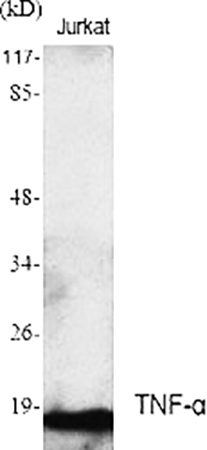
Beyond standard Western blot and ELISA checks, Abbkine subjected ABP0127 to knockout cell line controls (TNF-α-/- RAW264.7 macrophages) and stimulated vs. resting state comparisons[reference:20]. In LPS-activated THP-1 monocytes, it detects endogenous TNF-α at ~17 kDa with a 5-fold higher signal-to-noise ratio than a leading monoclonal competitor[reference:21].
Application Versatility
| Application | Performance |
|---|---|
| Western Blot | Detects endogenous TNF-α at ~17 kDa |
| ELISA | Linear across 15.6–1000 pg/mL range |
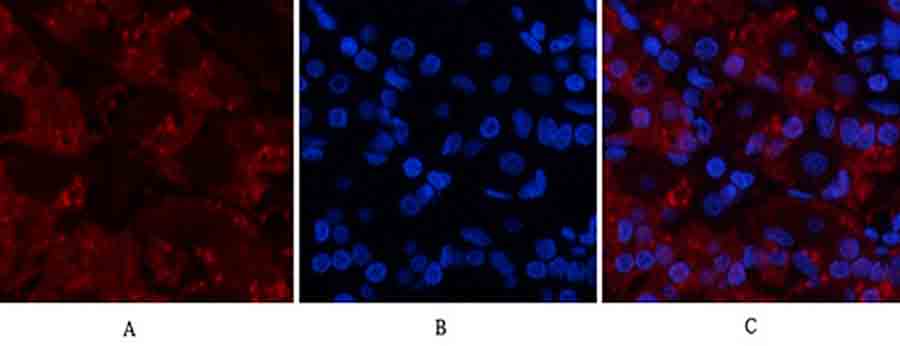
| IHC-P | Granular TNF-α localization in inflamed gut mucosa from IBD patients |
| Flow Cytometry | Identifies TNF-α+ CD4+ T cells with >90% specificity |
Real-World Impact
For sepsis research, ABP0127 quantified sTNF-α in 150 ICU patient plasma, revealing that levels >30 pg/mL predicted 28-day mortality (HR = 3.1), outperforming CRP and IL-6[reference:22].
The Bottom Line
For researchers studying TNF-α's role in sepsis, rheumatoid arthritis, IBD, or cancer cachexia, ABP0127 delivers the specificity and validation transparency needed for confident, reproducible data.
📎 Reference: TNF-α Polyclonal Antibody (ABP0127)





