




The Unsung Hero of Reproducible Science: Why Your Choice of Bradford Assay Kit Matters More Than You Think
It is a scene played out in laboratories across the globe, day after day, year after year. An investigator, having completed a complex protein extraction from tissue or cells, needs to normalize their samples for western blotting, enzymatic activity, or any number of downstream applications. They reach for a bottle of Coomassie Brilliant Blue G-250 dye, add it to a cuvette or a 96-well plate with a few microliters of their unknown sample and a standard, and measure the absorbance at 595 nm. This is the Bradford assay, a method so ubiquitous, so seemingly simple, that it is easy to forget it is a critical juncture where experimental rigor can be either fortified or fatally compromised. The choice of which specific Protein Quantification Kit (Bradford Assay) to use, such as the one offered by Abbkine (KTD3002), is not merely a matter of procedural convenience; it is a foundational decision that underpins the reliability of the data that follows.
The elegance of the Bradford assay lies in its mechanism, a rapid and stable color shift that has made it a cornerstone of biochemistry for decades. As detailed in the Abbkine kit's documentation, the underlying chemistry is precise: under acidic conditions, the red cationic form of Coomassie dye binds to proteins, predominantly to basic and aromatic amino acid residues, converting to its stable blue anionic form. This shift in the absorption maximum from 465 nm to 595 nm is the basis for quantification. However, the true value of a well-formulated kit, like the KTD3002, is that it delivers this chemistry in a ready-to-use, optimized format. You are not simply buying dye; you are buying a guarantee of consistency. The "improved Coomassie blue G reagent" mentioned in the specifications is not just marketing language; it signifies a formulation designed for linearity, stability, and reduced batch-to-batch variation, which are the silent partners of reproducible science.
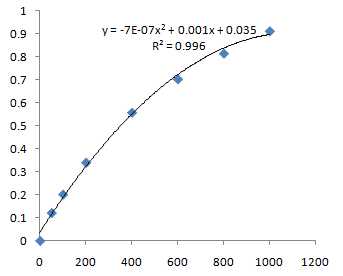
A deep dive into the performance characteristics of the Abbkine Protein Quantification Kit reveals a thoughtful design aimed at real-world laboratory challenges. The stated calibration range of 50 to 1000 µg/ml, with a detection limit of 25 µg/ml, covers the vast majority of typical protein extract concentrations, making it exceptionally versatile. More importantly, the kit's compatibility data provides critical guidance. The specification that samples can contain up to 1 mM mercaptoethanol and 5 mM DTT is a practical boon, as these reducing agents are staples in protein lysis buffers. Equally valuable is the explicit warning about detergent compatibility—keeping SDS below 0.1%, Triton X-100 below 0.1%, and Tweens below 0.06%. This level of detail, presented in the usage notes, is precisely the kind of information that saves experiments. It empowers the user to make informed decisions about buffer preparation or necessary dilution steps before ever adding the reagent, preventing a silent failure before it can compromise the results.
Examining the product's broader impact, the list of publications citing this specific kit (KTD3002) is a powerful testament to its utility across diverse fields of inquiry. With four publications already leveraging this reagent, we see its application in areas as varied as developmental toxicology in zebrafish, the study of oxidative stress responses in dermal fibroblasts, and parasitology research on fecundity in Schistosoma japonicum. This range is telling. A kit used to quantify protein from whole-organism extracts in a toxicology study, and also for normalized cell culture work in a mechanistic cell biology paper, demonstrates a robustness that transcends any single model system. For a researcher, seeing this breadth of validation is often the final, most compelling piece of evidence. It answers the unspoken question: "Has this tool been proven to work by my peers, in situations similar to mine?"
In the current landscape of life sciences, where there is a growing crisis of reproducibility, the importance of reliable foundational assays cannot be overstated. High-profile results are built upon layers of data, and each layer, starting with a simple protein assay, must be sound. The Abbkine Protein Quantification Kit (Bradford Assay) addresses this need by adhering to the classic Bradford principle while providing the modern researcher with the necessary quality controls, clear guidelines, and documented performance. It removes the guesswork. It allows the scientist to focus on the biology of their experiment—the effect of a drug, the role of a gene, the dynamics of a disease—with confidence that the first critical measurement, the protein concentration, is accurate and reproducible. For any laboratory that values the integrity of its data pipeline, from the initial lysate to the final publication, this kit represents a small but immensely significant investment in the overall quality of their science. To explore the specifications and see how this tool can support your research, you can access the complete product information for the Abbkine Protein Quantification Kit (Bradford Assay) (KTD3002) here: https://www.abbkine.com/product/protein-quantification-kit-bradford-assay-ktd3002/ .





