




The "Soft Scaffold" You Never Quantify: Why Type III Collagen (COL3A1) Protein Mass — Not Just a Sirius Red Stain — Is the Real-Time Fibonacci of Your Fibrosis, Keloid, and Vascular-Rupture Risk
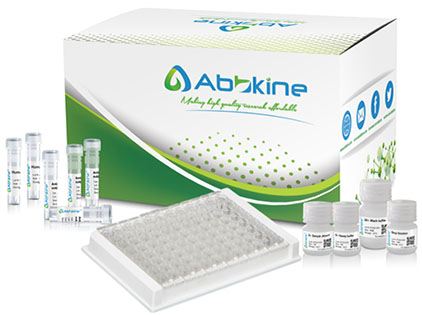
Ask any pathologist what "young connective tissue" looks like, and they'll point at the type III collagen (reticulin) network — that pale, delicate, silver-staining lattice that wraps the tunica adventitia of every large artery, holds the pulmonary interstitium together, and gives fetal/early-wound dermis its stretch-without-tear quality. The gene encoding its α1 chain is COL3A1 (UniProt: P02461, Gene ID: 1281, Chr 2q32.2), and its protein product is the ~138–145 kDa (pro-form α1(III) chain, processed to ~95 kDa triple-helical monomers in mature fibrils) that forms the heterotypic, interwoven type I/III fibril system of every extensible soft tissue in the human body — skin, lung interstitium, portal tracts, intestinal submucosa, and especially the tunica media and adventitia of large elastic arteries. The problem? Ninety percent of labs studying fibrosis, keloid, or post-MI remodeling still measure COL3A1 the Victorian way: a picrosirius-red photo + a densitometer guess, or a COL3A1 mRNA qPCR that pretends transcription = deposited fibrillar mass. The Human Collagen Type III Alpha 1 (COL3A1) ELISA Kit (KTE62513) from Abbkine is the tool that drags this structural protein into the plate-reader era: a two-site sandwich ELISA giving you 0.625–40 ng/mL range, LOD ~0.23 ng/mL, so your matrix-turnover story rests on interpolated ng/mL from a standard curve — not a photography argument.
COL3A1 in One Paragraph: The α1 Chain of the Fibril That Absorbs the Stretch
Type III collagen is a fibrillar collagen (like type I, II, V, XI) whose triple helix = [α1(III)]₃ (homotrimeric) or hybridizes with type I (α1(I)₂α2(I) or α1(I)α2(I)/α1(III) blends depending on tissue age). It is synthesized as a precursor (pre-pro-α1(III)) with an N-terminal signal peptide + N-propeptide (PIIINP domain) and a C-terminal propeptide — both cleaved off during fibrillogenesis:
Processing Step Enzyme Product
Cleavage of signal peptide Signal peptidase Pro-α1(III) in ER lumen
N-propeptide (PIIINP) release ADAMTS-2 (primarily) PIIINP released into circulation (the famous serological "type III synthesis" proxy)
C-propeptide release BMP1/tolloid-like Mature α1(III) incorporated into fibril
The tissue-engineering fact everyone forgets: type III is the "loose weave" — it forms narrower fibrils (≈30–35 nm diameter) than type I, with less pyridinoline cross-linking density, which makes it more extensible, less brittle, and preferentially laid down early in wound healing or embryonic development before being partially replaced by the stiffer, fatter type I fibrils as the tissue matures. When the COL3A1 gene breaks, you don't get "no collagen" — you get type I without its compliant partner → stiff, brittle tissue that tears under normal strain → the defining pathology of Ehlers-Danlos syndrome type IV / vascular type (autosomal dominant, COL3A1 missense/nonsense/splice mutations): spontaneous arterial rupture, intestinal perforation, uterine rupture in pregnancy.
Why a Sandwich ELISA for a ~95–140 kDa Fibrillar Chain — And Why Picrosirius + Polarizer Is Not Enough
COL3A1 is secreted, deposited into the ECM, and turnover-slow (half-life measured in months for mature fibrils), which means three things conspire against casual quantification:
- Most of the COL3A1 mass is in the insoluble matrix, not floating in your culture supernatant — so whole-cell-lysate-only readings undercount it unless you also look at the deposited fraction.
- Sirius red / picrosirius stains total collagen (I+III+IV+…) — it cannot tell you the type III / type I ratio, which is the single most informative number in any remodeling zone (scar young = high III/I; mature = low III/I).
- mRNA ≠ ECM-deposited protein. COL3A1 transcription can spike transiently, but the actual fibril accretion depends on propeptide cleavage, C-terminal registration, nucleation sites, and cross-linker availability — none of which a qPCR detects.
The KTE62513 kit uses the proven two-site architecture:
- Microplate pre-coated with capture anti-COL3A1 (directed at a conformational/linear epitope of the α1(III) triple-helical or processed-chain region that survives in extracted/partially digested matrix samples).
- Standards (recombinant/calibrator COL3A1 peptide or denatured α1(III) fragment) + samples — serum, plasma, tissue homogenates, cell culture supernatates/lysates, other biological fluids — added → COL3A1 (or its soluble/extracted immunoreactive fraction) binds.
- Wash → biotinylated anti-COL3A1 detection (different epitope) → Streptavidin–HRP → TMB → color ∝ bound COL3A1.
- Stop → 450 nm → interpolate ng/mL from the standard curve.
Consolidated performance envelope (from distributor/technical cross-references aligned with KTE62513):
Parameter KTE62513-class Specification
Target Human COL3A1 / α1 chain of type III collagen (UniProt P02461, Gene 1281)
Format 96-well sandwich ELISA, pre-coated capture
Detection Biotin-Ab → SA-HRP → TMB, 450 nm
Range 0.625 – 40 ng/mL
Sensitivity / LOD ~0.23 ng/mL
Intra-Assay CV < 8%
Inter-Assay CV < 10–12%
Specificity No significant cross-reactivity with collagen I, II, IV, V analogues at physiological levels
Samples Serum, plasma (EDTA preferred), tissue homogenates, cell culture supernatants/lysates
Assay time ~3–4.5 hours
(Confirm exact dilution scheme and lot-specific recovery on the shipped Abbkine datasheet/CoA for KTE62513.)
The Prep Rule That Decides Whether You're Measuring Air or the Fibril Itself
Because COL3A1 ends up as cross-linked fibrils in the ECM, the critical distinction is:
Soluble/partially degraded pool (what the ELISA mostly sees in lysates): extract in cold 0.5–1% Triton X-100 / 50 mM Tris pH 7.4 / 150 mM NaCl + protease inhibitors; clarify 12,000–16,000 ×g, 15 min, 4°C → supernatant = your soluble/deposited-surface-accessible COL3A1 fraction.
Insoluble fibrillar pellet (the rest): re-extract with 0.5% SDS or limited pepsin/acetic acid if you want the "true total deposited" number — most routine screens use the first fraction and normalize to total protein (BCA) or hydroxyproline for a COL3A1 / total collagen ratio.
For serum/plasma, COL3A1 circulates primarily as cleaved PIIINP fragments and trace solubilized triple-helical fragments — so the ELISA here tracks turnover/biogenesis proxy (same logic as a PIIINP assay), not "circulating rope." Report accordingly.
Where COL3A1 Quantification Actually Carries the Paper
- Fibrosis — Liver (NASH), Lung (IPF), Kidney (CKD/Diabetic Nephropathy)
This is the classic application. Fibrosis is type I accumulation + type III "immature scaffold" remodeling — and the III/I ratio is the best single descriptor of how active vs. burnt-out the scar is:
• Early/active fibrogenesis (stellate-cell activation, TGF-β ON): COL3A1 ↑ relative to COL1A1 (young, compliant scar → higher III/I)
• Mature/burnt-out fibrosis: COL3A1 plateaus or drops, COL1A1 dominates (stiff, cross-linked, acellular collagen sheet → low III/I)
In liver, pairing COL3A1 (ELISA, ng/mg tissue) with PIIINP, hyaluronic acid, and TIMP-1 is the backbone of the ELF (Enhanced Liver Fibrosis) score — the non-invasive panel that has kept thousands of patients out of unnecessary biopsy chairs.
- Skin: Keloid vs. Normal Scar vs. Striae — The Compliance Axis
Keloids are defined by excess collagen + abnormal collagen typing — and numerous derm papers show keloid tissue has persistently elevated COL3A1 mRNA/protein with disordered III/I weaving and altered PIIINP turnover. Quantifying COL3A1 in punch-biopsied dermal lysates (ng/mg, BCA) alongside COL1A1, MMP-13, and TGF-β1 gives you the fibril-type ratio that Sirius-red-polarizer alone can't assign chemically.
- Vascular Wall Integrity & Aortic Dissection (Where COL3A1 Mutations Teach the Lesson)
The vascular type EDS (formerly EDS IV) is the starkest proof-of-principle: COL3A1 haploinsufficiency → thin, disorganized media → spontaneous rupture of aorta, iliac, splenic, uterine arteries. Even in non-mutant pathology — aneurysm wall, atherosclerotic plaque shoulder, Marfan aortopathy — measuring COL3A1 / COL1A1 ratio in microdissected media vs. adventitia tells you whether the wall still has its compliant "shock absorber" or has aged into brittle, rupture-prone homogeneity.
- Myocardial Infarction & Post-Infarct Remodeling
The healing infarct evolves in stages: early provisional matrix (fibronectin + high type III) → granulation → stiff type I–dominant scar. COL3A1 ELISA on border-zone tissue (day 3/7/14/28 post-LAD ligation) gives you the temporal compliance profile that coordinates with LV dilation, ejection fraction, and MMP/TIMP ratios — the structural equivalent of a stress–strain curve in molecular form.
- Orthopedic & Tendon Overuse: The Collagen-Type Switch as Damage Sensor
Ligaments and tendons normally run high type I (85–90%) / low type III (5–10%). Overload injury or chronic tendinopathy → type III upregulates (attempt to lay down more extensible fibrils for repair) → creates a mechanically confused matrix: neither as compliant as young tissue nor as stiff-strong as mature tendon → predisposed to tear. Biopsy or fine-needle FNA-lysate → COL3A1 ELISA → objective typing.
- CRISPR / AAV & Anti-Fibrotic Drug Screens
Silencing COL3A1 is lethal in the whole organism (vascular catastrophe), so most screens target TGF-β axis, LOX cross-linking, or MMP-13–dependent remodeling. The readout that sells it: COL3A1 mass (ELISA, ng/mg) + hydroxyproline + COL1A1 + PIIINP → "we changed the fibril composition, not just the cell."
A Minimal Protocol You Can Paste Into Methods
- Harvest tissue (skin, liver edge, artery segment) → snap-freeze in LN₂ or homogenize cold in 50 mM Tris pH 7.4, 150 mM NaCl, 0.5% Triton X-100 + inhibitors.
- If you want the deposited-surface pool: after the first spin's supernatant, take the pellet, re-extract gently with 0.1% SDS or acetic acid/pepsin (limited, on ice, 10–15 min) → spin → supernatant = your ECM-released COL3A1 (use this for the "deposited" bucket).
- BCA the parallel-soluble fraction → express as ng COL3A1 / mg total protein (or ng COL3A1 / µg hydroxyproline if you want pure-ECM normalization).
- Warm kit reagents ≥ 30 min RT before opening; protect TMB; stop uniformly; read 450 nm promptly; fit 4-PL; run full standard curve per plate.
The Bottom Line
COL3A1 is the ~95–140 kDa α1 chain of type III collagen, the fibrillar "soft weave" whose III/I ratio defines whether a scar is young-and-compliant or old-and-brittle, and whose haploinsufficiency produces the most feared vascular catastrophe in clinical genetics (EDS type IV spontaneous arterial rupture). Measuring it as a calibrated sandwich-ELISA variable instead of a stained photo lets your fibrosis/remodeling paper join the quantitative century. The Human Collagen Type III Alpha 1 (COL3A1) ELISA Kit — KTE62513 from Abbkine gives you that readout: pre-coated capture → biotin detection → HRP–TMB → 450 nm → ng/mL, over a 0.625–40 ng/mL working range with LOD ~0.23 ng/mL, in a ~3–4.5 hour workflow that scales from a keloid-punch cohort to a post-MI border-zone time-course without chaining you to a polarizer.
Product Reference: KTE62513 – Human Collagen Type III Alpha 1 (COL3A1) ELISA Kit
Learn more and order: https://www.abbkine.com/product/human-collagen-type-iii-alpha-1-col3a1-elisa-kit-kte62513/
(For Research Use Only; not for diagnostic procedures in humans.)





