




The 135-Da Sulfur Time Bomb in Your Serum: Why "Normal B12/Folate" Means Nothing Until You See Total Homocysteine — And How KTE62507 Finally Puts tHcy on a 96-Well Curve Anyone Can Run
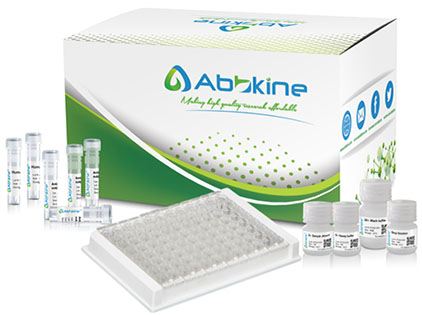
Homocysteine (Hcy / HCY, C₄H₉NO₂S, MW 135.2 Da) is the only cardiovascular risk factor on your lab report that isn't a lipid, a sugar, or a pressure — it's a thiol-containing non-protein amino acid whose name literally means "same as cysteine but with one extra methylene group," and whose accumulation silently triples stroke/MI risk while your standard BMP/CBC sits there looking perfectly boring. Formed when S-adenosylmethionine (SAM) donates its methyl group → S-adenosylhomocysteine (SAH) → hydrolysis → Hcy, it sits at the hinge of the one-carbon metabolism / methionine cycle, and when that cycle stalls — because folate (B9), cobalamin (B12), or B6 can't run the remethylation or transsulfuration salvage — Hcy piles up as total Hcy (tHcy) in plasma. The Human Homocysteine (HCY) ELISA Kit (KTE62507) from Abbkine is the reagent that lets you measure this 135-Da sulfur metabolite not as an HPLC 40-minute run or a fluorescent polarization analyzer you don't have budget for, but as a calibrated immunoassay readout (μmol/L, LOD ~0.05 μmol/L) on a standard plate reader — so your cardiometabolic, renal, or nutrigenomics paper can actually show tHcy numbers, not just "we gave folic acid and assumed it worked."
Hcy in One Paragraph: A 4-Carbon Thiol That's 70% Glued to Albumin
The chemistry is deceptively simple. Hcy is HS–CH₂–CH₂–CH(NH₂)–COOH — cysteine with an extra –CH₂– wedge — but in human plasma it's anything but free:
Plasma Pool Approximate % of tHcy Chemical Form Why It Matters
Albumin-bound (Hcy–S–SA) disulfides ~70–80% Mixed disulfide with Cys³⁴ of albumin Not measurable as "free Hcy" unless you reduce it first
Free reduced monomer (thiol form) ~1% HS–CH₂–CH₂–CH(NH₂)COOH Reactive, short-lived, is what enzymes and assays actually "see"
Mixed disulfides w/ cysteine, cysteinylglycine, GSH, etc. ~20–30% Hcy–S–X Also invisible without reduction
That's why every Hcy assay — whether HPLC, FPIA, enzymatic cycling, or ELISA — lives or dies by the reduction/liberation step: you must convert all forms → free monomeric Hcy (usually with DTT = dithiothreitol or TCEP) before the detector sees the true total Hcy (tHcy). Skip this and you're measuring a phantom.
The clinical thresholds every lab memorizes:
tHcy (μmol/L) Interpretation
5–15 Normal (population median ~9 μmol/L)
15–30 Mild–moderate hyperhomocysteinemia (borderline; MTHFR C677T heterozygotes often land here)
30–100 Moderate HHcy (folate/B12 deficiency, renal impairment, severe MTHFR homozygosity)
100 Severe HHcy (homozygous CBS deficiency / classical homocystinuria — rare but devastating: thrombosis, lens dislocation, Marfanoid habitus, intellectual disability)
Why an Immunoassay for a 135-Da Molecule — And Why HPLC/FPIA Aren't Always the Answer
The gold-standard methods are well-known:
• HPLC + pre-column derivatization (FITC/ABD-F) → fluorescence detection — exquisite specificity, but needs pricey columns, skilled hands, and 30–60 min per batch
• FPIA (Abbott AxSYM / Abbott Architect) — automated, fast, excellent precision (CV ~3–4%), but proprietary instrument locked to clinical chemistry platforms
For a research lab, nutrigenomics cohort, or animal-study panel where you need 40–200 samples/week and a $20k analyzer isn't in the cards, a hapten-based immunoassay (the class KTE62507 belongs to) is the pragmatic win — provided you respect what it is:
HCY is a 135-Da hapten, not a protein. What's coated or captured in the well is an anti-Hcy antibody (or an Hcy–carrier-protein conjugate serving as capture), and the sample Hcy (post-reduction) competes for antibody sites against a labeled tracer/detection reagent. The curve slopes downward (inverse), not upward like a true sandwich. Distributor listings sometimes lazily tag it "sandwich ELISA," but the real mechanism is competitive hapten immunoassay — and that distinction dictates how you fit the curve (4-PL / log-logit, never linear).
From the consolidated specification data for KTE62507:
Parameter KTE62507-class Specification
Target Human total Homocysteine / tHcy (C₄H₉NO₂S, MW 135.2)
Assay Type Competitive hapten immunoassay (pre-coated antibody or conjugate format)
Detection Biotin/HRP tracer → TMB, read 450 nm (inverse curve)
Calibration Range 0.5 – 8 μmol/L (equivalently 0.0675 – 1.08 μg/mL)
Sensitivity / LOD ~0.05 – 0.1 μmol/L
Intra-Assay CV < 8%
Inter-Assay CV < 10–12%
Specificity No significant cross-reaction with cysteine, methionine, cystathionine, glutathione, or other plasma thiols at physiological levels
Samples Serum (fasting preferred), EDTA plasma, urine, tissue homogenates, cell culture supernatants
Assay time ~2.5–4 hours (includes reduction step)
(Confirm exact range, reduction protocol, and lot-specific recovery on the shipped Abbkine datasheet/CoA for KTE62507.)
The Reduction Step That Makes or Breaks Your tHcy Number
This is the non-negotiable most people skip when they buy an Hcy kit:
Total Hcy ≠ free Hcy.
Total Hcy = (free Hcy) + (albumin-disulfide Hcy) + (mixed-disulfide Hcy) → all must be reduced → measured as free thiol.
The standard approach (reflected in most Hcy immunoassay protocols):
- Sample + reducing agent (DTT or TCEP, typically 5–10 mM final) in Tris/EDTA buffer pH 7.5–8.5, incubate 15–30 min @ 37°C (or RT) to liberate all Hcy–S–X → free Hcy-SH.
- Acidify or stabilize per kit manual (some protocols add MPA / iodoacetate post-reduction to alkylate and lock the thiol so it doesn't re-oxidize during the assay window).
- Load into the pre-coated well, add detection reagent, develop, read 450 nm, interpolate from the descending standard curve.
Skip the reduction and you're measuring ~1% of reality and wondering why your folate supplementation "didn't change anything."
Where tHcy Quantification Actually Carries the Paper
- Cardiovascular Risk & the "Normal Lipids, Dead Vessel" Phenotype
This is the flagship. tHcy >15 μmol/L is an independent CVD risk factor (meta-analyses: ~1.5–2.5× pooled RR for coronary events per 5 μmol/L increment) via endothelial nitric oxide suppression, pro-thrombotic endothelial surface (TF/tPA/PAI-1 dysregulation), smooth-muscle proliferation, and oxidized-LDL promotion.
The research-grade question isn't "is Hcy high" — it's did your intervention (folate 0.8–5 mg, B12 500 μg, B6 50 mg, or MTHFR-aware diet) actually drop tHcy into the ≤9 μmol/L sweet spot? KTE62507 lets you run that as a fasted morning serum panel with error bars, not a clinical send-out you wait 3 weeks for.
- MTHFR Genotyping Phenotypes: C677T (Ala→Val) & A1298C
These are the two SNPs every nutrigenomics student memorizes:
• MTHFR C677T homozygous (TT): thermolabile enzyme → ~2–3× higher tHcy unless folate status is aggressively repleted
• A1298C: milder impact, but compound heterozygotes (C677T + A1298C) can still show HHcy
Pairing tHcy (μmol/L, ELISA) with plasma folate/B12/MeGal and MTHFR genotype is the three-variable argument — "the gene loads the gun, the B-vitamin status pulls the trigger" — that reviewers love because it connects DNA to metabolite to phenotype.
- CKD & Renal Clearance: tHcy as the Metabolic Thermometer You're Not Measuring
The kidney clears ~70% of plasma Hcy (partly via renal transsulfuration, partly filtration/reabsorption of albumin–Hcy complexes). When eGFR drops, tHcy climbs linearly — often reaching 30–50 μmol/L in ESRD — and compounds the vascular calcification/thrombosis risk that already comes with uremia. Tracking tHcy alongside BUN, creatinine, cystatin C, and Ca×P product in rodent or patient-panel work gives you the sulfur-metabolism axis that "kidney function worsened" alone doesn't visualize.
- Pregnancy, Preeclampsia & Neural Tube Defect Risk
tHcy rises modestly in normal pregnancy (hemodilution + increased utilization), but excessive HHcy (>12–15 μmol/L in 2nd trimester) is overrepresented in:
• Preeclampsia (vascular endothelial dysfunction cascade)
• Recurrent miscarriage / placental insufficiency
• NTD-affected pregnancies (periconceptual folate–Hcy cycle failure)
Morning-fasted serum tHcy + folate, B12, RBC folate is the metabolic triad that frames the "one-carbon nutrition" story in OB/GYN research.
- Aging, Cognition & the B-Vitamin–Brain Axis
Moderate HHcy (15–20 μmol/L) tracks with white-matter hyperintensity load, hippocampal atrophy rate, and poorer executive function in elderly cohorts — the proposed mechanism is microvascular endothelial injury + excitatory amino acid (Glu) dysregulation via Hcy's thiol/disulfide chemistry. Intervention trials (e.g., VITACOG / B-vitamin + ω-3 studies) use tHcy as the primary metabolic gate to stratify responders — ideal for plate-based measurement.
- Diet & Supplementation Studies (Sports Nutr / Functional Med / Rodent Models)
High-protein/meat diets → ↑ methionine intake → ↑ Hcy transient. Folate/B12 repletion → ↓ tHcy. Methionine-loading test (0.1 g/kg p.o.) → exaggerated Hcy excursion → reveals occult remethylation defects. All of these live or die on accurate tHcy before/after, and a 96-well immunoassay is what lets you run the time-course without booking an HPLC slot.
A Minimal Prep/Run Protocol You Can Paste Into Materials & Methods
Collection: draw fasted (12–14 h) morning serum into plain or EDTA tubes on ice, spin 2,000 ×g, 10 min, 4°C within 30 min, aliquot, -80°C, avoid >1 freeze–thaw.
Reduction (per most Hcy immunoassay protocols): mix sample 1:1–1:5 with reduction buffer (e.g., 10 mM DTT / 50 mM Tris pH 8.0 + 1 mM EDTA), incubate 30 min @ 37°C, stop/alkylate per kit instructions, then load wells.
Read: warm reagents ≥ 30 min RT before opening, protect from light, stop uniformly, 450 nm, fit 4-PL / log-logit (B/B₀), run full standard curve per plate.
The Bottom Line
Homocysteine is the 135-Da sulfur thiol — HS–CH₂–CH₂–CH(NH₂)–COOH — that sits at the hinge of the methionine/folate/B12 cycle, exists ~70% locked to albumin as a disulfide, and when the B-vitamin engine stalls, accumulates as total Hcy (tHcy) to become one of the most well-validated metabolic cardiovascular and thrombotic risk factors we have. Measuring it needs a reduction step to free all hidden pools, and it needs a format that fits a research budget and a 96-well plate, not just an HPLC column or a proprietary immunofluorescence analyzer. The Human Homocysteine (HCY) ELISA Kit — KTE62507 from Abbkine gives you that format: anti-Hcy capture / competitive hapten immunoassay → HRP–TMB → 450 nm → μmol/L, over a 0.5–8 μmol/L working range with LOD ~0.05 μmol/L, in a ~2.5–4 h workflow that turns a sulfur-metabolism story into plotted, intervenable data.
Product Reference: KTE62507 – Human Homocysteine (HCY) ELISA Kit
Learn more and order: https://www.abbkine.com/product/human-homocysteine-hcy-elisa-kit-kte62507/
(For Research Use Only; not for diagnostic procedures in humans.)





