




The Gram-Negative Shadow in Your Plasma (and Your Reagents): Why an Antibody-Based LPS/Endotoxin ELISA Beats the Crab Out of Your Lab — And How KTE62375 Puts Picograms on a 450 nm Curve
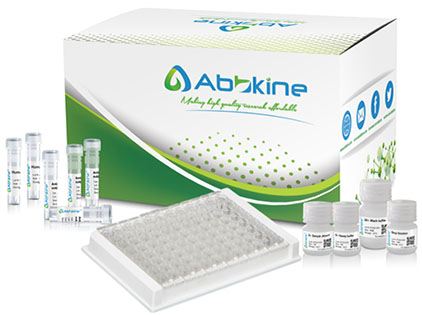
Lipopolysaccharide (LPS, endotoxin) is the only molecule on your bench that can ruin a $40k animal experiment without leaving a fingerprint. It lives in the outer membrane of every Gram-negative bacterium (E. coli, Salmonella, Pseudomonas, Klebsiella, Porphyromonas…), and its business end — the lipid A disaccharide phosphorylated anchor — is the single most potent natural ligand of TLR4–MD2–CD14, a pattern-recognition circuit that can, milliseconds after binding, flood a macrophage with TNF-α, IL-1β, IL-6, HMGB1, and the rest of the SIRS/coagulopathy cascade. That's why the pharmacology textbooks call LPS an exogenous pyrogen and systemic toxin; and why your cell-culture or in-vivo grant proposal calls it the contamination you can't see unless you measure it. The Human Lipopolysaccharides (LPS) ELISA Kit (KTE62375) from Abbkine is the reagent that lets you do exactly that — not as a mystic blue gel-clot ("LAL positive at 1:32?"), but as a calibrated, two-site sandwich immunoassay giving you 0.156–10 ng/mL range, LOD pushing ~0.06 ng/mL, and plate-level CVs you can actually plot — so "endotoxin-free" stops being a vibe and becomes a datum.
LPS in One Paragraph: Lipid A + Core + O-Antigen — And Why "Total LPS" Is Always a Moving Target
Chemically, LPS is a giant amphiphile built as three covalently linked zones:
Zone What's Inside Why It Matters
Lipid A (hydrophobic) Hexa-acyl disaccharide-1,4′-bisphosphate; R groups = saturated/OH/myristoyl/lauryl The toxic core; inserts into membranes; selectively recognized by TLR4–MD2; slight structural tweaks (number of acyl chains, phosphorylation) swing potency by >100× between E. coli vs. P. gingivalis (tetra-acyl, much weaker)
Inner/outer core oligosaccharide KDO (3-deoxy-D-manno-oct-2-ulosonic acid) + heptoses Anchors the O-antigen; helps stabilize the micelle
O-antigen repeat (variable) Serotype-defining polysaccharide repeats (scores of structures) Why there's no single "universal LPS mass" — E. coli O111:B4 is not Bacteroides fragilis (Gram-negative-like LPS-lacking) nor P. gingivalis LPS
Because the O-antigen varies by species/serotype, an immunoassay can't magically count all LPS from all sources with identical efficiency. What a good kit does is calibrate against a defined reference LPS (commonly E. coli O111:B4 / O55:B5) and report results as LPS equivalents — the only honest way to talk about it.
Why This ELISA — And Why LAL (Limulus Amoebocyte Lysate) Is Starting to Look Like a Museum Piece
If you've ever run a rabbit pyrogen or LAL gel-clot assay, you know the ritual:
• Horseshoe-crab blood cells (amoebocytes) lyse on endotoxin → cascade → gel/clot
• Beautiful in 1977; miserable now because:
- Ethical/supply pressure — several US states (and EU guidance) are pushing crab-free alternatives (synthetic Factor C, recombinant Factor C, and antibody-based ELISAs)
- β-glucan cross-reactivity — LAL also reacts to (1→3)-β-D-glucan (fungi/plant fibers/cellulose dust) → false-positive "endotoxin glow"
- Batch variability (crab harvest season, amoebocyte quality) → plate-to-plate drift you can't fully control
- Throughput — gel-clot is qualitative/semi-quant at best; turbidimetric/chromogenic LAL is better but still chained to a biological reagent
The KTE62375 sandwich ELISA avoids the crab entirely. Architecture in plain English:
- 96-well plate pre-coated with a capture antibody specific for LPS (typically raised against a conserved E. coli O-antigen/lipid-A proximal epitope cluster, not a "generic carb").
- Standards (reference LPS, e.g., E. coli O111:B4) and samples — serum, plasma (EDTA), tissue homogenates, cell culture supernatants/lysates, other biological fluids — added → LPS binds.
- Wash → biotinylated detection antibody (different epitope/region) → Streptavidin–HRP.
- TMB → stop → 450 nm → interpolate LPS concentration from the reference curve.
Performance envelope you'll cite (drawn from distributor-matched spec sheets aligned with KTE62375):
Parameter KTE62375-class Specification
Target LPS / Lipid A–core–O-antigen (calibrated against E. coli reference LPS)
Format 96-well sandwich ELISA, pre-coated capture
Detection Biotin-Ab → SA-HRP → TMB, 450 nm
Dynamic Range 0.156 – 10 ng/mL (equivalently 156 – 10,000 pg/mL)
Sensitivity / LOD 0.055–0.071 ng/mL (55–71 pg/mL)
Intra-Assay CV < 6–8%
Inter-Assay CV < 10%
Specificity No significant cross-reactivity with LTA (lipoteichoic acid), peptidoglycan fragments, or β-glucans at physiological levels
Samples Serum, plasma (EDTA preferred), tissue homogenates, culture supernatants, other biological fluids
Assay time ~3–4 hours
(Lock Methods to the shipped Abbkine CoA/datasheet for your exact lot; recovery can shift slightly with your matrix.)
The Sample-Handling Rules That Decide Whether Your "Endotoxin-Free" Label Is Real
LPS is amphiphilic, sticky, and everywhere: it loves plastic, glass, rubber stoppers, and fingertips, it hides in nanoparticle coatings / dialysis tubing / serum batches, and it survives 121 °C autoclaving (endotoxin is heat-stable; you need dry heat 250 °C+ >30 min or validated alkaline detergent/depyrogenation).
Golden protocol for human matrices:
- Use polypropylene low-binding tubes (not cheap glass washed with tap water detergents).
- EDTA plasma preferred (chelate Ca²⁺, keep complement from complicating lysis, and avoid heparin-contaminated lines if possible).
- Keep cold, spin promptly, aliquot, -80°C, avoid >1 freeze–thaw.
- For cell culture supernatants/media: never "test the media" without a parallel blank (no-cell) media control run the same day — LPS can come from water, FBS batches, plasticizers, or even your pipette tips; the blank tells you the real baseline.
- Positive-spike recovery (add a known ng/mL of reference LPS) is your one-minute sanity check that the matrix isn't swallowing signal.
Where LPS Quantification Actually Carries the Paper
- Sepsis / SIRS / Endotoxin-Tolerance Models
This is the canonical. Plasma LPS (often framed as "metabolic endotoxemia") rises in overt bacteremia, but the more interesting paper is low-grade endotoxemia:
• Gut-barrier compromise ("leaky gut" / DSS models / alcohol/NSAID/chemotherapy mucositis) → LPS transits portal → systemic TLR4 activation → chronic low-grade inflammation (insulin resistance, NAFLD/NASH, neuroinflammation)
• Measuring plasma LPS (pg–ng/mL) alongside LBP (LPS-binding protein), sCD14, cytokines, and tight-junction markers (zonulin/fatty-acid-binding protein/FABP) is the quartet that proves the barrier leaked, not just "inflammation exists."
- Cell-Culture QC & Bioproduction: "My Cytokine Jumped" Might Be LPS, Not Your Construct
The quietest killer of transfection/primary-monocyte papers: FBS batch endotoxin or contaminated PBS/water gives you a TLR4 pseudo-challenge that looks like "your construct activated monocytes." Running KTE62375 on neat media / FBS / reagent water (compare new vs. old bottle) is the 45-minute insurance policy that stops a reviewer from asking: "How do you know it wasn't endotoxin?"
- Implant/Device & Nanoparticle Biosafety
Catheters, mesh, microplastics, lipid-NP formulations, and nanomaterials can adsorb/desorb LPS and present it in a surface-display form that is hyper-recognizable by TLR4. ELISA on extracts (soak fluid) or concentrated rinse is the standard ISO-style proxy (often paired with TNF-α from THP-1/MonoMac assays) to argue "material itself is inert — or not."
- Microbiome & Germ-Free / Gnotobiotic Work
If you're moving from GF → conventionalized, or testing probiotics/antibiotics, plasma/cecal LPS levels become the molecular thermometer of how "Gram-negative" the lumen challenge got. Pair with 16S qPCR (Enterobacteriaceae vs. Bacteroides) so the LPS number has a taxonomic source.
- Obesity/Metabolic Syndrome & "Metabolic Endotoxemia"
This is the hot epidemiology-meets-basic-science lane: high-fat diets (especially saturated FA) alter mucin/glycocalyx and increase portal LPS micro-influx, tracked as ~20–80 pg/mL elevations that correlate with insulin resistance, liver TAG, and IL-6. KTE62375 is sensitive enough to catch that whisper — provided you EDTA cold-chain it like a pro.
- Pharmaceutical/Injectable QC (Exploratory, RUO)
Water-for-injection, excipients, and small-molecule APIs can carry trace LPS; although formal GMP pyrogen control is LAL/rFC territory, many R&D labs use an ELISA screen on concentrated samples to pre-filter before spending on official tests.
A Minimal "What to Write in Methods" Workflow
- Collect in EDTA tubes, invert gently, keep on wet ice, spin ≥ 1,500 ×g, 4°C, 10 min within 30–60 min. Aliquot immediately, snap -80°C, label, one thaw.
- Dilute into kit buffer per manual (often 1:2–1:10 depending on expected ng/mL) — never spike DMSO/organics above 0.5% into the well unless validated.
- Warm reagents ≥ 30 min RT before opening; protect TMB from light; stop uniformly; read 450 nm promptly; fit 4-PL; run full standard curve on every plate.
The Bottom Line
LPS is the ~10–20 kDa amphiphilic micelle whose lipid A is the most potent natural TLR4 ligand on Earth — and because it's heat-stable, sticky, and invisible without a reagent, it's the one contaminant that can fake "biological activation" in your cultures and the one toxin that can tip a bacteremic patient into irreversible shock. Measuring it with a calibrated, antibody-based sandwich ELISA instead of a crab-blood gel-clot gives you pg–ng/mL interpolated numbers, batch-to-batch consistency, and no β-glucan ambiguity. The Human Lipopolysaccharides (LPS) ELISA Kit — KTE62375 from Abbkine gives you that readout: pre-coated anti-LPS capture → biotin detection → HRP–TMB → 450 nm → ng/mL (E. coli LPS-equiv), over a 0.156–10 ng/mL working range with LOD ~0.06 ng/mL, in a ~3–4 hour workflow that scales from a media-batch QC check to a low-grade endotoxemia cohort without a gel-clot timer.
Product Reference: KTE62375 – Human Lipopolysaccharides (LPS) ELISA Kit
Learn more and order: https://www.abbkine.com/product/human-lipopolysaccharides-lps-elisa-kit-kte62375/
(For Research Use Only; not for diagnostic procedures in humans.)





